


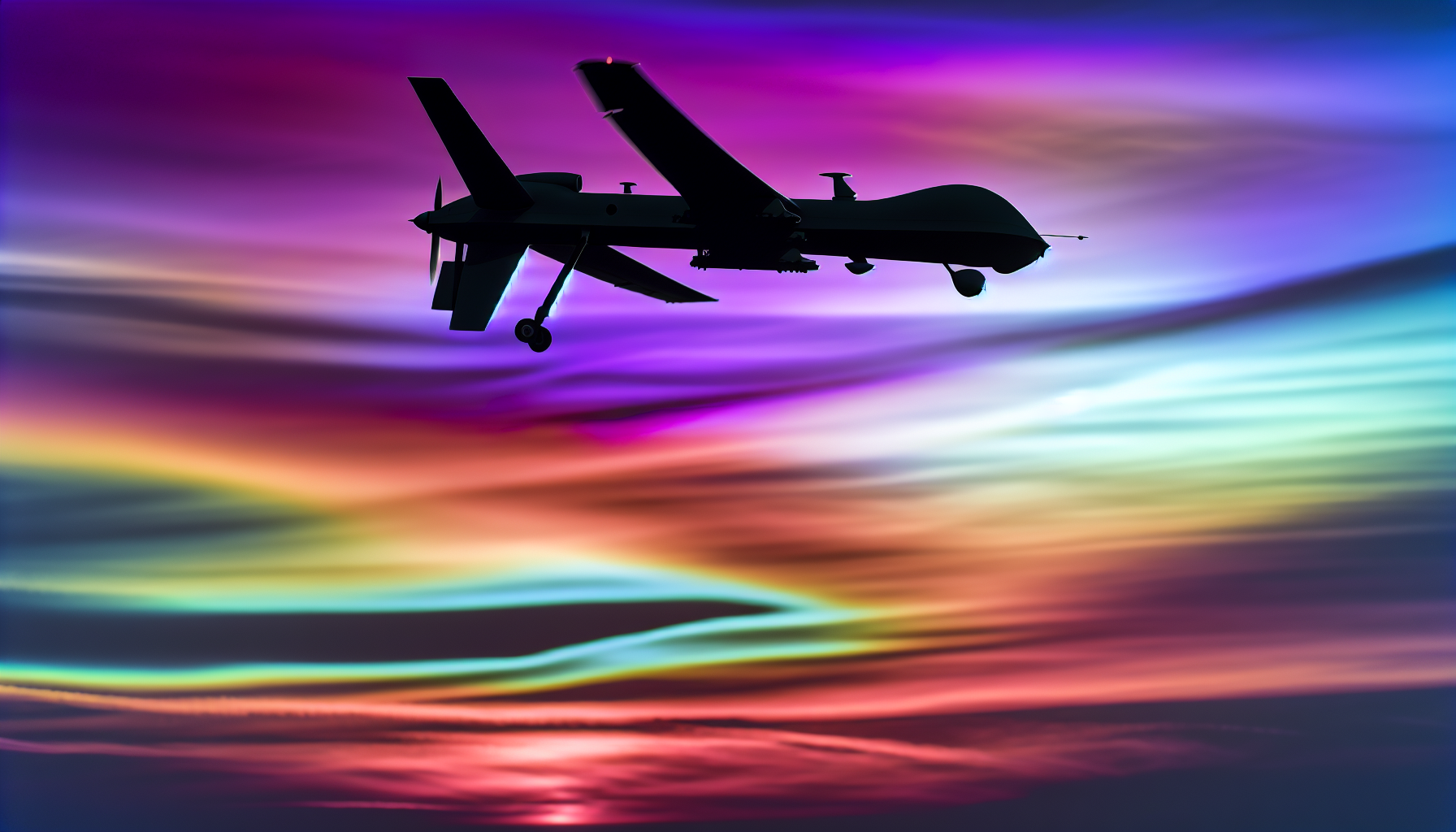
The Myths of Drone Warfare
Drones have emerged as the defining instrument of 21st-century warfare, particularly utilized by U.S. forces in their ongoing “war on terror.” The predominant justification for their use is that drones can deliver “surgical precision,” purportedly minimizing collateral damage and saving civilian lives. However, the reality presents a stark contrast to this narrative.
The Reality of Drone Strikes
Recent events, like the drone strike in Kabul that mistakenly killed aid worker Zemari Ahmadi and nine of his family members, including seven children, challenge the myth of precision warfare. Such incidents reveal a more complicated and tragic picture, one that contradicts the assurances of safety and accuracy often associated with drone operations.
Military technology aims to maximize damage to adversaries while minimizing the risk to its own forces. Drones, by virtue of being remotely operated, are touted as a solution that allows strikes to be conducted with fewer risks to personnel. This very aspect has fostered a dangerous illusion: that wars can be fought from a safe distance, with minimal civilian harm, in a manner that aligns with ethical standards and respects international law.
Myth 1: Precision Bombing
One of the most pervasive misconceptions is that drone strikes are equivalent to “precision bombing.” Contrary to this belief, the process of targeting and executing a drone strike often occurs rapidly, with operators making significant decisions on the fly. This has led to grave miscalculations and substantial civilian casualties, with reports indicating that over 13,000 civilians have been killed in coalition drone strikes in Iraq since 2014.
The statistics are sobering: in merely 1,773 days, there were 14,570 drone strikes in Iraq and 19,785 in Syria, resulting in the deaths of up to 13,000 civilians, including 2,300 children. The UN Assistance Mission in Afghanistan has similarly noted a rise in civilian casualties, illustrating the troubling trend of drone warfare inflicting harm on innocent lives rather than safeguarding them.
Myth 2: Ethical Warfare
Many proponents of drone strikes argue that they are a more ethical form of warfare. However, the intention is often to kill rather than to capture. Individuals are presumed guilty based solely on their association with groups considered hostile by operators, without the opportunity for arrest, questioning, or fair trial. Such practices not only normalize targeted killings but also signal a troubling trend towards human rights violations.
Journalist David Rohde’s chilling description of the constant drone surveillance he experienced while kidnapped by the Taliban reflects the psychological torment imposed by this form of warfare. The implications for justice and ethical conduct are significant and troubling.
Myth 3: Legality of Weapons
The idea that legality in warfare permits the use of any weapon is another dangerous myth. International law, alongside the Geneva Conventions, mandates a clear distinction between combatants and civilians. Despite efforts to err on the side of caution—with President Obama signing an executive order aimed at minimizing civilian casualties—the reality of drone strikes in places like Iraq suggests that many civilians still bear the brunt of these so-called “legal” actions.
Statistics reveal that drone strikes have accounted for some of the highest civilian death tolls, countering the narrative that these actions can comply with humanitarian laws and ethics. To ensure safety, military and civilian policies must emphasize the protection of civilians and restrict aerial bombardment in populated areas unless clear, transparent monitoring shows no harm to non-combatants.
Myth 4: Technological Triumph
While drones symbolize a remarkable advancement in military technology, the belief that they have revolutionized warfare in a manner that avoids the “dirty” aspects of combat is misguided. Despite their deployment, conflicts in Iraq and Afghanistan quickly evolved into widespread insurgencies, necessitating hundreds of thousands of troops on the ground.
The reliance on drones alone won’t end traditional warfare; it sidelines essential aspects of armed conflict that require close-quarters engagement and nuanced understanding. Instead, we’ve seen an amalgamation of technology with special forces and private military companies that perpetuate violence rather than restraining it.
Myth 5: Efficacy of Drone Warfare
Though proponents of drone warfare argue that it prevents large-scale attacks on U.S. soil since events like 9/11, the collateral damage of such actions is staggering. Civilian casualties soar into the hundreds of thousands across Iraq, with drone strikes contributing significantly to this toll.
Aerial bombardment has failed to establish peace or stability. Instead, it perpetuates violence, deepens sectarian conflicts, and leads to mass displacement. The aftermath of drone strikes has often manifested in grief, poverty, and enduring trauma, failing to create a safer world or to address the root causes of violence.
The facade of drone warfare, characterized by technological advancements, precision, and ethical superiority, stands in stark contrast to the grim realities on the ground. The remote nature of drone tactics shrouds the consequences of warfare in obscurity, denying victims the recognition they deserve and erasing the total human cost of modern warfare.