


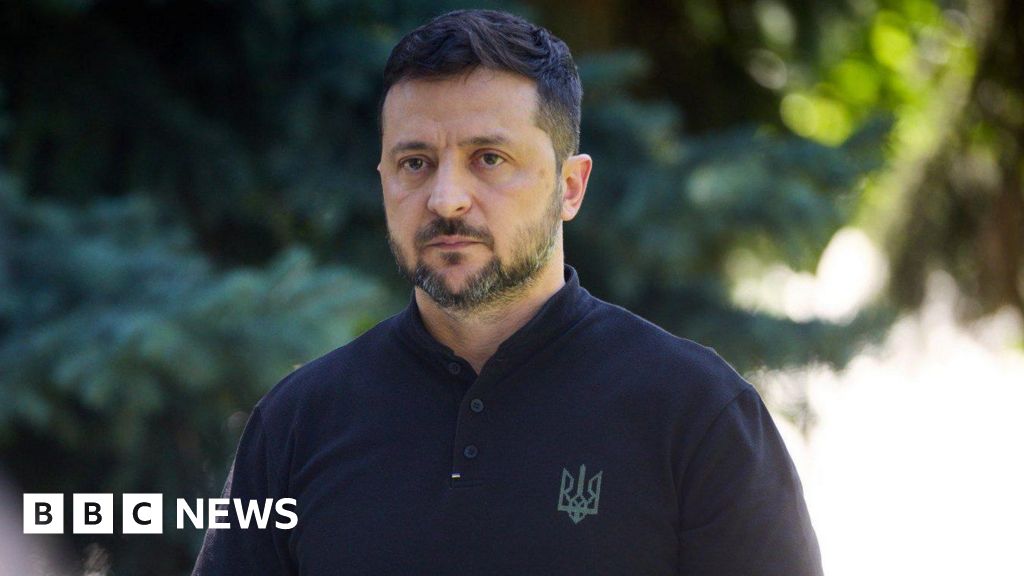
Zelensky’s Rejection of Buffer Zone Proposals: Understanding Modern Warfare Dynamics
Ukrainian President Volodymyr Zelensky has recently taken a firm stance against proposals for a buffer zone between Ukrainian and Russian forces as part of any potential peace deal. His rejection of the idea is rooted in a clear understanding of the complexities and realities of modern warfare, particularly in the context of advanced drone technology that has transformed conventional battlefields.
The Proposal and Its Context
Reports have suggested that European leaders were contemplating the establishment of a 40-kilometer (approximately 25-mile) buffer zone, aimed at creating a demilitarized strip of land in Ukraine. This proposal, backed by various military and civilian officials, echoes historical examples such as the Korean Demilitarized Zone and the Iron Curtain that once divided Europe.
However, Zelensky dismissed these ideas during a recent press briefing, argumentatively stating, “Only those who do not understand the technological state of today’s war propose a buffer zone.” His remarks highlight a crucial gap in understanding the evolving nature of warfare, where geography can be reshaped by technology.
The Impact of Drone Warfare
Zelensky pointed out that the conflict has increasingly been shaped by aerial warfare, particularly through the use of drones. He articulated that the front lines already function like a buffer zone because the threat posed by drone strikes inhibits the movement of heavy artillery within a certain distance. “Today, our heavy weapons are located at a distance of more than 10 km from each other, because everything is hit by drones,” he explained.
In this context, Zelensky referred to the areas on either side of the front line as a "dead zone" or "grey zone," where traditional military tactics are rendered ineffective. This understanding of drone warfare underscores the necessity of adapting strategies that reflect current technological realities, rather than relying on outdated methods of demarcation.
Territorial Implications and Diplomatic Stance
The implications of such a deal also raise concerns about territorial concessions. Zelensky firmly rejected the idea of Ukraine surrendering any land within the proposed buffer zone. “If Russia wants to have a greater distance from us, they can retreat deep into the temporarily occupied territories of Ukraine,” he stated. This reflects a staunch stance on sovereignty and territorial integrity, crucial elements for Ukraine amid ongoing hostilities.
Furthermore, Zelensky expressed skepticism regarding Russia’s willingness to engage in meaningful diplomacy. He suggested that the Kremlin is more focused on delaying an end to the conflict rather than genuinely pursuing peace.
The Diplomatic Landscape
The backdrop of these discussions is the broader, ongoing diplomatic efforts, notably led by the United States, to bring an end to the full-scale conflict, now in its 40th month. Recent high-profile meetings involving Zelensky, U.S. President Donald Trump, and European leaders briefly raised hopes for a summit between Zelensky and Russian President Vladimir Putin. However, those hopes appeared increasingly tenuous as German Chancellor Friedrich Merz and other leaders acknowledged Putin’s reluctance to engage.
In the early hours of a Thursday morning, an extensive missile and drone assault from Russia targeted Kyiv, resulting in significant civilian casualties and property damage. Such aggressive actions have escalated tensions and prompted strong condemnation from European leaders, highlighting the crumbling prospects for successful diplomatic negotiations.
Ongoing Efforts and Future Security Guarantees
To navigate this complex situation, European leaders are actively exploring how to provide Ukraine with security guarantees that could help in negotiations with Russia. Discussions on “Nato-like” commitments have emerged as a potential path to ensure Ukraine’s protection, illustrating the international community’s commitment to supporting Ukrainian sovereignty despite the hostile environment.
In a recent meeting in New York, Ukrainian chief of staff Andriy Yermak deliberated on peace moves with American officials. However, he acknowledged that every initiative put forth was being obstructed by Russia, further complicating the potential for a diplomatic resolution.
The Russian Perspective
Adding to the complexities, Russian foreign ministry spokeswoman Maria Zakharova critiqued Western proposals as “one-sided,” asserting that any security guarantees must reflect Russia’s interests. This perspective serves as a reminder of the multifaceted nature of international relations in conflict zones and the delicate balancing act required for substantive talks.
As diplomatic efforts continue to evolve, the stark realities of modern warfare, characterized by advanced technology and shifting military strategies, will undoubtedly dictate the terms and feasibility of any proposed peace agreements between Ukraine and Russia.