


The situation in Ukraine has become increasingly consequential as the conflict outstrips the bounds of conventional warfare. With the latest update from the General Staff of the Armed Forces of Ukraine, we have a clearer picture of the ongoing combat losses incurred by enemy forces from February 24, 2022, to August 30, 2025. The data sheds light on the severity of the situation and provides insights into the shifting dynamics of warfare in the region.
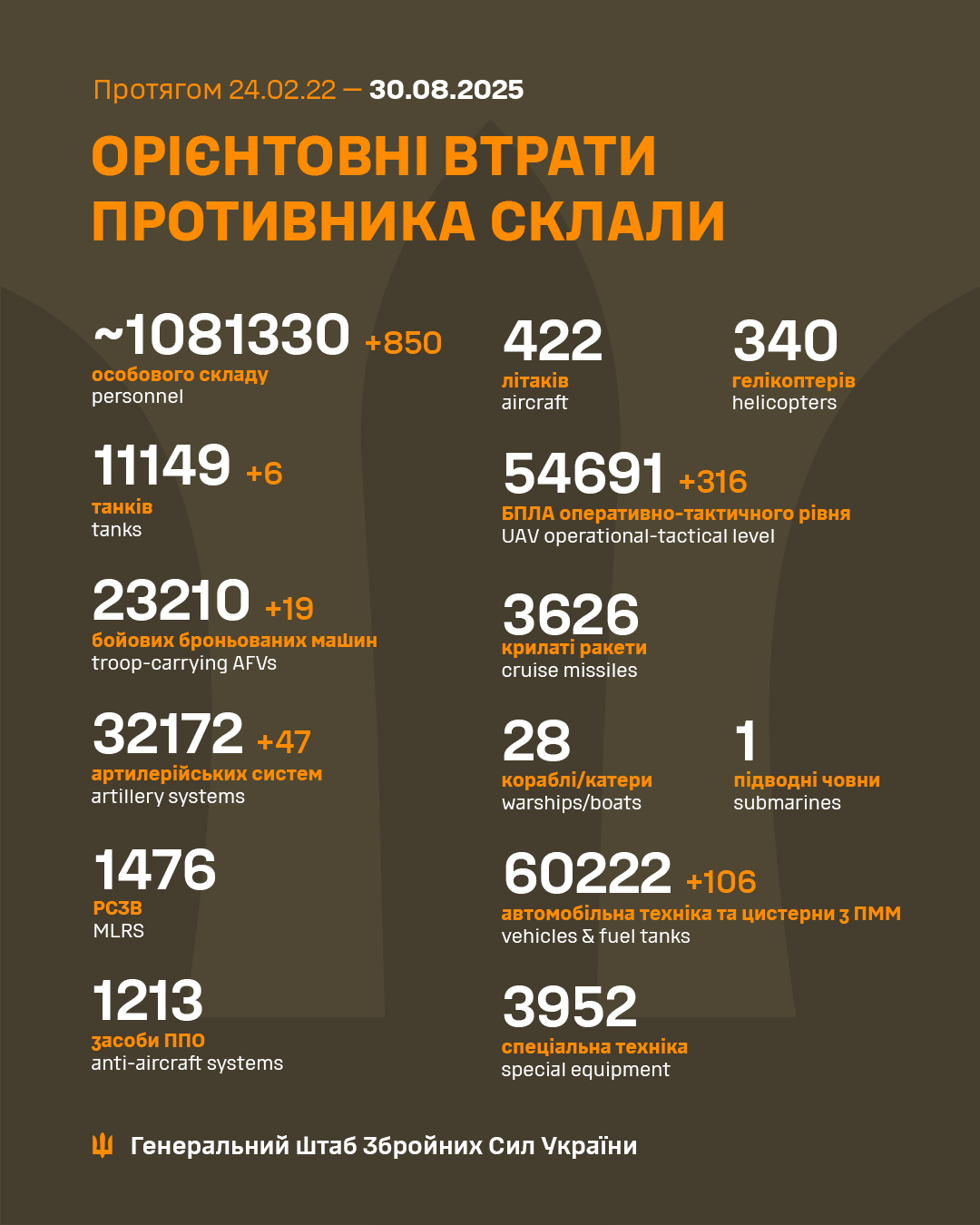
So far, the enemy’s combat losses are reported as follows:
- **Personnel:** 1,081,330 (+850)
- **Tanks:** 11,149 (+6 units)
- **Armored Personnel Vehicles (APV):** 23,210 (+19 units)
- **Artillery Systems:** 32,172 (+47 units)
- **Multiple Launch Rocket Systems (MLRS):** 1,476 (+0 units)
- **Anti-Aircraft Warfare Systems:** 1,213 (+0 units)
- **Aircraft:** 422 (+0 units)
- **Helicopters:** 340 (+0 units)
- **Operational-Tactical Level UAVs:** 54,691 (+316 units)
- **Cruise Missiles:** 3,626 (+1 unit)
- **Boats / Warships:** 28 (+0 units)
- **Submarines:** 1 (+0)
- **Special Equipment:** 3,952 (+0 units)
- **Vehicles and Fuel Tanks:** 60,222 (+106 units)
This comprehensive tally underscores the extensive toll the conflict has taken on the enemy’s resources, especially in personnel and critical equipment. Each figure encapsulates a story of strategic failures, tactical missteps, and the relentless pursuit of military objectives.
Read more:
Ukrainian FPV Drone Destroys Russian Msta-B Howitzer on the Lyman Front (Video)
Moreover, the progress in drone warfare is particularly noteworthy. With operational-tactical drones marking a significant uptick in their deployment (with 316 units reported), it’s clear that these aerial assets play a crucial role in both reconnaissance and direct engagement. The effectiveness of UAVs has transformed traditional combat strategies, allowing for precision strikes while minimizing risk to personnel on the ground.
Ukrainian Drone Giant TAF Industries Launches Kolibri 13 FR1 Relay UAV
Ongoing assessments indicate the need for intensified and consistent intelligence-gathering operations. As highlighted by various reports, disruptions to critical infrastructure—such as the recent targeting of railway hubs—are part of the broader strategy to cripple enemy supply lines and combat effectiveness.
Which Russian Naval Drone Could’ve Struck Ukraine’s Simferopol Ship and Potential Countermeasures
Read more:
Night Strike Blinds Russian S-400 in Temporarily Occupied Crimea (Video)
As the conflict evolves, it prompts reflections on the nature of modern warfare, where technology and intelligence are as crucial as brute strength. The implications of these losses extend beyond immediate battlefield outcomes, affecting the strategic landscape and long-term considerations for both sides in this multifaceted conflict.