


UK Flies Fighter Jets Over Poland: A Clear Warning Shot to Putin
In a bold move signaling commitment to European security, the United Kingdom has deployed fighter jets over Poland, marking a decisive stance against Russia’s increasingly aggressive military tactics. This deployment serves as a clear signal to Russian President Vladimir Putin and other world leaders that Western nations are prepared to defend NATO’s airspace against potential incursions.
NATO’s Response to Russian Provocations
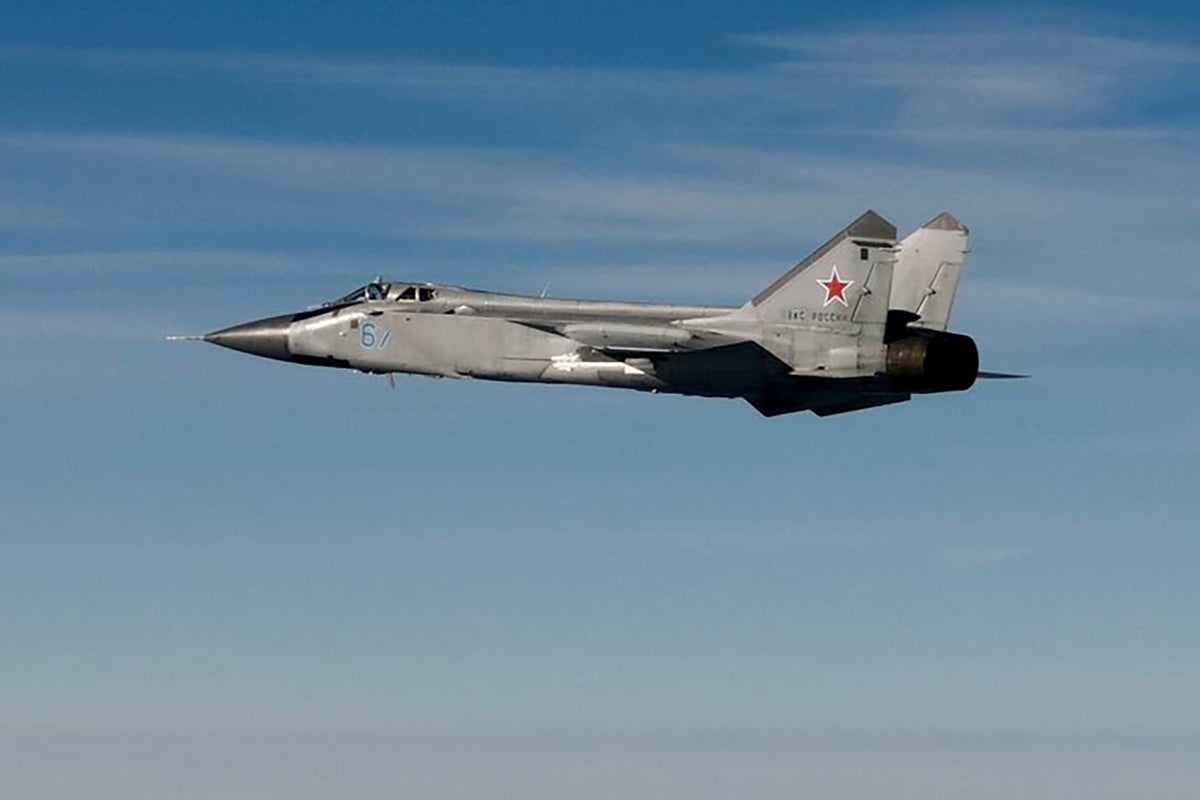
The recent surge in Russian military activities, including the unauthorised entry of Russian jets into Estonian airspace, has drawn widespread condemnation across NATO member states. In response to this provocation, the Royal Air Force (RAF) Typhoons participated in a NATO operation aimed at reinforcing the security of European airspace. Defense Secretary John Healey emphasized that the UK’s use of fighter planes sends a definitive message: “NATO airspace will be defended.”
This coordinated response from NATO allies reflects the growing concern over Russia’s maneuvers, which are being interpreted as tests of NATO’s resolve. The presence of RAF Typhoons over Poland is just one element of a broader strategy designed to deter future incursions and reassure member nations of their safety.
The Rising Tensions with Russia
The tension between NATO and Russia has escalated significantly since the onset of the Ukrainian conflict in 2022. As Russia continues to embroil itself in military action, including drone incursions into member states like Poland and Romania, the alliance’s unified response becomes increasingly critical. Kremlin spokesperson Dmitry Peskov has expressed that NATO’s backing of Ukraine equates to a direct conflict with Russia, reflecting Moscow’s perception of a direct threat.
Adding to the fire, Czech President Petr Pavel has suggested that NATO must be ready to intercept Russian jets if necessary. His statement underscores a potential shift in policy, advocating for a stronger military posture. “Russia will realize very quickly that they have made a mistake and crossed the acceptable boundaries,” he remarked.
The Article 4 and Article 5 Mechanisms
As tensions heighten, NATO’s foundational principles—articulated in Article 4 and Article 5 of the North Atlantic Treaty—are increasingly relevant. Article 4 allows member states to request consultations when their territorial integrity is threatened, which has been invoked recently due to the escalating situation in Estonian airspace.
Conversely, Article 5 establishes the principle of collective defense, stating that an armed attack against one member is considered an attack against all. While NATO has yet to activate this article in the current crisis, its looming presence serves as a potential deterrent against further aggression from Russia.
A Wider European Context
The implications of these military movements transcend immediate geopolitical boundaries. Events in Eastern Europe resonate not only within NATO circles but also across global political landscapes. With the UN General Assembly approaching, nations are preparing to discuss security guarantees and long-term commitments aimed at curbing Russian expansionism.
Ukrainian President Volodymyr Zelensky has actively engaged with world leaders to finalize essential security guarantees. His administration continues to advocate for stringent sanctions against Russia, emphasizing that any delays in peace negotiations must be met with firm consequences.
The Shadow Fleet Sanctions
Meanwhile, in a related offensive against Russian tactics, U.S. senators are advancing a bill aimed at disrupting Russia’s “shadow fleet.” This legislation seeks to impose sanctions on vessels supporting Russian military logistics, bolstering international efforts to counteract sanctions evasion tactics employed by Moscow.
Senator Jim Risch highlighted the importance of these sanctions, asserting that they are crucial for maintaining American and European security. The proposed bill delineates a set of indicators to identify potential sanctions violators, illustrating the multifaceted approach Western nations are taking in response to Russian hostilities.
Cultural Responses: The Intervision Contest
Interestingly, the conflict has also spurred cultural responses. Recently, Vietnam won the Intervision song contest, a competition created by Russia as a counterpoint to Eurovision. This event has been criticized as a tool of geopolitical propaganda, further complicating Europe’s already fraught cultural landscape in the context of the ongoing conflict.
The Global Dialogue Continues
As the situation evolves, global dialogue remains vital. International leaders, including those in the U.S. and Europe, are continuously reassessing their strategies as they respond to Russia’s provocations. The impending discussions at the UN and NATO’s forthcoming consultations will be critical in charting the course of Europe’s security landscape in the face of escalating tensions.