


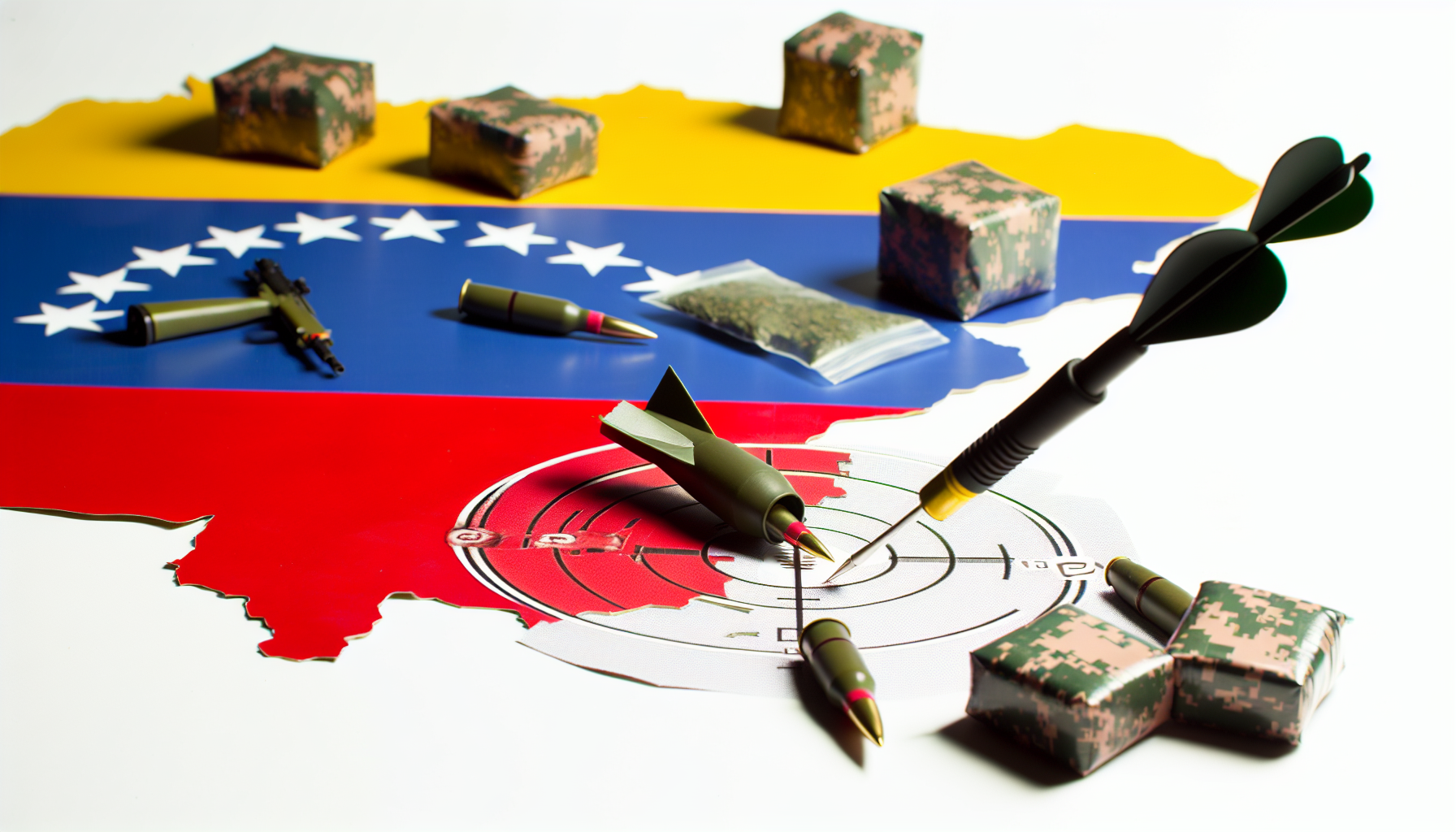
U.S. Intelligence Targets Venezuelan Military in Drug Trafficking Crackdown
The Wall Street Journal reported on October 30, 2025, that U.S. intelligence agencies have pinpointed several military-controlled sites in Venezuela allegedly linked to international drug trafficking operations. This development signals a potential military strike plan awaiting President Donald Trump’s approval, reflecting a significant hardening of the U.S. stance towards Nicolás Maduro’s regime.
Intelligence Findings and Implications
U.S. officials have confirmed the existence of military installations suspected of facilitating drug shipments, including naval bases, covert airstrips, and ports. These facilities are reportedly utilized for smuggling narcotics to the Caribbean and Central America. Anonymity was granted to officials sharing this information, highlighting the sensitive nature of the impending military strategy and the shift in U.S. tactics regarding the Maduro administration.
A Shift in U.S. Military Strategy
The identification of these sites marks a dramatic escalation in how the United States approaches counter-narcotics efforts. Historically, U.S. missions have involved intercepting drug vessels in international waters. However, military strikes on Venezuelan soil would represent the first offensive air campaign in Latin America by the U.S. in decades, dramatically raising the stakes in an already tense situation.
U.S. Military Posturing
In preparation for potential military action, the Pentagon has intensified aerial maneuvers in the Caribbean. Over the last two weeks, U.S. Air Force B-52 and B-1B bombers have conducted long-range flights near Venezuela, ostensibly to assess the country’s air defense capabilities. For instance, a recent flight saw two B-1Bs operating for approximately 30 minutes between Venezuela’s mainland and nearby islands, showcasing increased U.S. military presence in the region.
Covert Operations by the CIA
In an unusual public declaration, President Trump acknowledged the authorization of the Central Intelligence Agency (CIA) to undertake secret operations within Venezuela. Although details remain classified, reports suggest that these operations include both surveillance and pre-strike targeting to support broader military initiatives against Maduro’s government.
Targeting Strategy and Legal Considerations
The operational framework being developed focuses on precision strikes against Venezuelan military facilities, which are alleged to be part of a narcotics trafficking network. U.S. defense officials describe these sites as “logistical nerve centers” for drug smuggling, raising concerns about the legal ramifications of targeting military installations of a sovereign nation. Pentagon lawyers are currently evaluating the legality of these actions under U.S. law and international guidelines, including the War Powers Resolution and the United Nations Charter.
Venezuelan Military Response
In response to these developments, Venezuela has ramped up its military readiness. Reports indicate the redeployment of mobile radar systems and the repositioning of air defense assets along the coast. Open-source intelligence has revealed that Caracas has activated older Soviet-era missile systems, including the S-125 Pechora and the Buk, anticipating possible air engagements.
Technical Challenges for the U.S. Military
Any U.S. military operations would likely require stealth-capable platforms or standoff munitions to avoid detection and engagement by Venezuelan air defenses. The B-1B, although not classified as stealth, can deploy precision-guided munitions such as the AGM-158 Joint Air-to-Surface Standoff Missile, allowing strikes without penetrating the most heavily defended airspace.
Political Underpinnings for Military Action
The Trump administration’s increasing impatience with Maduro’s government, coupled with growing domestic concerns over the U.S. fentanyl and cocaine crisis, is contributing to the push for military action. By framing the Venezuelan military’s drug trafficking activities as a direct threat to the American homeland, the current administration appears to be aligning counter-narcotics operations with a broader regime-change strategy.
Phased Military Escalation
Defense analysts suggest that the White House is considering a phased approach to military escalation—beginning with symbolic strikes against less defended facilities and potentially escalating to significant strikes against Venezuela’s infrastructure if Maduro does not alter his course. Some military insiders have referred to this strategy as “shock therapy,” aimed at dismantling the alliances between the Venezuelan military and drug cartels.
Regional Alertness and Coordination
As tensions mount, both U.S. Southern Command and Venezuelan security forces have heightened their alert levels. The region is bracing for the ramifications as the United States and its allies, including Colombia, navigate the complex landscape of military preparedness and diplomatic dialogue. The forthcoming weeks may reveal whether the U.S. is willing to engage in a military campaign against a sovereign nation under the banner of counter-narcotics efforts.
As the situation continues to evolve across diplomatic, military, and intelligence fronts, Army Recognition will provide ongoing updates.
Author Bio
Alain Servaes is the Chief Editor of Army Recognition Group and has over 20 years of experience in defense journalism. A former infantry non-commissioned officer, he delivers expert analysis on military equipment, NATO operations, and the global defense industry.