


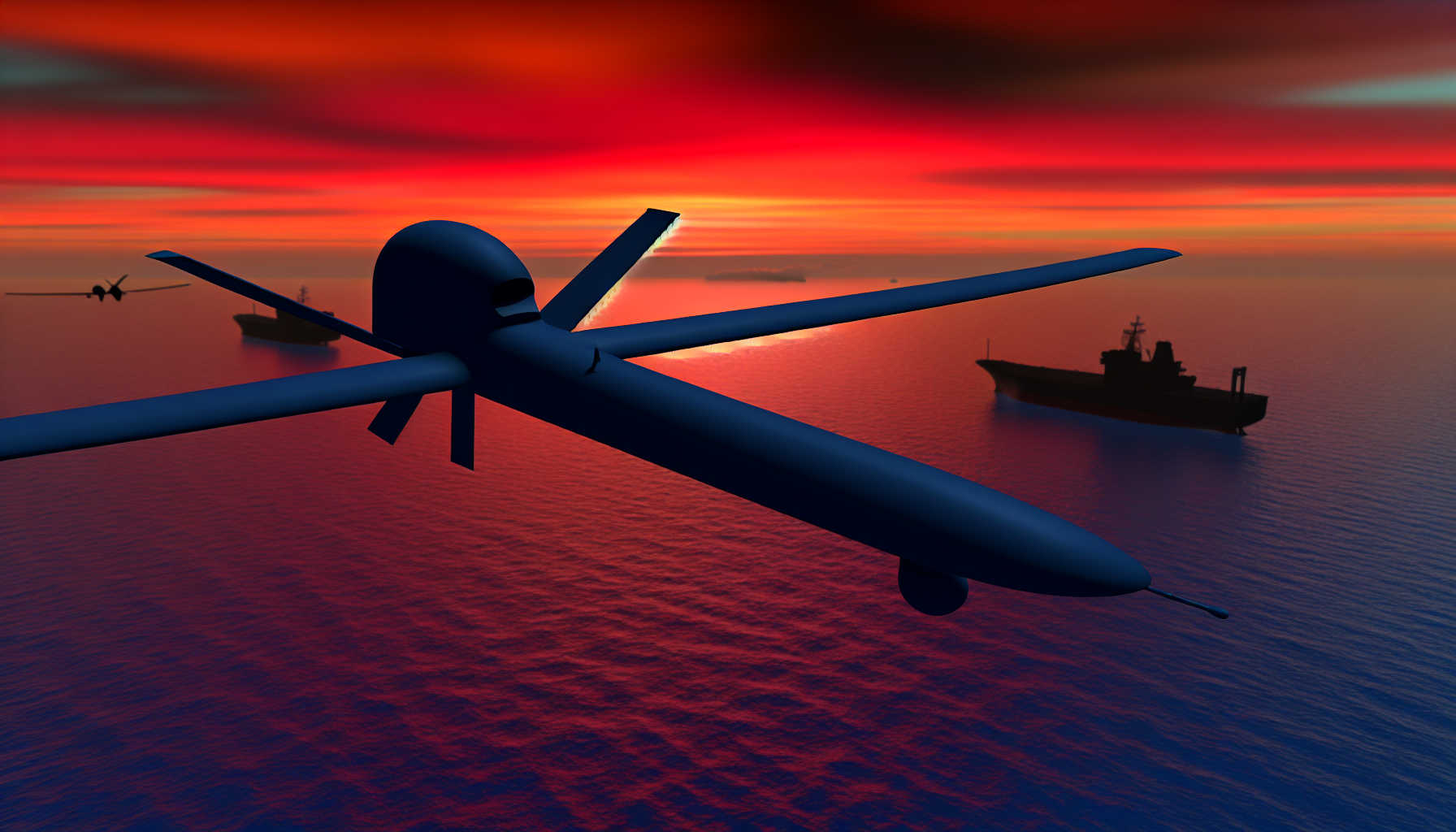
The Impact of Drones and Quantum Sensors on Modern Warfare: A Transformation in Strategy
Introduction
The emergence of drones and quantum sensors marks a profound transformation in warfare, with the ongoing conflict in Ukraine serving as a pivotal example. As the world’s military strategies evolve, nations like Australia find themselves questioning the viability of traditional defense investments, such as the AUKUS submarine program. The landscape of modern warfare is shifting—drones are no longer simply tools of reconnaissance but revolutionizing the entire battlefield.
The War in Ukraine: A Drone Era
The Russian-Ukrainian war is becoming widely known as the first great drone war. Here, the skies are dominated by a variety of unmanned aerial vehicles (UAVs), including kamikaze drones, reconnaissance platforms, and surveillance swarms. These affordable, adaptable drones are reshaping the dynamics of combat, ensuring that movement on the ground is constantly observable and scrutinized.
Ukrainian and Russian soldiers face a “kill zone,” a term reflecting the heightened risks associated with movement in an environment where drones have become omnipresent. Such advancements have created a battlefield that operates under a network of watchful eyes, complicating traditional forms of military maneuvers.
The Collapse of Traditional Advantages
Historically, warfare heavily relied on heavy armor, artillery, and troop formations. However, drones have dramatically altered this paradigm. The high cost of traditional warfare becomes irrelevant when low-cost drones can pinpoint and neutralize larger, more expensive targets with alarming accuracy. Armored tanks and mechanized units, once symbols of military prowess, are now sitting ducks for these agile machines.
Consequently, military tactics are forced to adapt. Commanders are dispersing troops, concealing equipment, and forming smaller, drone-enabled units to counteract the continuous aerial surveillance. The operational landscape is no longer dominated by the might of large formations but rather by the strategic use of UAVs.
The Fluid Nature of Modern Front Lines
The front lines in Ukraine are no longer static; they are fluid, resembling an aerial chess match. Troops on either side probe and redeploy under the constant gaze of various drone systems. Each move on the ground is meticulously countered by aerial intelligence, transforming traditional combat into a real-time interactive environment.
First-person-view (FPV) drones act not just as reconnaissance tools but also as flying grenades, profoundly changing the stakes of ground battles. Meanwhile, larger UAVs coordinate operations, emphasizing the need for real-time intelligence that blurs the boundaries between observation and engagement.
The Imperative of Electronic Warfare
Electronic warfare (EW) has become a cornerstone in this rapidly evolving landscape. Both Ukrainian and Russian forces engage in a constant struggle for air superiority, relying on jamming, spoofing, and hijacking enemy drones. Modern soldiers now equip themselves with portable jammers as essential tools of survival, signaling a shift in how military personnel view technology in their arsenals.
Ethical and Strategic Fog
The introduction of semi-autonomous kamikaze drones raises significant moral and legal questions. Who takes responsibility for a decision made by an algorithm that misidentifies a target? The lines between lawful engagement and harmful collateral damage blur with each technological advancement.
Beyond ethics, more pressing questions arise for nations like Australia. As drone technology becomes the leading edge of warfare, investing billions in stealth technologies, such as submarines, may lead to misaligned military strategies. What happens when the overarching principle of invisibility becomes obsolete?
AUKUS: Challenges of Modern Defense
Australia’s AUKUS partnership places an emphasis on subaquatic dominance, primarily focusing on nuclear-powered submarines that are designed to operate without detection. However, advancements in quantum sensing and drone technology threaten to undermine these stealth capabilities.
High-altitude, satellite-linked drones are already equipped with sophisticated sensors capable of identifying minute changes in underwater environments, such as heat signatures or wake patterns left by submarines. The investment by major powers—like China and the U.S.—in quantum radar capable of detecting even the smallest fluctuations only underscores the urgency for reassessment.
The staggering projected costs for Australia’s nuclear submarine fleet, ranging from $268 billion to $368 billion over three decades, pose a pressing question: What if technology outpaces this investment, rendering these platforms inefficient by the time they are operational?
Understanding the Strategic Trap
Ukraine’s experience in this new form of warfare contributes an important lesson: the rapid pace at which technology can disrupt power dynamics. What is considered advanced today might quickly become obsolete. Drones have lowered the barrier of entry into effective warfare, making it less about size and strength and more about agility and technology.
In contrast, AUKUS could bind Australia to capital-heavy projects that may face strategic irrelevance in the coming decades. As focus remains on traditional submarines, innovations in autonomous systems, drone networks, electronic warfare, and cyber resilience fight for attention—areas where small but smart advancements hold significant value.
A Call for Agility
Australia could benefit from approaching defense investments with greater flexibility. Instead of tying its future to a solid hardware commitment, the focus could pivot toward rapidly deployable technologies such as unmanned underwater vehicles and autonomous surface drones.
With security threats likely originating closer to its geographic region, rapid advancements in drone warfare, electronic interference, and cyber disruptions are far more relevant than potential nuclear confrontations in distant geographies. Investing in scalable technologies will facilitate a balanced defense posture aligned with immediate security challenges.
The Future of Warfare
The ongoing drone conflict in Ukraine sends a resounding message: the age of invisibility in warfare is rapidly approaching its end. Every military force now operates under the omnipresent gaze of drones and advanced quantum sensors, transforming the rules of engagement.
If Australia’s AUKUS partnership continues to adhere to an outdated doctrine of stealth, it risks becoming the world’s most expensive target rather than a formidable deterrent. In this new era, warfare will belong to the networks that are small yet sophisticated—drones, satellites, and quantum technologies are rewriting military strategies at a pace that demands immediate attention.