


The Humanitarian Crisis in Sudan: A Deepening Catastrophe
Sudan’s civil war has now stretched into its third year, characterized by relentless violence and rising humanitarian crises. The conflict has transitioned from political strife to an outright assault on civilians, with massive casualties, displacement, and a severe food crisis. The paramilitary group Rapid Support Forces (RSF) are increasingly at the forefront of this chaos, turning what was once a struggle for democracy into a nightmare for millions.
Recent Atrocities: Casualties and Conflict
On November 3, 2025, the city of el-Obeid in North Kordofan province was struck by a drone attack during a funeral service, which resulted in at least 40 civilian deaths and numerous injuries. This attack, attributed to the RSF, is indicative of the paramilitary group’s brazen tactics as they expand their control into government-held areas. The situation in Kordofan, now labeled as an escalating crisis by the United Nations Office for the Coordination of Humanitarian Affairs (OCHA), illustrates the desperate need for immediate ceasefire and adherence to international humanitarian law. The cycle of violence shows no signs of abating, leaving civilians caught in the crossfire.
The Fall of el-Fasher: A Strategic Takeover
Just days before the attack in el-Obeid, the RSF captured the strategic city of el-Fasher, the capital of North Darfur, after a prolonged 18-month siege. This takeover was nothing short of catastrophic, resulting in the deaths of over 450 individuals within a single hospital. Eyewitness accounts describe how RSF fighters executed civilians room by room, while others faced sexual assaults during the chaotic takeover. The targeted killing of medical professionals, such as Dr. Adam Ibrahim Ismail, underscores the dire circumstances faced by those attempting to provide care amid ongoing violence.
Grievous Evidence of Atrocities: Mass Graves and Satellite Imagery
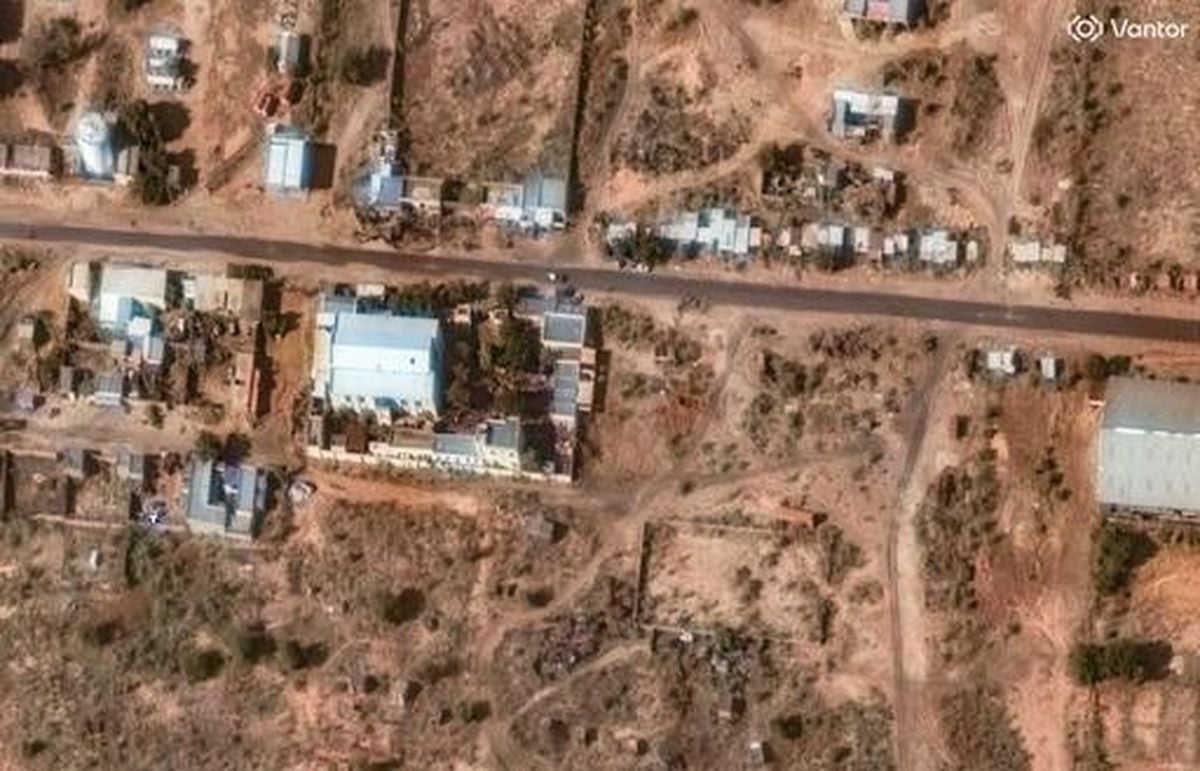
Recent satellite imagery has revealed chilling evidence of the violence’s aftermath, showing mass graves being dug in el-Fasher. Analysts from the Yale School of Public Health’s Humanitarian Research Lab, in collaboration with the Associated Press, have pinpointed locations where bodies are buried, situated near a mosque and a repurposed children’s hospital. These images tell a harrowing story of death and despair, highlighting the urgent need for independent investigations, which are severely hindered by ongoing conflict and restricted access.
As the world grapples with the scale of these atrocities, the RSF maintains its denial of responsibility for the killings at the Saudi hospital, despite mounting video evidence showing fighters executing unarmed prisoners. Accountability remains elusive, even as the RSF claims to have detained individuals seen committing these crimes.
A Broader Conflict: The Magnitude of the Humanitarian Disaster
The violence extends far beyond the boundaries of Kordofan and Darfur. A conflict ignited by a power struggle between the RSF and the Sudanese Armed Forces (SAF) in April 2023 has taken the lives of at least 40,000 people, with humanitarian organizations warning the true toll may be significantly higher. More than 14 million people have been internally displaced as a result of the conflict, with towns like Bara recently experiencing further attacks.
This ongoing war has exacerbated a humanitarian disaster, plunging over 24 million Sudanese into acute food insecurity. The World Food Program has raised alarms about famine conditions looming in el-Fasher and Kadugli, with reports of severe malnutrition and fatalities tied directly to the violence. Many families are left without food for days, compounding the misery of those caught in a rapidly descending spiral of deprivation and disease.
The Strained Response and Urgency for Action
With the RSF’s grip tightening over vast swathes of Sudan, the United Nations has classified the crisis as the world’s largest humanitarian disaster. Over 12 million people have been displaced, with thousands fleeing el-Fasher after the RSF’s takeover. Amidst the chaos, the Sudanese Defence Minister has announced a continued military engagement against the RSF, juxtaposing ongoing discussions for a possible ceasefire backed by the United States. For civilians trapped between fighting factions, such declarations offer little reprieve or hope.
The Continual Cycle of Violence and Suffering
With grim predictions on the horizon and the ongoing suffering of civilians, the humanitarian tragedy in Sudan continues to unfold. As the world looks on, calls for peace, protection, and accountability grow louder but remain unmet. The vast scale of suffering paints a stark picture of a nation embroiled in one of the most significant humanitarian crises of the 21st century, leaving uncertainty, fear, and desperation in its wake.