


The Future of Military Technology: Integrating Anduril’s Lattice System into the Army’s Command Control

The Integrated Battle Command System (IBCS) is taking a significant leap forward with the recent integration of Anduril’s Lattice anti-drone software. This innovative application stands poised to revolutionize how the Army addresses the growing threat posed by drone warfare. During a missile flight test at Redstone Arsenal, Alabama, on July 1, 2025, the Lattice system was showcased as a crucial component of the IBCS infrastructure.
Lattice has been designed specifically to counter unmanned aerial systems (UAS) and is considered a cornerstone of the Army’s efforts to modernize and maintain an adaptive approach to warfare. Alex Miller, the Army’s chief technology officer, emphasized the need for flexibility in countering drone threats. He stated, “We can’t think of counter-unmanned aerial systems as static or in the same vein as counter ballistic missile defense. It has to be maneuverable, which means it has to be software-centric and adaptable above all else.”
Leveraging Artificial Intelligence for Threat Detection
At the heart of the Lattice software is its ability to harness data-driven insights to detect and track drone targets effectively. The integration of artificial intelligence allows the system to prioritize threats and seamlessly coordinate responses using existing military assets like the Patriot surface-to-air missile system. This capability indicates a significant shift in how the Army approaches air defense, marking a move towards more dynamic and responsive command systems.
Supporting Tactical Maneuverability
The Army’s decision to adopt Lattice stems from a desire to empower platoon leaders operating in the field. The envisioned operational landscape features a vast network of small sensors strategically placed across various military vehicles. This setup is designed to ensure swift information flow and operational efficiency, allowing soldiers to respond rapidly to evolving threats on the battlefield.
The Engagement Operation Center

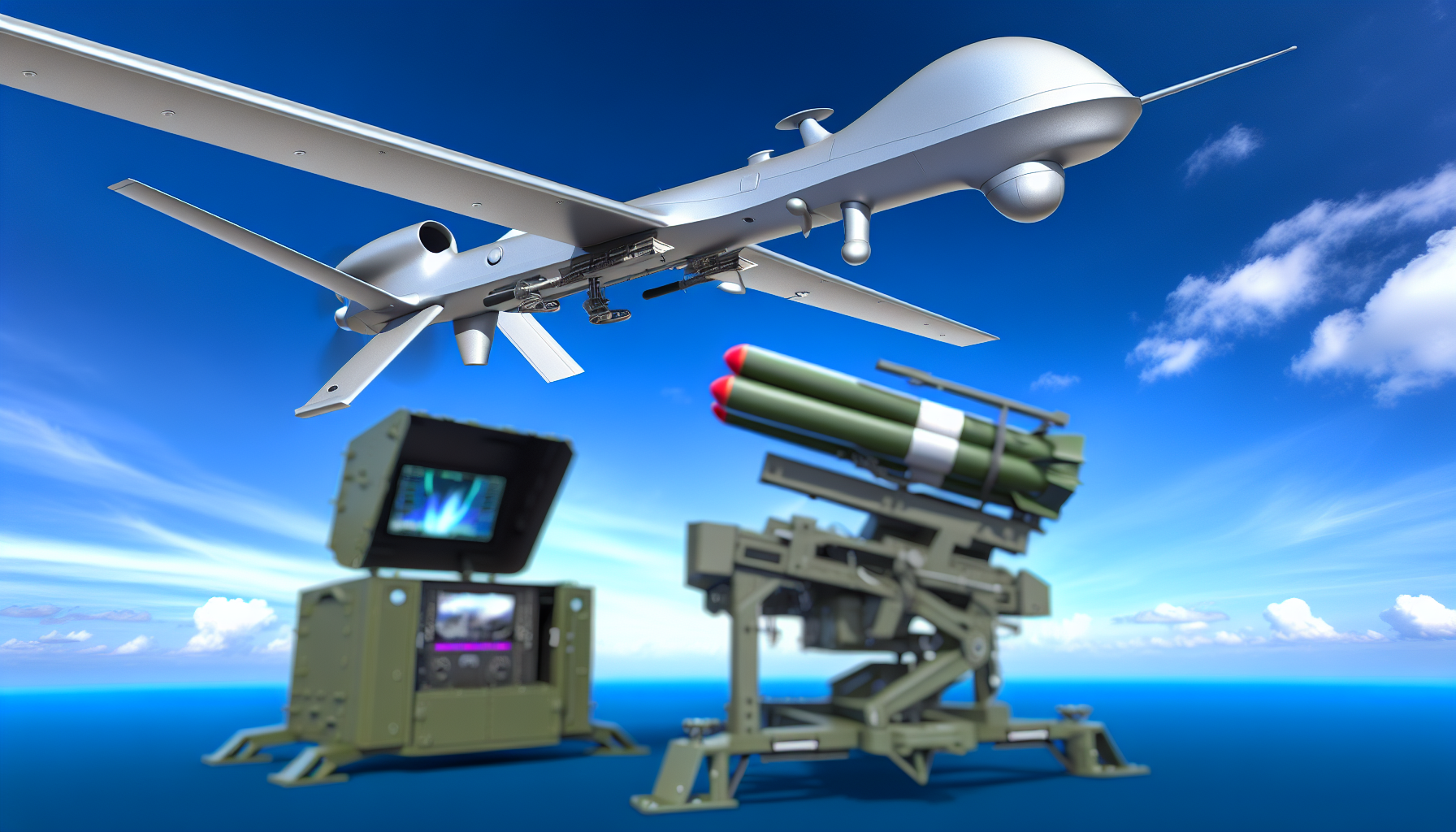
The engagement operation center serves as the primary data processing and communication hub within the IBCS framework. Illustrated during a missile flight test on July 2, 2025, this center underpins the operational capabilities of IBCS, reinforcing the system’s significance in modern military engagements. As it coordinates efforts, the center offers commanders real-time insights, bolstering decision-making processes during critical missions.
Earlier this year, the 5th Battalion, 7th Air Defense Artillery Regiment marked its place in history as the first operational U.S. Patriot missile battalion to field the IBCS. Based in Baumholder, Germany, this battalion plays a pivotal role in demonstrating the practical applications of the technology.
A Global Strategy: Allies and Collaborations
The IBCS is not just a U.S. initiative. Poland’s military also fields the system, highlighting its importance as a mobile command and control center equipped with monitors and workstations for monitoring enemy movements in real-time. With plans for deployment across allies in Europe and the Indo-Pacific, the IBCS stands as a testament to collective defense strategies and modern warfare tactics.
Streamlined Threat Management
Lattice’s design is particularly notable for its capacity to enable a single soldier to manage multiple threats simultaneously. This efficiency reduces the response time required to identify and counter drone incursions, which is essential in high-pressure combat scenarios.
Adding to its versatility, Lattice supports the operational functionalities of Anduril’s Ghost-X reconnaissance drone, which has gained traction across various military exercises throughout the year.
Proven Effectiveness Through Testing
Lattice’s development and capabilities have been rigorously tested, ensuring its reliability in active-duty scenarios. Recent trials at the Yuma Proving Ground in Arizona demonstrated the software’s robustness, successfully integrating a new sensor within hours and intercepting four out of four drone targets during the testing phase. This impressive performance underscores Lattice as a reliable asset in the Army’s arsenal against aerial threats.
As the battlefield continues to evolve with new technologies and strategies, the integration of systems like Lattice into the IBCS symbolizes a proactive stance against contemporary challenges. By harnessing artificial intelligence and fostering adaptability, the Army is not just preparing for the future; it is re-shaping it.