


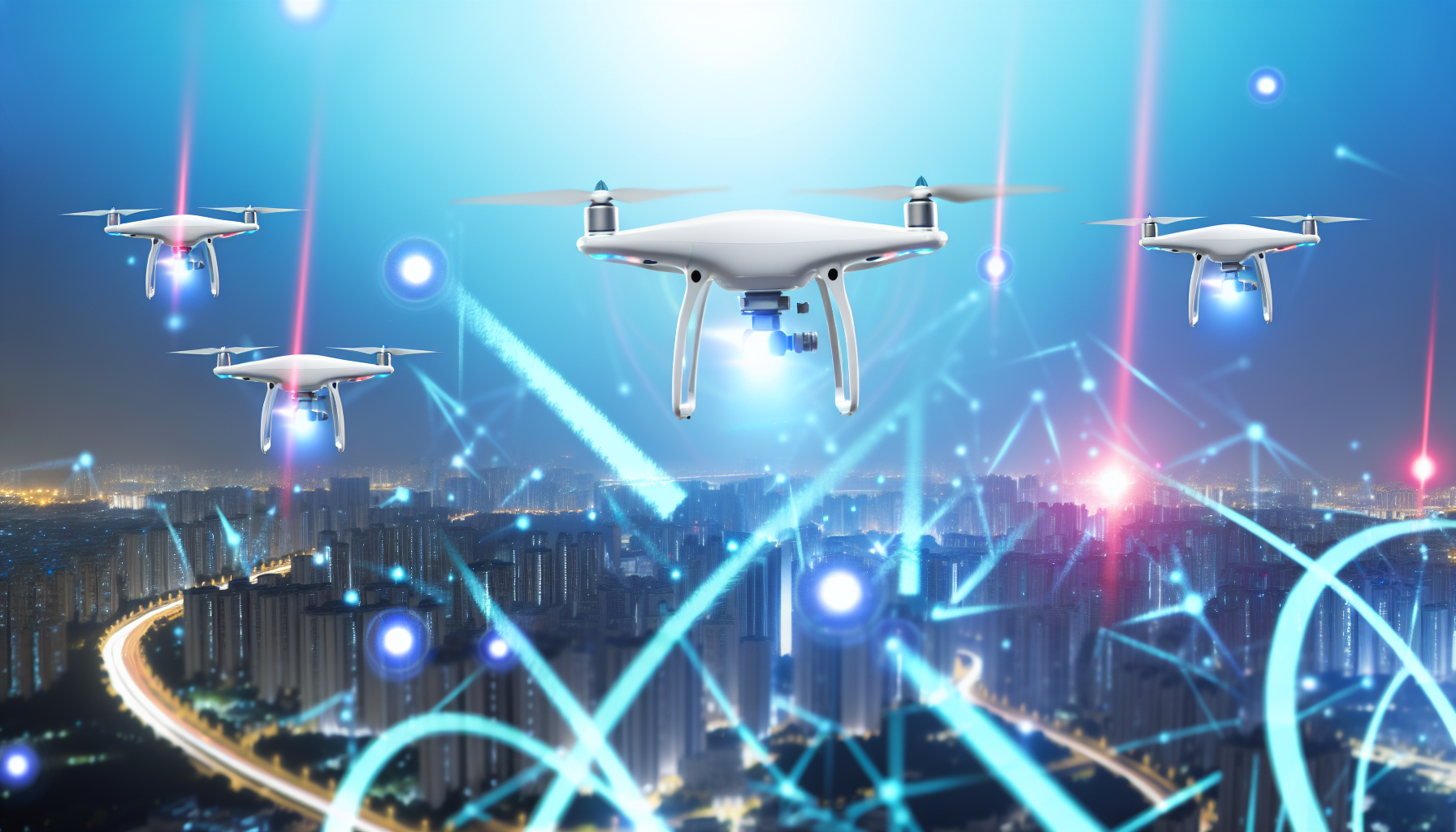
Autonomous C-UAS: Why Autonomy is Key to Eradicating the Most Sophisticated Drone Threats
by Nolan Bowlus, Vice President of Business Development at AimLock
The conflict in Ukraine has ushered in a new era of warfare, showcasing the advanced capabilities of drones and the critical role of technologies like artificial intelligence (AI) and machine learning (ML). Drones are evolving rapidly, becoming faster and more sophisticated, with the capacity to carry larger payloads and execute complex missions. Observing this shift highlights the urgent need for defense leaders to rethink strategies—not just for the current drone threats but also for those emerging on the horizon.
The Evolution of Drone Tactics
In Ukraine, tactics are evolving swiftly as forces engage in combined-arms assaults—a notable development that marries drones with ground robots. The introduction of AI-driven threats, drone swarms, and asymmetric warfare tactics clearly indicates that traditional countermeasures are failing to keep pace. As Ukrainian forces have shown, the modern battlefield demands a new approach that combines multi-sensor capabilities and AI. Autonomous counter-unmanned aerial systems (C-UAS) are now essential for maintaining operational security and protecting deployed troops—much like the Active Protection Systems (APS) already used in larger armored vehicles.
The Need for Multi-Sensor Integration
Drones in the Ukraine conflict are deployed for diverse roles—surveillance, reconnaissance, and kamikaze attacks. The rapid evolution in drone technology requires a rethinking of defense systems; relying on single-sensor approaches no longer suffices. Deploying a variety of sensors—acoustic, radar, radio frequency (RF), thermal, and optical—will result in more robust defensive networks.
The increase in simple, one-way drone attacks puts significant pressure on current defense mechanisms. To manage the growing threat, it’s imperative that military forces adopt systems that not only leverage multi-sensor input but also incorporate AI for optical precision targeting and autonomous engagement. An AI-enabled system can facilitate rapid target recognition, allowing for a prompt response to incoming threats.
Autonomous Systems for Safety
As we delve deeper into this evolving battlefield scenario, the importance of autonomy in military technology becomes all the more pronounced. For decades, discussions around military autonomy have been fraught with apprehension. However, in the face of low-cost drones equipped with explosives that can be launched from considerable distances, the need for systems capable of early detection and autonomous targeting is critical.
Early threat detection is pivotal. The sooner a threat can be identified, the easier it is for human operators to react. As autonomous systems absorb the data and process it, humans can focus on authorizing engagements, ensuring a more streamlined operational response. C-UAS systems must rapidly detect and categorize drones, enabling them to track and engage threats without human intervention. This automation is not just beneficial; it’s necessary for ensuring the safety of military personnel on the ground.
Strategic Advantages of Integrated C-UAS Systems
Fully integrated C-UAS systems present a strategic advantage by enabling operators to disrupt, degrade, and delay enemy drone attacks. Through enhanced computer vision and AI methodologies, these systems improve situational awareness and offer timely warnings of approaching UAVs. Employing a multi-sensor strategy allows for a layered detection mechanism—initial detection via radar, closer identification using optical systems, and finally engagement as threats come within range.
As the conflict in Ukraine demonstrates, the trend toward one-way drone attacks is not only growing but will likely continue. The challenges posed by inexpensive but deadly drones necessitate a reevaluation of existing defense protocols that currently lack the capability and interoperability required for the modern battlefield.
Staying Ahead with Cost-effective Solutions
In this context, autonomous C-UAS, equipped with a multi-sensor approach and powered by advanced AI algorithms, can offer a cost-efficient means of enhancing situational awareness and keeping up with the evolving threats faced by military forces. Investing in such technologies now can yield substantial future dividends in operational effectiveness and troop safety.
Autonomous systems are not just a futuristic upgrade; they represent a necessary evolution in military defense strategies, especially in light of the significant challenges presented by advanced UAV threats on today’s battlefield.