


U.S. Army’s Innovative Drone Defense Exercise with NATO Allies
A New Era in Air Defense
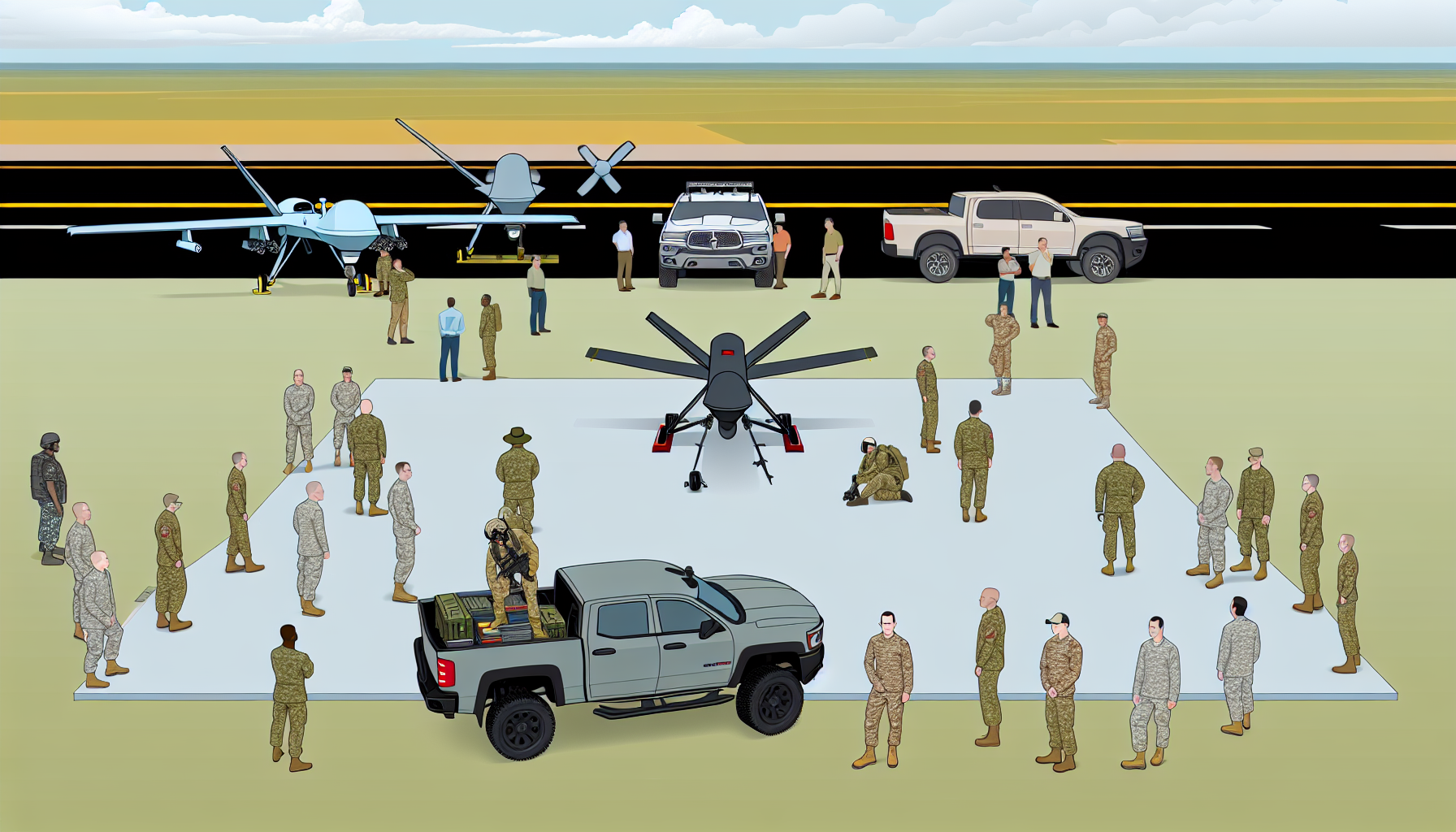
In a striking demonstration of modern military capabilities, a recent U.S. Army exercise showcased a cutting-edge approach to counter drone threats. Conducted in collaboration with NATO allies, soldiers from the 1st Battalion, 57th Air Defense Artillery Regiment undertook a live-fire drill at the Nowa Dęba Training Area in Poland. This exercise highlighted the effective use of interceptor drones launched from pickup trucks to neutralize incoming threats, illustrating a significant leap in the versatility and efficiency of military operations.
Training and Preparation
The exercise followed a comprehensive two-week training program that equipped soldiers with the necessary skills to operate these small Unmanned Aerial Systems (UAS). This intensive course encompassed classroom instruction, simulation exercises, and hands-on drills. Soldiers learned the intricacies of launching and controlling the interceptor drones, ensuring they were prepared to address real-world scenarios involving hostile aerial vehicles.
Mobile and Effective Defense System
The interceptor drone system forms a kinetic strike component, relying heavily on advanced electro-optical sensors and radar for threat detection. This mobile defense system is designed for quick deployment, allowing military units to effectively respond to drone incursions. The compact system can be easily packed into light tactical vehicles or set up in the back of a truck, facilitating rapid assembly and operational readiness with only a four-person crew.
Live-fire Demonstrations
During the exercise, soldiers successfully deployed interceptor drones to intercept and destroy incoming small UAS. Impressively, they were able to recover these drones using parachutes, enabling them for potential reuse in future drills. While these drones can be recovered, they are primarily developed as expendable munitions—exceptionally effective against one-way attack drones, often referred to as “suicide drones.” Their capabilities have already seen practical applications in conflict zones such as Ukraine, further validating their design and functionality.
Cost-Effectiveness and Lethality
“The interceptor drone system is very lethal and very effective, but perhaps most importantly, it is also cost-effective,” Brig. Gen. Curtis King, commanding general of the 10th Army Air and Missile Defense Command, stated. He emphasized that this technology represents some of the latest advancements actively utilized in contemporary combat scenarios, particularly in the ongoing situation in Ukraine. The balance of cost and effectiveness is crucial in modern warfare, allowing military forces to maximize their operational capabilities while minimizing expenses.
Supporting NATO’s Operational Readiness
This joint exercise aligns with NATO’s Operation Eastern Sentry, a strategic initiative aimed at fortifying the alliance’s presence along its eastern flank. Given the heightened tensions and recent incursions involving drone technologies, this operation underscores the importance of enhancing air defenses for NATO countries in Eastern Europe. The collaborative exercise serves as a testament to the alliance’s commitment to addressing modern threats while reinforcing cooperative defense measures against common adversaries.
A Glimpse into the Future of Air Defense
As military operations continue to evolve, the integration of drone technology into defense strategies is becoming increasingly apparent. The U.S. Army’s recent exercise with NATO allies in Poland underscores not only a commitment to readiness but also showcases innovation in air defense mechanisms. The use of mobile interceptor drones symbolizes a significant pivot in military strategy, blending technology with tactical precision to meet the challenges of contemporary warfare head-on.