


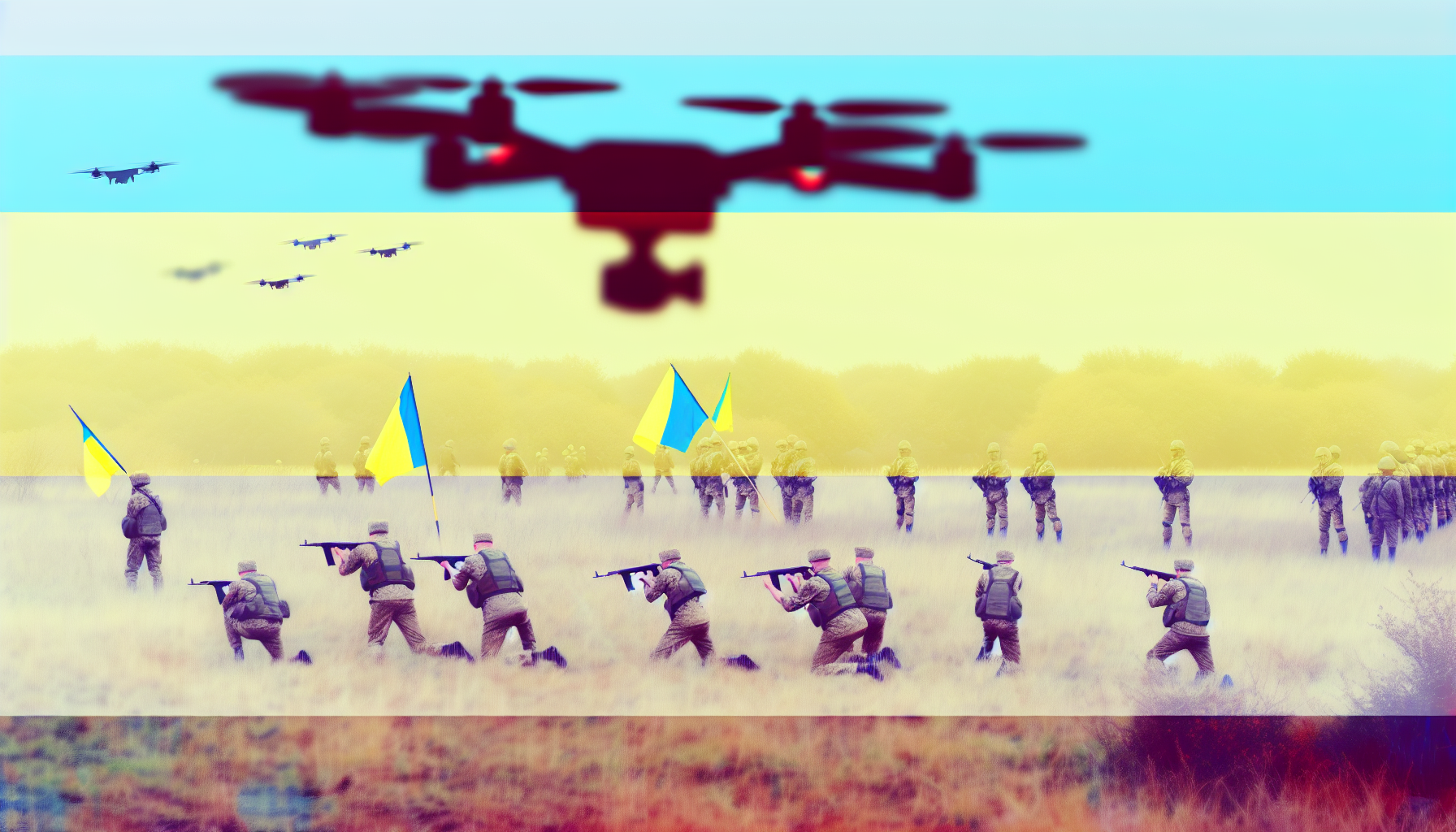
Like Sitting Ducks: Ukraine Warns Polish Instructors Don’t Get Drone Warfare
As the battlefield evolves, so too must the training that prepares soldiers for modern combat. Recent conversations with Ukrainian soldiers who trained in Poland reveal a troubling disconnect between NATO-style military education and the harsh realities of warfare today, particularly concerning drone use. These troops have openly questioned whether the training courses reflect the complexities they face on the front lines.
Training vs. Battlefield Reality
Ukrainian soldiers have expressed their concerns to BBC-Ukraine, highlighting a critical issue: the training they received often seems outdated and irrelevant. In scenarios taught by Polish and Czech instructors, the lessons often overlook pivotal modern aspects of warfare, such as drone warfare. Many soldiers returning from intense combat experiences have found that the training received does not adequately prepare them for the realities they face on the ground.
During their combat operations, such as those in Krynki where they endured constant UAV surveillance, these soldiers have realized that traditional tactics are increasingly ineffective. The reliance on slow amphibious armored personnel carriers (APCs) and conventional vehicle-heavy assaults appears misguided. The soldiers voiced that current combat demands a strong understanding of camouflage, the use of thermal cloaks, foot infiltration, and an acute awareness of drone activity.
A Call for Relevance
While Poland maintains it has not received formal complaints about the training programs, numerous Ukrainian officers have emphasized the need for training that reflects contemporary warfare. They assert that relying on military manuals rooted in Afghanistan-era scenarios will endanger lives on the battlefield.
“You can’t prepare for current conditions using guidelines from the past,” said a former Polish military officer who now serves in reserve. The essence of their argument points toward a desperate need for more relevant training that can genuinely address the threats posed by modern technology.
Training Exercises: A Case Study
In one notable training episode, a Polish instructor outlined a scenario in which four APCs were set to cross a river. Concerned for their safety, a Ukrainian soldier pointed out that the bridge could be destroyed. The Polish instructor then confidently asserted that their armored carriers could float.
However, this moment underscored a disconnect between theory and reality. Ukrainian Marines, experienced in the harsh lessons of battle, knew all too well that while these vehicles could indeed operate in shallow waters, their speed would significantly diminish. As described, their 70 km/h land speed would drop to a mere 10 km/h in the water—making them easy targets for drones.
Ukrainian officers conveyed a grim reality: “To enemy drones, this makes these vehicles even easier to kill than a sitting duck.” This stark acknowledgment from battle-tested soldiers highlights the need for a shift in training paradigms.
The Information Gap
The dialogue captured in the training sessions reveals a broader issue that reflects systemic gaps in military preparedness. Training that aligns with NATO scenarios drawn from historical conflicts fails to incorporate the current norms shaped by drone warfare. The first dedicated drone training range only opened recently in Poland, and this late focus on an essential aspect of modern combat raises critical questions about preparedness.
Ukrainian soldiers, like “Major Eighteen,” conveyed frustrations about their training experiences. He noted that while the Polish and Czech programs comply with NATO standards, they often fail to translate into practical knowledge necessary for success in the field.
Stories from soldiers reveal that fundamental tools like maps are not just outdated; they are impractical. For instance, Ukrainian soldiers have long relied on digital maps stored on their phones, rendering physical navigation techniques essentially obsolete. They have learned that successful strategies demand new methodologies, incorporating innovative approaches that mitigate risks presented by drone surveillance.
The Need for Modernization
The soldiers call for a broader embrace of tactics that focus on stealth and the necessity of remaining unseen. Traditional methods that involve driving tanks and Humvees directly into combat zones are becoming outdated. Instead, modern training should emphasize techniques such as utilizing camouflage suits or thermal cloaks for foot-based operations—the reality of today’s battlefield.
In response to the BBC’s report, the Polish Ministry of National Defense claimed it has not received signals suggesting that its training is outdated. However, the comprehensive critiques from Ukrainian soldiers tell a different story, raising urgent calls for adaptation and modernization in military training.
About the Author: Reuben F. Johnson
With over thirty-six years of experience in analyzing and reporting on foreign weapons systems and international arms policy, Reuben F. Johnson offers a rich background relevant to this discussion. His experiences have shaped a nuanced understanding of modern military operations, rooted in personal anecdotes and field observations. He believes that effective training must evolve alongside the nature of warfare, emphasizing real-world conditions that today’s soldiers face.