


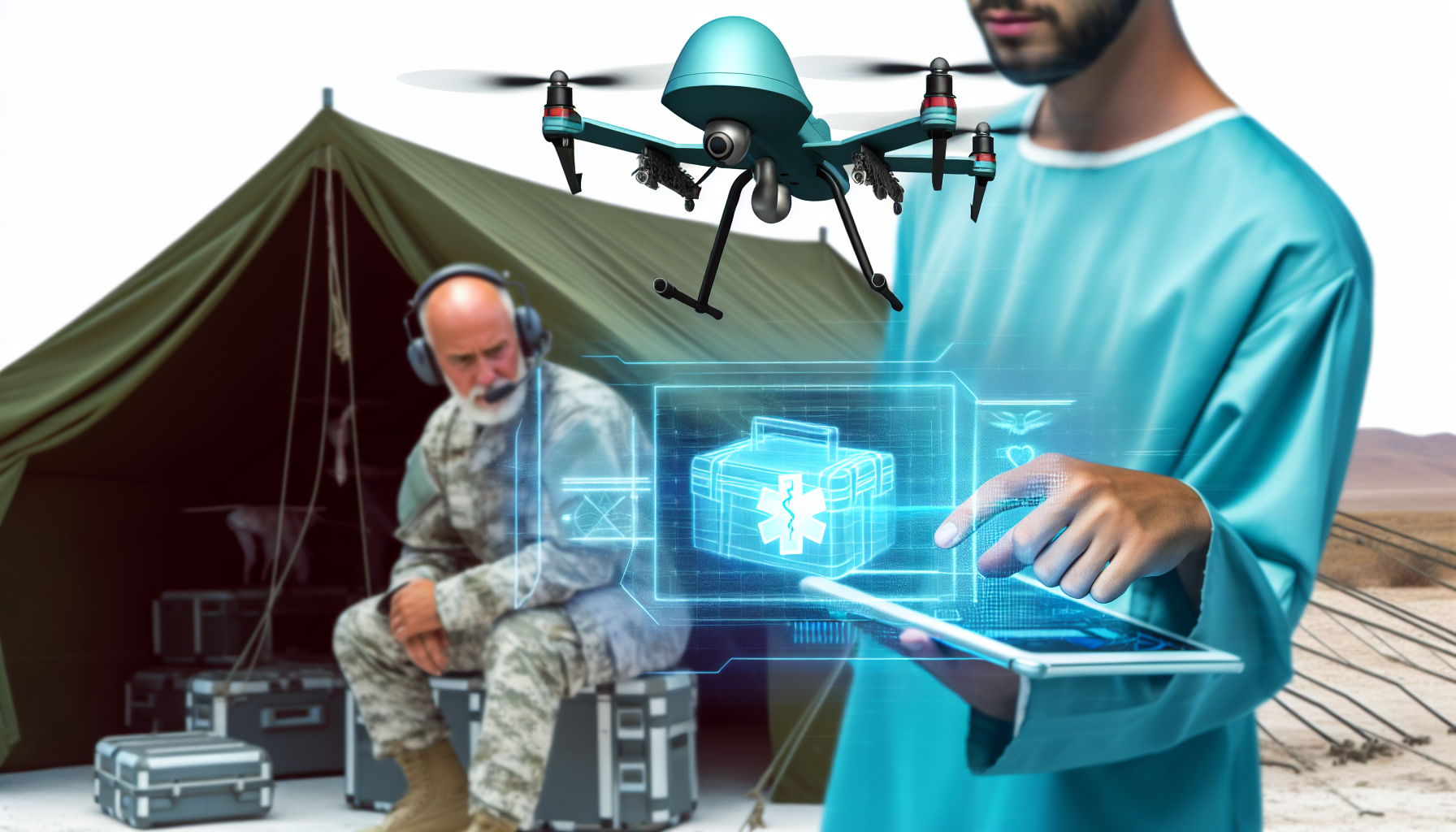
Integrating Drone Technology into Military Medicine: A collaboration between KACH and USMA
By Robert Lanier, KACH Public Affairs Officer, and Lt. Col. Samuel Teague, KACH Primary Care Department Chief
### Advancing Military Medicine Through Drone Technology
Keller Army Community Hospital (KACH) is at the forefront of an exciting initiative to integrate drone technology into military medical practices. This forward-thinking approach aims to enhance the health and safety of Soldiers, reflecting significant advancements in warfare technology.
### The Evolution of Warfare: The Role of Drones
The ongoing conflict in Ukraine has highlighted the vital application of Unmanned Aircraft Systems (UAS) in military operations. These drones serve various purposes, especially in areas such as prolonged field care, medical logistics, and patient evacuation. The growing dependence on this technology signals the necessity for military personnel to gain proficiency in operating these systems effectively.
### A Collaborative Approach
Recognizing this evolution, KACH has joined forces with the United States Military Academy’s (USMA) Robotics Research Center, positioned within the Electrical Engineering and Computer Sciences (EECS) department. This collaboration targets a training gap for Army Medical Department (AMEDD) personnel, ensuring that they are well-versed in drone technology and its applications.
### Enhancing Patient Experience and Healthcare Delivery
The primary aim of this partnership is to foster a solid understanding of UAS capabilities among active-duty Soldiers, ultimately improving the patient experience in combat situations. Col. Sean J. Hipp, commander of KACH, and his team, including Lt. Col. Samuel Teague and Maj. Wesley Snow, participated in the Medical Autonomous Care-State of the Science (MAC-SOS) Conference at the University of Pittsburgh. This conference, sponsored by the Defense Health Agency, gathered experts from multiple industries to discuss autonomous care’s advancements.
At this event, KACH presented a notable poster on “Overcoming Barriers: Implementing Small Unmanned Aircraft Systems (sUAS) Technology for Medication Delivery at West Point.” This project illustrates how KACH and the EECS Department aim to deliver medications to cadet candidates at the United States Military Academy Preparatory School (USMAPS), where medical assets are limited.
### Streamlining Medical Logistics
Lt. Col. Samuel Teague emphasizes the importance of this research: “Our focus is on streamlining medical logistics in combat through drone technology. By optimizing the delivery of medications and supplies, we can significantly improve response times and ultimately save lives on the battlefield.” The initiative, which started in November 2024, successfully completed a test flight in April 2025, with plans for daily flights by December 2025.
### Hands-On Training for Soldiers
Through this initiative, KACH Soldiers will gain hands-on experience with sUAS, which is critical in enhancing operational efficiency in military healthcare. Col. Hipp describes the goal succinctly: “We are trying to create a system that ensures AMEDD personnel can proficiently operate the sUAS equipment, providing Soldiers immediate access to necessary medications, irrespective of their location.”
### Cadet Contributions to the Program
Adding to this collaborative spirit, USMA cadets are actively engaged in research and development. Cadets Jacob Crossman, Daniel Orfao, and Anant Sabata presented their groundbreaking work on “Medical Delivery Drones for Combat Operations” at the MAC-SOS Conference, receiving accolades for being the top abstract. Their work underscores the potential of sUAS in optimizing logistics during combat operations, showcasing a commitment to innovation in military healthcare.
### The Future of Drone Technology in Military Training
The initiative not only focuses on operational efficiencies but also emphasizes the importance of training Soldiers with drone technology. As drones become an integral element of military tactics, equipping Soldiers with the skills to utilize these technologies is paramount for their safety and effective performance in the field.
The collaboration between KACH and USMA fosters an environment rich in interdisciplinary learning and innovation, benefiting both medical personnel and military cadets. By paving the way for the effective integration of drone technology into military operations, this initiative aims to enhance medical logistics and improve the overall experience for personnel on the front lines.