


The AH-64E Apache: Pioneering Counter-Drone Operations
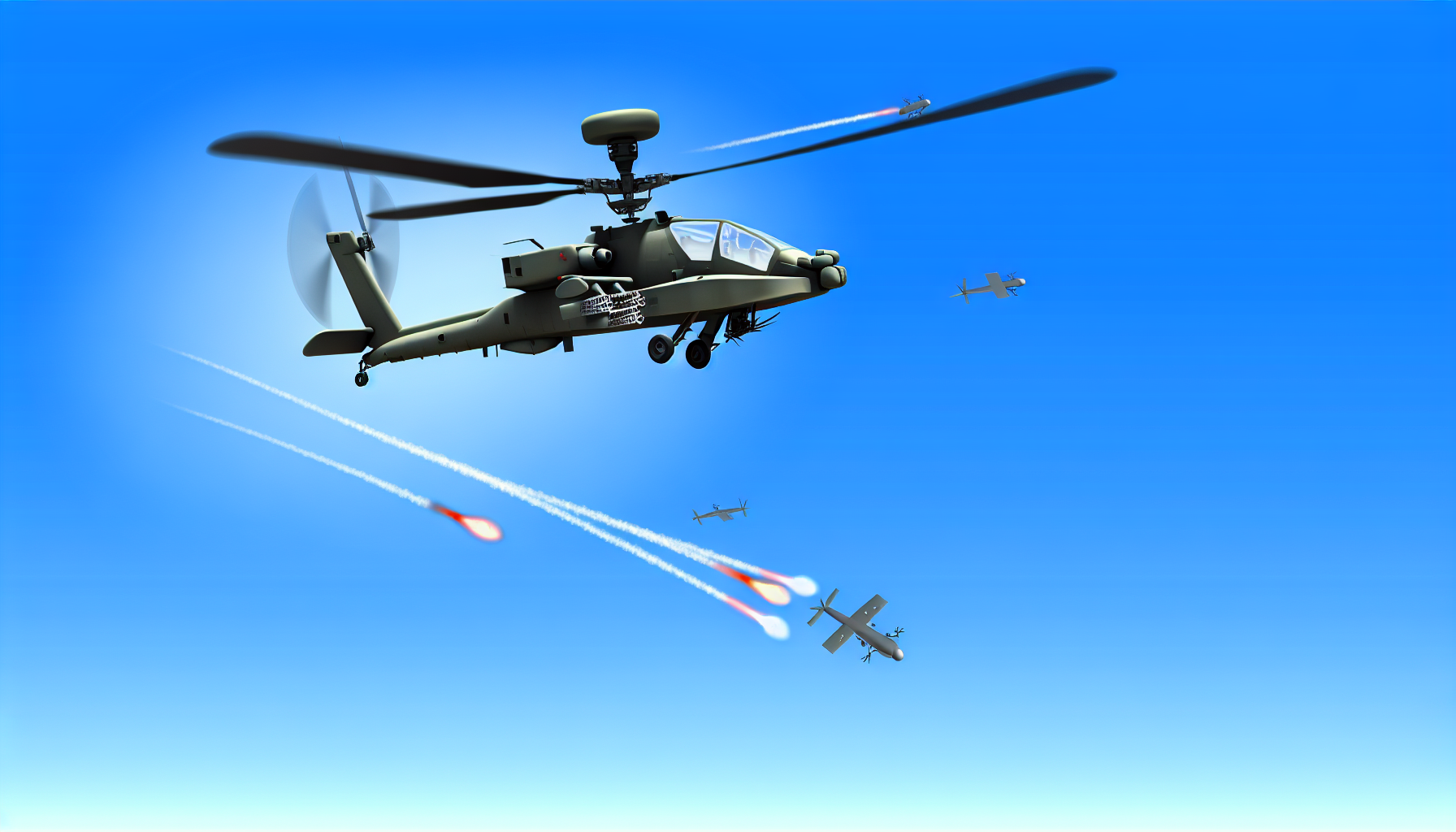
The modern battlefield is evolving rapidly, with small unmanned aerial systems (UAS) altering the dynamics of warfare. In this context, the U.S. Army’s recent confirmation that the AH-64E Apache, particularly the Version 6 variant, can effectively deliver counter-drone capabilities marks a significant advancement in aerial defense mechanisms. The outcome of Operation Flyswatter at Marine Corps Air Station (MCAS) New River in North Carolina showcased the Apache’s potential in addressing one of today’s pressing challenges in military operations.
Operation Flyswatter: A Test of Capabilities
Operation Flyswatter was structured as a live-fire event aimed at determining whether the AH-64E Apache V6 could provide robust counter-drone defenses without requiring hardware modifications. During this operation, crews from the South Carolina Army National Guard participated, actively engaging in real-world scenarios designed to test the Apache’s weapon systems and targeting capabilities. The results were remarkable: Apache teams recorded 13 successful kills out of 14 engagements, indicating a formidable conversion of the Apache into a frontline counter-UAS platform.
The efficiency of the Apache in this role highlights its transformation from a traditional tank-hunting aircraft to a versatile mobile defense asset. This capability becomes critical as small drones continue to proliferate on the battlefield, reshaping tactical and strategic approaches to combat.
A High-Tempo Engagement Test
The trials conducted during Operation Flyswatter deliberately challenged the Apache’s Version 6 architecture—pushing its software, sensors, and weaponry to their limits. Crews utilized the LONGBOW Fire Control Radar to engage targets from standoff distances with Joint Air-to-Ground Missiles, then adjusted their tactics based on changing battlefield conditions. Their versatility was on display as they transitioned between various missile types, showcasing an agile response to the operational landscape.
Moreover, Apache crews effectively utilized Hydra-70 rockets equipped with Advanced Precision Kill Weapon System (APKWS) guidance kits, proving their cost-effectiveness against drones. Engaging in cooperative strategies, Apache helicopters employed buddy-lase techniques, which allowed them to achieve impressive kill ratios in challenging environments.
Advanced Technological Integration
At the heart of the Apache’s performance lies its Version 6 architecture, which enhances its capabilities through advanced technology integration. This includes upgraded LONGBOW radar, enhanced electro-optical and infrared sensors, and Link 16 datalink capabilities. These upgrades not only allow Apache crews to independently target and destroy hostile drones but also enable them to communicate and share data with other military assets in real time.
The networking capabilities are particularly noteworthy. With Link 16 operational, Apaches can receive track information from joint forces, quickly identify and confirm targets, and engage them before they pose a threat. As one senior pilot succinctly noted, the Apache’s role has transitioned beyond simply supporting ground forces; it is crucial in maintaining control of the airspace.
Implications for Future Doctrine
The insights gained from Operation Flyswatter are poised to significantly influence Army doctrine and training. Program leaders have indicated that the outcomes will inform updates to the AH-64 Aircrew Training Manual, cementing the Apache’s role in counter-drone operations as a Mission Essential Task. This will shape future training exercises, ensuring that Apache units are proficient in dealing with swarm tactics and nuanced drone engagements.
Importantly, the collaboration with Marine Corps forces at MCAS New River further emphasizes the need for joint solutions to modern warfare challenges. The tactics validated during Flyswatter align with the Pentagon’s broader initiatives toward integrated air and missile defense strategies, advocating for a collaborative approach where any sensor can inform any shooter.
Adapting to Evolving Threats
As the military landscape changes, Army aviation faces the challenge of adapting legacy platforms to meet new demands, particularly in the face of low-cost UAS proliferation. The success of the AH-64E Apache V6 during Operation Flyswatter illustrates its capability as a flexible defensive asset, ready to respond to emerging threats around maneuver brigades, expeditionary airfields, and vital homeland targets.
Future enhancements, such as Version 6.5 or 7, alongside advancements in Air Launched Effects teaming, are on the horizon. These developments promise to further solidify the Apache’s role within the U.S. Army’s integrated air defense system, ensuring its legacy as a key player in the counter-drone mission set.
The findings from Operation Flyswatter underscore a pivotal moment in aerial warfare, showcasing how established platforms can adapt to new realities without the extensive investments required for entirely new systems. The Apache’s journey is just beginning—reshaping its narrative from a classic combat helicopter to an essential component of modern military resilience against drone threats.