


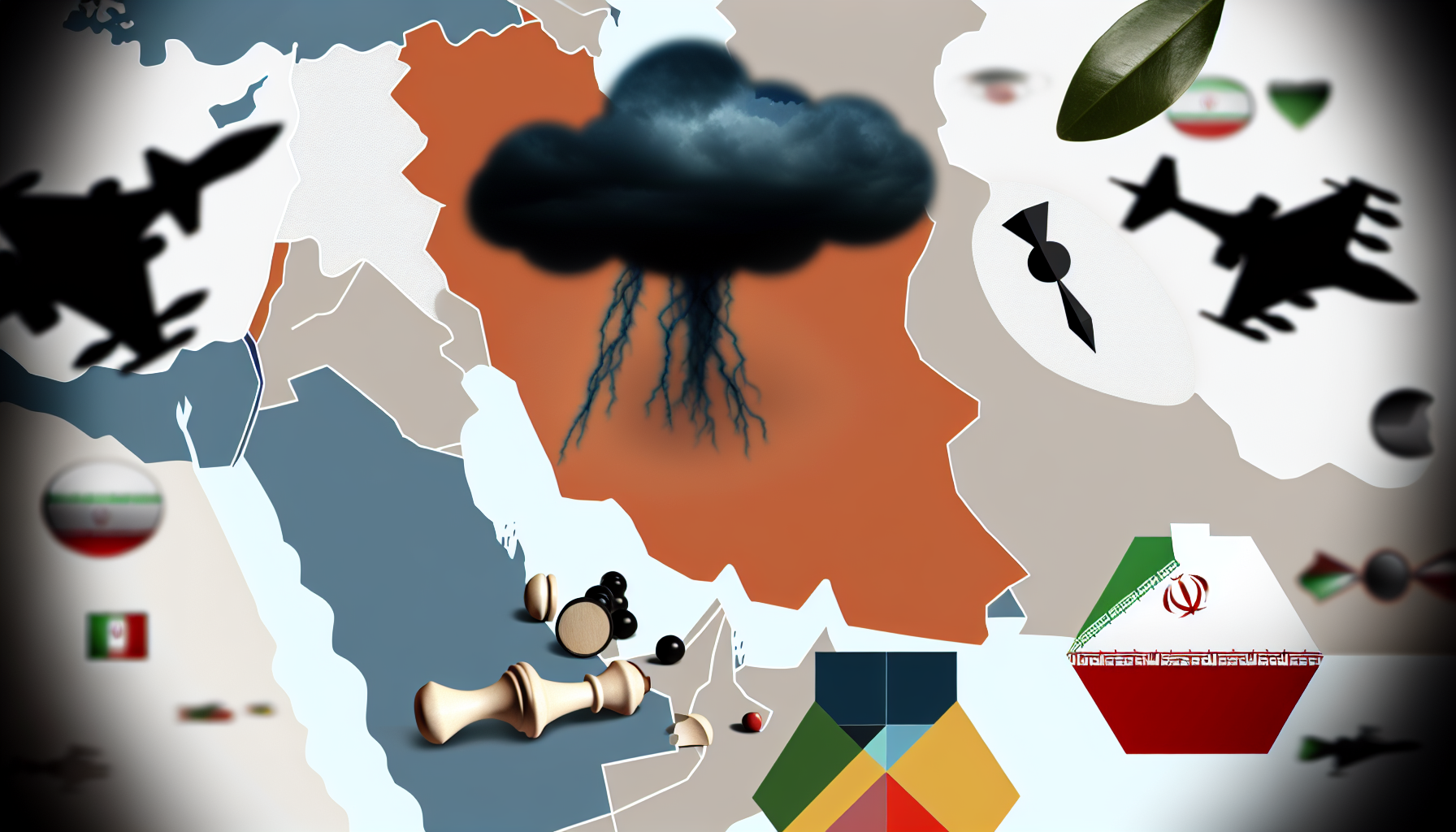
The Iran-Israel Confrontation: Tensions and Trends in the Middle East
The recent confrontation between Iran and Israel was a sharp reminder of the region’s persistent hostilities. Earlier this year, Iran responded to Israeli strikes on its military installations and senior commanders with a barrage of missiles and drones. This show of force, while intended to signal resilience and power, exposed significant vulnerabilities in Iran’s military framework—a system heavily reliant on proxies, technological assets, and audacity, rather than conventional military might.
Military Limitations and Strategic Vulnerability
Israel’s robust defensive capabilities, reinforced by American and regional partnerships, successfully intercepted a majority of the incoming attacks. For Iran’s leadership, which thrives on narratives of deterrence, this setback was not merely a tactical failure, but an unsettling episode that prompted introspection. The outcome challenged the narrative of invincibility that often accompanies their rhetoric, revealing a critical shortcoming in their strategy.
Rather than succumbing to defeatism, however, Iran is known for its cyclical approach to conflict. The typical pattern involves absorbing blows, recalibrating tactics, and gradually escalating pressures through its extensive network of proxy groups. This resilience is infused with a determination to maintain a pivotal role in Middle Eastern affairs, reshaping regional dynamics while unsettling adversaries.
The Role of the Islamic Revolutionary Guard Corps (IRGC)
At the forefront of Iran’s strategy is the Islamic Revolutionary Guard Corps (IRGC) and its elite Quds Force. This organization extends its influence through a network of quasi-non-state actors, including groups like Hezbollah in Lebanon, Shia militias in Iraq, and the Houthis in Yemen. These alliances allow Iran to project power without the risks associated with direct military confrontation. By employing missiles and drones as instruments of warfare, Iran maintains a strategy of psychological dominance over its adversaries.
Reassertion and Tactical Shift
Following the recent conflict, Iran’s leadership is likely recalibrating. The first phase of this recalibration involves a measured reassertion of influence, a quiet yet calculated engagement of proxies to restore deterrence without escalating to full-blown retaliation. This approach is already visible through Hezbollah’s provocations at Israel’s northern border and Houthi operations in the Red Sea.
The next strategic move would involve deepening partnerships that bolster technological advancements and legitimacy. For instance, Iran’s relationship with Russia not only provides access to military hardware but also grants Tehran essential battlefield validation and strategic cover. Furthermore, as Arab states gradually shift towards normalization with Israel, Iran sees an opportunity to reclaim its position as the leader of the anti-Israel narrative—a role it once held before the regional landscape evolved.
The Nuclear Dimension
As this dance of strategic maneuvering unfolds, Iran’s nuclear pursuits add another layer of complexity. Recent reports from the International Atomic Energy Agency (IAEA) indicate that Iran possesses uranium enriched up to 60 percent, an alarming proximity to weapons-grade material. The aftermath of American strikes on key nuclear sites has resulted in varying assessments about the delays imposed on Iran’s nuclear ambitions, with estimates ranging from a few months to two years. Nevertheless, these developments highlight Iran’s commitment to remaining a significant counterforce to US-Israeli hegemony in the region.
Perception of Risk and Complacency
For Washington and Jerusalem, the perception of the threat posed by Iran’s nuclear ambitions has shifted to one of cautious management. Years of clandestine operations and intelligence-led strategies have fostered a belief that Iran’s nuclear capabilities can be contained. Yet, this complacency might be a double-edged sword. Tehran leverages its nuclear program as a form of insurance, effectively keeping its adversaries in a constant state of uncertainty.
Regional Dynamics: Eastern Focus
Beyond the ongoing tensions with Israel, Iran’s strategic gaze extends towards its eastern border with Pakistan and Afghanistan—a region fraught with volatility that poses significant security challenges. The recent unrest between Afghanistan and Pakistan raises concerns for Tehran, which prefers diplomatic coexistence over military confrontation with groups such as the Taliban. By ensuring stability along its eastern frontier and maintaining key land routes for trade through Central Asia and India, Iran seeks to bolster its regional influence without becoming embroiled in direct military conflicts.
Economic Gateway: The Chabahar Port
In support of its strategies, the Chabahar port has re-emerged as a critical asset for Iran. India’s operationalization of a 10-year agreement to develop and manage the Shahid Beheshti terminal presents an opportunity for Iran to strategically position itself in regional trade. While challenges related to sanctions and financing remain, Chabahar symbolizes Iran’s potential to transform its geographic location into a leverage point against its adversaries.
The Shadow of Conflict
As Iran aims to restore its balance, another direct confrontation with Israel seems unlikely in the immediate term. However, the shadow of a cold war continues to loiter over the region, manifested through proxy engagements, drone strikes, and cyber warfare. Israel’s superior operational capabilities allow it to maintain control, while Iran’s ideological imperatives ensure that underlying tensions remain unresolved.
In this intricate chess game, as Iran navigates pressures both from external adversaries and internal dissent, it may find itself at a critical juncture. The impact of sanctions weighs heavily on its economy, while a more connected and assertive Generation Z poses challenges to traditional narratives and governance. Amid these challenges, the regime understands the necessity of patience as a form of power but must also entertain limited reforms to ensure its longevity, especially as regional dynamics continue to evolve.