


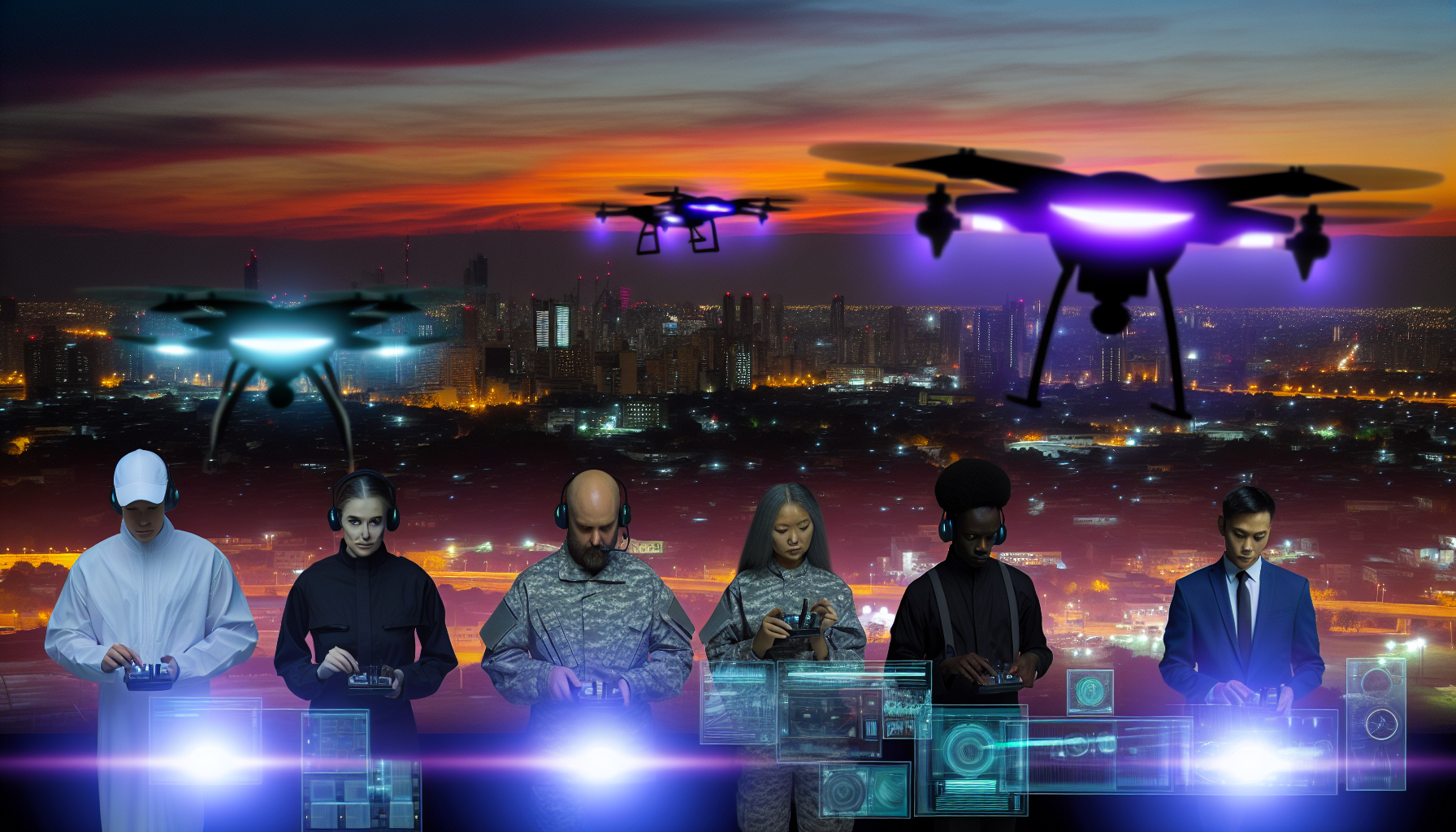
The Drishti 10 Starliner: A Leap Forward in India’s Defence Capabilities
Why in the News?
Adani Defence and Aerospace has recently made headlines with the introduction of the Drishti 10 Starliner Unmanned Aerial Vehicle (UAV) for the Indian Navy. This significant development marks a crucial step in India’s pursuit of autonomous maritime capabilities.
More on the News
- The UAV embarked on a significant journey from Hyderabad to Porbandar, signifying its formal induction into naval operations.
- Notably, it is the Indian Navy’s first indigenously manufactured UAV, featuring over 60% indigenous content. This is a clear demonstration of India’s commitment to bolstering its defense technology from within.
- The Drishti 10 Starliner aims to enhance the Navy’s Maritime Domain Awareness (MDA) and support anti-piracy as well as seaborne missions.
Key Features
The Drishti 10 Starliner boasts:
- An advanced intelligence, surveillance, and reconnaissance (ISR) platform.
- It qualifies as a Medium Altitude Long Endurance (MALE) UAV, enabling sustained operations.
- With a 450 kg payload capacity, it is designed for versatile mission profiles.
- Additionally, it has received STANAG 4671 certification, indicating compliance with NATO standards.
This launch emphasizes the rising importance of drone technology for security purposes, consolidating India’s position in the drone ecosystem.
Role of Drones in National Security
Drones play a multifaceted role in national security:
Surveillance and Intelligence
Drones are pivotal for remote surveillance, reconnaissance, and intelligence-gathering operations, allowing security agencies to monitor strategic areas discreetly.
Offensive Military Operations
Drones provide the ability to conduct strikes on enemy positions, especially in geographically challenging or hostile areas, effectively extending the reach and operational capability of military forces.
Replacing Manned Aircraft
Utilizing drones minimizes the risk to pilots, enabling critical operations to be conducted without loss of life.
Military Logistics
The Indian Army is exploring drones for logistical purposes, particularly to replace mules and helicopters for supply operations at forward posts along the Line of Actual Control (LAC) in regions like Ladakh and Northeastern India.
Force Multipliers
AI-enabled drones can communicate with one another, carry out Automatic Target Recognition (ATR), and coordinate with traditional military forces, enhancing overall operational effectiveness.
Law Enforcement Applications
Drones are also increasingly being utilized by law enforcement agencies for monitoring large crowds, conducting search and rescue operations, and surveilling illegal activities.
Concerns Associated with Drone Technology
While the benefits of drone technology are immense, there are several associated concerns:
Threat to National Security
Drones falling into the wrong hands could pose significant threats. Instances of cross-border infiltration for smuggling explosives and weapons highlight the urgency of addressing this issue.
- Rogue drones may also threaten civilian airplanes and critical infrastructures such as nuclear plants.
Skills Shortage
There is a notable lack of skilled operators, engineers, and inspectors in the drone industry, hindering development and deployment.
GPS-Denied Environments
Many drones depend on GPS for navigation. For example, imported systems like the Heron Mk II UAV may struggle in areas where GPS signals are weak or unavailable.
Battery Supply Challenges
The fast-paced advancement of drone technologies leads to a focus on lightweight Lithium-ion batteries, yet supply remains a challenge as development is still a work in progress.
Ethical and Moral Concerns
Drone warfare, especially long-range strikes, has drawn criticism for its impact on civilian populations, raising questions about accountability and ethical implications.
Drone Regulations in India
The regulatory landscape for drones in India is evolving:
- The National Counter Rogue Drone Guidelines were issued in 2019 to establish protocols for assessing and mitigating drone-related threats.
- The Drone Rules 2021 categorize Indian airspace into Green, Yellow, and Red zones, each with different operational allowances. Notably, Red zones are off-limits unless special permission is granted.
India’s Initiatives for Drone Technology in the Defense Sector
India is actively expanding its drone capabilities through several strategic initiatives:
Acquisition of Foreign Drones
India has invested in foreign drone technologies from the US and Israel, including:
- Heron Mark-II: Designed for surveillance along the northern borders.
- Searcher Mk II: A reconnaissance drone utilized by the armed forces.
Indigenous Anti-Drone Systems
The Drone, Detect, Deter and Destroy (D4 System) developed by DRDO is an innovative indigenous anti-drone system that has been integrated into the armed forces.
Border Security Efforts
The Border Security Force (BSF) has implemented hand-held and static anti-drone systems to counter rising drone threats along the Indo-Pak border.
Development of Indigenous UAV Systems
DRDO is engaged in developing UAV systems that are at various stages of readiness, focusing on maximizing local production and innovation.
Indigenous Drones of DRDO
Several indigenous drone systems developed by DRDO are making waves in the defense arena:
| Drone | Description |
|---|---|
| DRDO Lakshya | A target drone utilized for aerial reconnaissance and target acquisition. |
| DRDO Nishant | A multi-mission UAV launched with day/night capabilities for surveillance, tracking, and artillery correction. |
| Rustom-1 | A short-range, remotely piloted aircraft with ISR capabilities. |
| TAPAS/Rustom-2 | A MALE UAV for ISTAR applications, currently in advanced developmental trials. |
| Archer | A weaponized UAV under development for reconnaissance and low-intensity conflict. |
Way Forward
The future of drone technology in India’s defense sector lies in:
Research and Development
Enhancing R&D efforts will facilitate quicker development of indigenous UAVs and counter UAV technologies.
Involvement of the Private Sector
Encouraging private industries to manufacture critical components could reduce dependency on imports. Initiatives like Innovations for Defence Excellence (iDEX) should support startups in creating military-grade drones.
Joint Doctrinal Framework
Developing a cohesive doctrinal framework for the tri-services will enhance coordination in drone operations and address ethical and accountability concerns.
With these advancements, India stands poised to revolutionize its defense strategy through cutting-edge drone technology.