


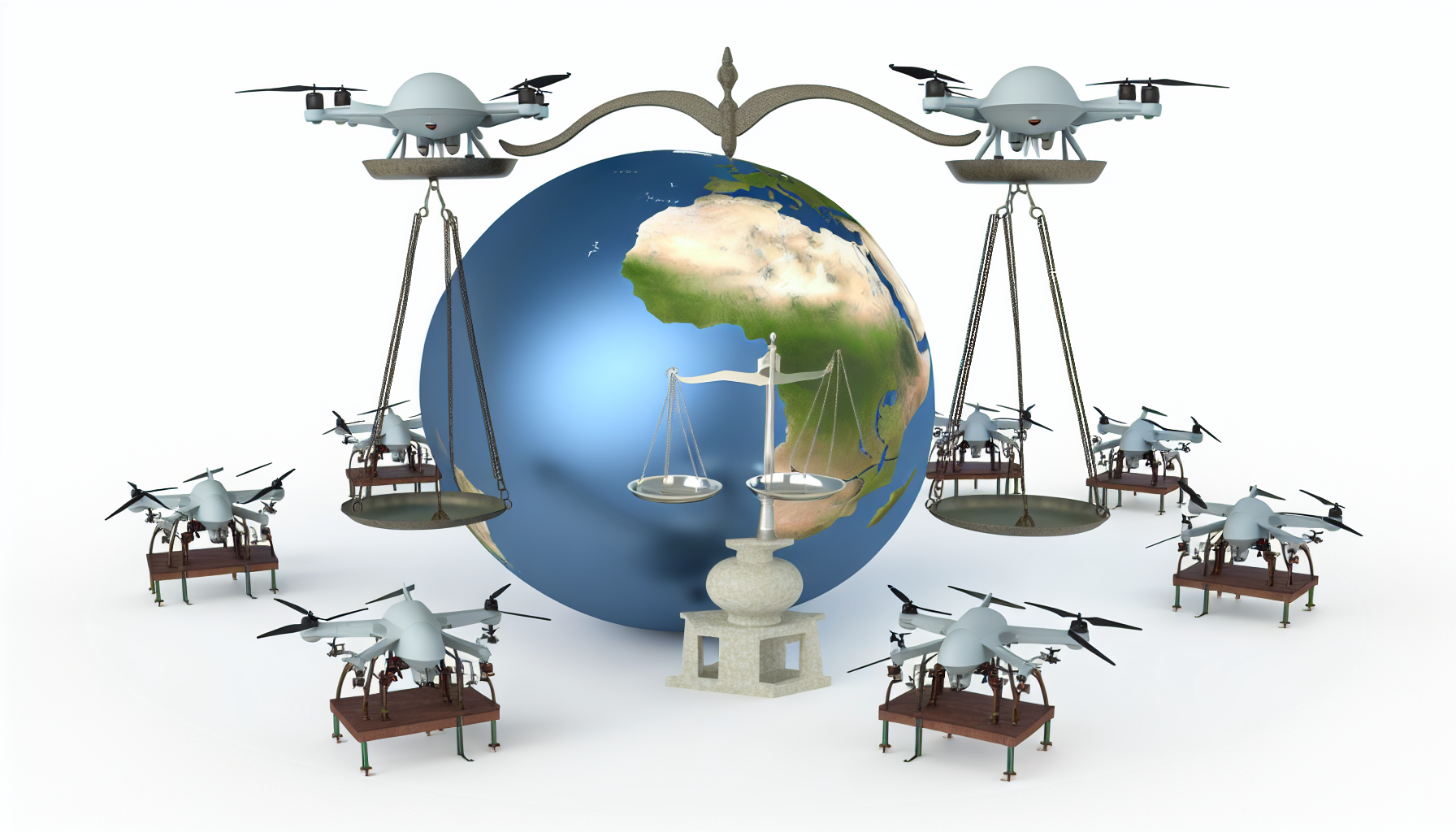
The Ethical Landscape of Armed Drones: A Call for Restraint
Introduction
In recent years, the deployment of armed drones has surged globally, with various governments employing these uninhabited aerial vehicles (UAVs) for military operations. While their technological advancements present unique opportunities, they also raise significant ethical concerns that demand careful examination. The complexity of drone warfare, particularly since the onset of the War on Terror post-2001, has led to heated debates about moral justification and the implications of such technologies in warfare.
Understanding Armed Drones
Armed drones are defined as reusable aircraft equipped with one or more weapons, devoid of human operators onboard, and incorporating advanced sensor and communication technologies. The nature of their deployment—often in foreign and distant territories—raises questions about accountability and ethical responsibility. Critics argue that drone strikes can sometimes resemble unlawful “assassinations” and render the act of killing too simplistic, thereby making moral questions easily overlooked.
Global Utilization of Drones
Countries like the United States and the United Kingdom have frequently employed drones to target suspected terrorists far from their borders, particularly in the ongoing Russo-Ukrainian conflict, where drones play a critical role. As of 2023, approximately 19 states have engaged in drone strikes, while six have established armed drone programs. This increase in participation suggests a shift in the military strategies of nations and highlights a growing reliance on drone technology.
Ethical Concerns in Drone Warfare
The use of armed drones is not merely a technical matter; it intertwines with broader ethical issues. The moral implications of drone warfare manifest in various dimensions, including:
-
Escalation of Violence: The accessibility of drone technology may lower the threshold for military intervention, leading states to resort to violence more readily.
-
Indiscriminate Targeting: There are fears that drones may be used in ways that violate the principle of proportionality, potentially leading to civilian casualties.
-
Moral Injury: Operators may experience profound psychological distress due to their involvement in remote killings, which can lead to long-term mental health consequences.
These concerns necessitate a reevaluation of how armed drones are deployed and the moral frameworks guiding their use.
Principles for Responsible Drone Use
To address the ethical dilemmas associated with drone warfare, a set of principles has been proposed, encouraging states to adopt a higher standard than what is legally mandated. These principles form a framework for responsible drone operation:
-
Combined Arms Principle: Armed drones should be deployed alongside ground-based personnel, inhabited vessels, or aircraft. This principle aims to mitigate the risk of excessive military action that may arise from the remote nature of drone warfare. By requiring the presence of human operators in conjunction with drones, states may refrain from hasty or unjustified actions.
-
Urgent Other-Defence Principle: Drones ought to be used solely to protect individuals facing immediate threats of serious harm. This principle emphasizes the importance of distinguishing between proactive strikes against potential threats and reactive measures that defend against active dangers. By limiting drone use to urgent defensive scenarios, operators prioritize moral justifications in their actions.
-
Operator Discretion Principle: Drone operators should have the right to refuse participation in missions they believe to be morally wrong. This principle recognizes the potential for moral injury in operators, empowering them to act in accordance with their ethical beliefs. Ensuring operators have discretion can preserve their mental well-being and safeguard against coercive pressures to engage in violence.
-
Human Agency Principle: All critical functions of armed drones should remain under meaningful human control. As advanced technologies evolve, concerns arise about delegating the decision to kill to artificial intelligence. This principle advocates for human oversight in all operational decisions, ensuring accountability and ethical considerations remain at the forefront of drone warfare.
-
High Transparency Principle: There must be a commitment to public disclosure regarding the use of armed drones. While operational security must be maintained, transparency about the legal and policy frameworks guiding drone use can bolster public scrutiny and ethical governance. Effective oversight is crucial in preventing states from exploiting drone capabilities for unjust ends.
Conclusion: The Path Ahead
The principles outlined are intended to foster discussion among policymakers, military officials, and the public alike. By adhering to a higher ethical standard in drone operations, countries can mitigate the injustices associated with drone warfare and protect the moral integrity of military operations. The conversation surrounding armed drones is far from over, and ongoing dialogue will be essential to navigate the complexities introduced by these transformative technologies.