


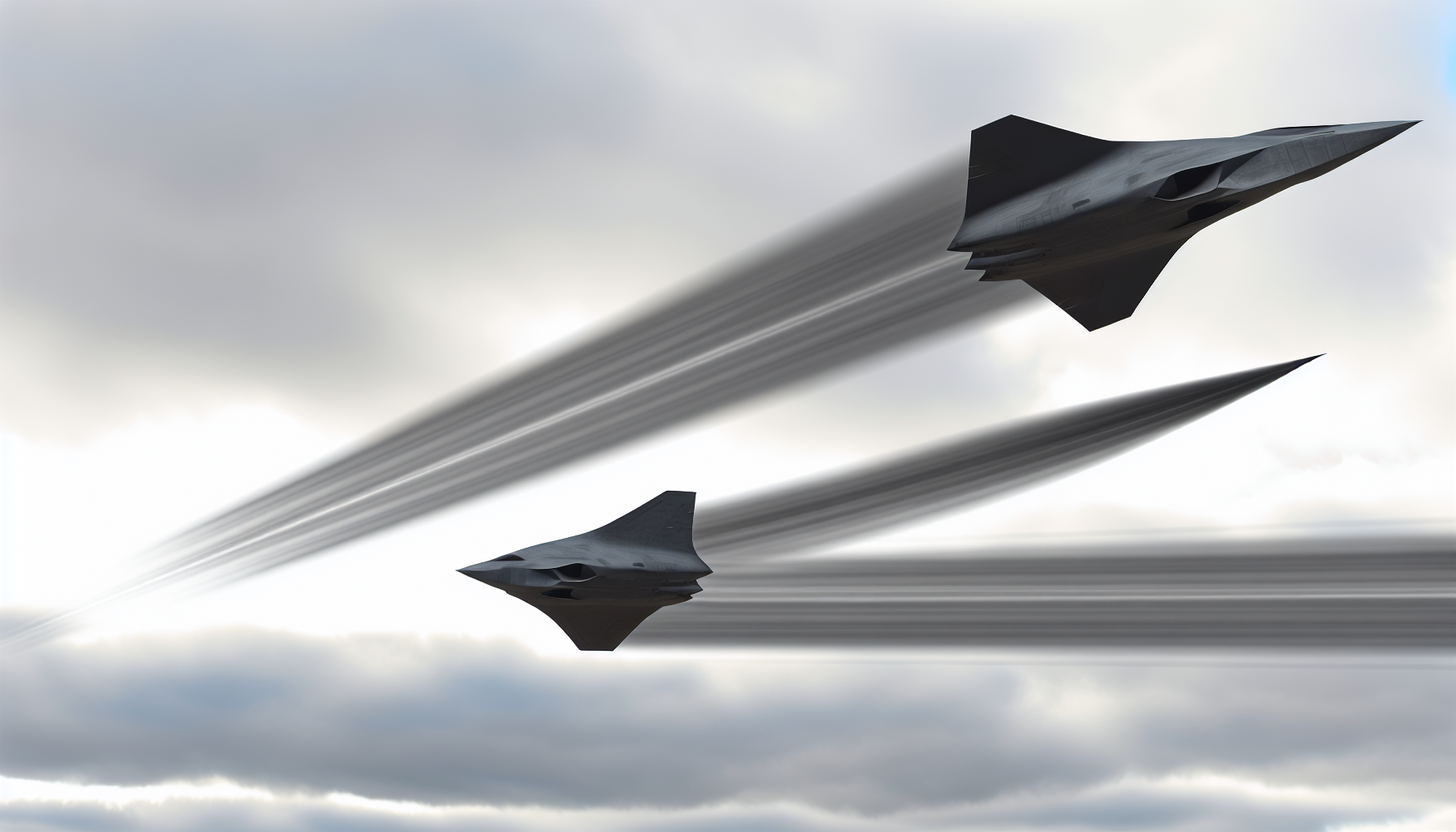
F-35 vs J-20: The Evolving Landscape of Air Superiority
Introduction to Air Dominance
For years, the F-35 Joint Strike Fighter has stood as the pinnacle of fifth-generation air combat. Defined by its stealth capabilities, sophisticated sensor fusion, coalition readiness, and a projected production of over 2,000 units, it encapsulates the Western approach to air dominance. However, the emergence of China’s J-20 Mighty Dragon—initially dismissed as merely a copycat—has become an increasingly credible competitor. With advancements in technology, the J-20 is shifting perceptions and redefining what air superiority means in the 21st century.
The Maturation of the J-20
Once seen as a product of imitation, the J-20 has undergone substantial upgrades, positioning it as a serious contender in the Asia-Pacific theater. With the introduction of new WS-15 engines that enable credible supercruise, an advanced suite of AI-driven avionics, and long-range missiles like the PL-15, the J-20 has transformed from a punchline into a formidable weapon. This evolution signifies not just technological advancements but also a strategic pivot by China toward a more aggressive posture in its regional military engagements.
Comparing Stealth and Avionics
When it comes to stealth characteristics, the F-35 has historically retained an edge. Its design incorporates radar-absorbing geometry, tightly optimized internal weapon bays, and combat-tested stealth coatings. However, the gap is narrowing. Post-2023 J-20s equipped with domestically manufactured WS-15 engines now boast practical supercruise capabilities, allowing them to extend operational reach over vast distances—an area where the F-35’s single-engine design limits its sustainability.
Avionics further complicate the comparison. While the F-35’s Distributed Aperture System (DAS) and sensor fusion are often considered the gold standard, the J-20 is catching up. The integration of AI in its cockpit—enhancing situational awareness and decision-making capabilities—marks a significant stride forward. The race to embed smart technologies is no longer solely a Western advantage, as China’s investments in AI promise to reshape operational effectiveness in air combat scenarios.
Weapons Systems: A Game Changer?
The F-35 advantages are most evident in its established weapons loadout, including advanced missiles and precision-guided munitions. Its array of AMRAAMs and JDAMs have logged thousands of combat hours, providing a track record that is hard to match. Meanwhile, the J-20’s weapons suite, though less well-documented, includes the long-range PL-15 missile, which boasts advanced capabilities that could outpace the AMRAAM in certain engagements.
China’s rapid development of the PL-21 missile—if realized—could further alter the tactical landscape. The emphasis on long-range strike capabilities in the J-20 aligns with China’s broader A2/AD strategy, aiming to project power and deny access to adversaries in critical regions, such as the Taiwan Strait and the South China Sea.
The Networked Future of Air Warfare
Air superiority is increasingly a function of how well various platforms communicate within a network rather than the capabilities of individual jets. The F-35 operates at the center of the U.S. military’s Joint All-Domain Command and Control (JADC2) system, which maximizes situational awareness across intertwined domains.
Conversely, the J-20 is becoming integrated into China’s expansive kill-web approach—connecting it to AWACS aircraft, ground-based radars, and satellite systems. In scenarios involving a Taiwan contingency, this networked capability would minimize the J-20’s vulnerability while enhancing its operational effectiveness as part of a broader tactical arsenal.
Operational Context and Strategic Posture
Given these developments, the fundamental question emerges: which aircraft reigns supreme in a conflict scenario? When considering an environment dominated by China’s dense sensor networks and missile fields, the J-20 appears as the better tool for achieving air superiority. In this context, the effectiveness of a fighter jet is less about inherent technical superiority and more about the operational ecosystem in which it operates.
The geopolitical stakes also add another layer to the discussion. The J-20 doesn’t have to surpass the F-35 in all areas; it merely needs to perform adequately in its intended strategic framework. Its primary focus is projecting power within the First Island Chain, rendering it a vital asset for deterrence against U.S. and allied operations.
Conclusion: A Multipolar Age of Aerial Warfare
The evolving dynamic between the F-35 and J-20 highlights a larger shift in military strategy and tech development. Each jet represents not only a technological achievement but also a statement of intent from their respective nations. While the F-35 exemplifies Western systems integration, emphasizing coalition capabilities, the J-20 stands as a symbol of China’s aspirations for regional dominance.
Understanding the intricacies of air combat in this multipolar age requires a reevaluation of traditional notions around superiority. Both the F-35 and J-20, despite their differences, are increasingly morphing into pieces of a larger puzzle in the ever-changing theater of air warfare.