


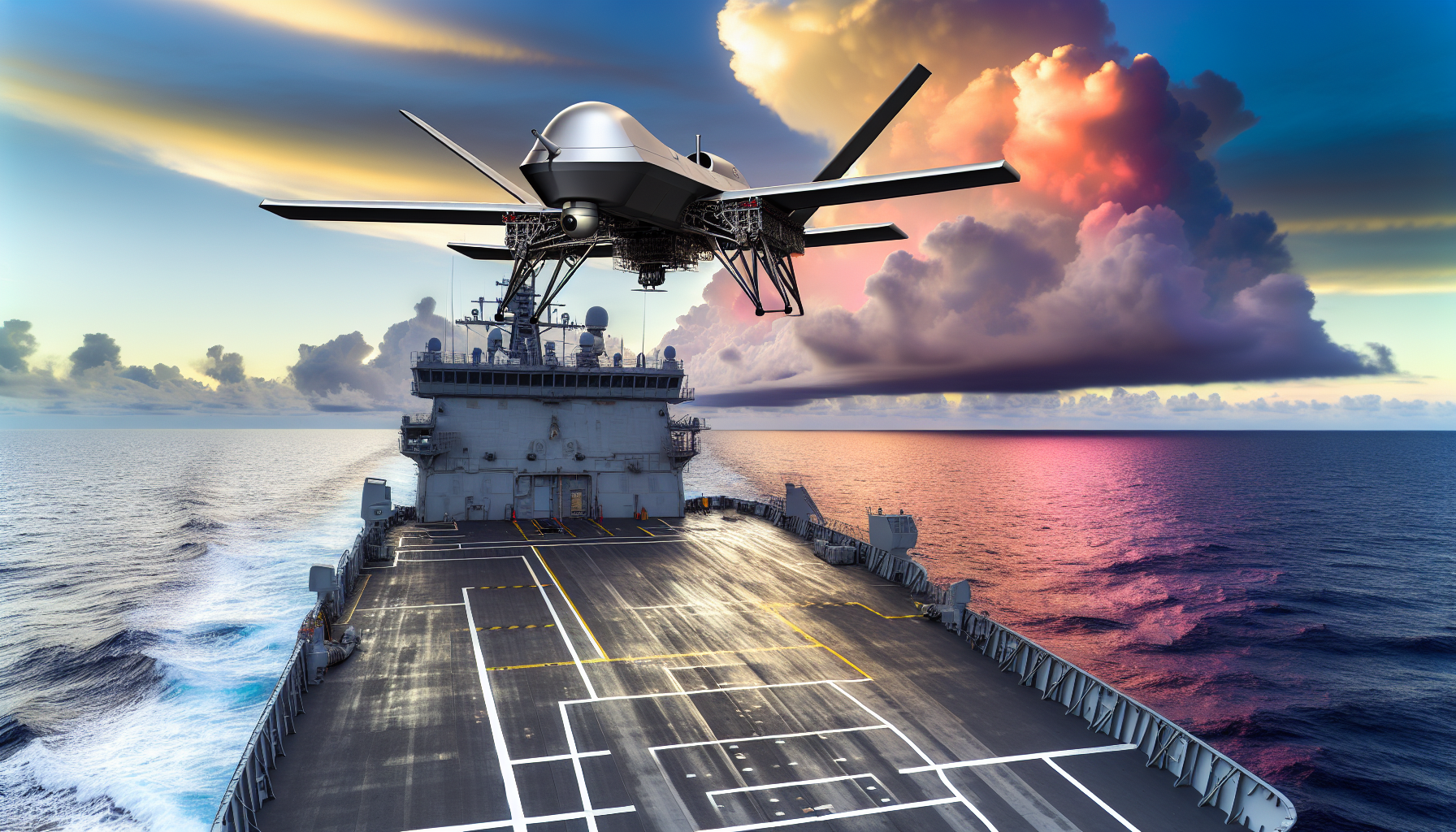
A Low-cost Unmanned Combat Attack System (LUCAS) Launched from USS Santa Barbara: A New Era in Naval Warfare
On December 16, 2025, a significant milestone in naval warfare was achieved with the launch of the Low-cost Unmanned Combat Attack System (LUCAS) from the flight deck of the USS Santa Barbara, an Independence-class littoral combat ship operating in the Persian Gulf. This event marks the first time such capabilities have been fielded from a ship at sea, showcasing a new versatility in maritime operations.
The launch was reported by the U.S. Department of Defense and quickly followed by analysts highlighting its implications for modern warfare. Vice Adm. Curt Renshaw, commander of the U.S. Navy’s 5th Fleet, emphasized the operational potential this technology brings, stating, “This first successful launch of LUCAS from a naval vessel marks a significant milestone in rapidly delivering affordable and effective unmanned capabilities to the warfighter.” The use of the USS Santa Barbara’s expansive flight deck enabled a smooth operational rollout for LUCAS, symbolizing a new approach to maritime conflict in a region long marked by tension and strategic uncertainty.
Expanding Tactical Flexibility
One of the groundbreaking aspects of LUCAS is its ability to be deployed without traditional, permanent launch systems like the Mark 41 vertical launch system (VLS). This flexibility allows for LUCAS to be launched from a broader range of naval vessels, including auxiliaries, and even from austere land-based locations. With recent advancements in unmanned aerial vehicle (UAV) technologies, the operational landscape for U.S. forces is rapidly evolving.
Just weeks before the LUCAS event, the U.S. announced the deployment of a squadron of one-way attack drones to the region under Task Force Scorpion Strike (TFSS). This squadron was designed to leverage low-cost UAV systems to rapidly deliver advanced capabilities to frontline forces, highlighting a shift in military strategy focused on agility and adaptability.
Economic and Strategic Advantages
The economic implications of using LUCAS are substantial. The cost-effectiveness of deploying these drones, which can be launched in groups without the associated risk of piloted aircraft, represents a paradigm shift in military expenditure. With each LUCAS drone significantly cheaper than conventional missiles, military planners can consider saturation tactics—where multiple drones are launched simultaneously to overwhelm enemy defenses—at a fraction of the traditional costs.
The strategic advantage of such operations is clear. By employing large numbers of LUCAS drones in a coordinated strike, commanders can confuse and significantly degrade an adversary’s air defense systems without risking human lives. This allows for a more extensive operational footprint and the possibility of more complex attack strategies.
Design and Specifications
The LUCAS drones are derived from the FLM-136 model manufactured by Spektreworks, offering an endurance of up to six hours and a cruising speed of 55 knots. They can be launched using various methods, including catapults and rocket assistance, enabling versatility across different platforms.
Visually, LUCAS bears resemblance to the Iranian Shahed 136 drone, which has gained notoriety for its effectiveness in various conflict zones, including their use in both the Middle East and Ukraine. The development of LUCAS and similar systems is partly driven by the successes seen with low-cost drones in use today, prompting military organizations worldwide to ramp up their own production and deployment efforts.
Saturation Tactics and Future Deployments
While LUCAS drones can be taken down by standard anti-air weaponry, their true power can be harvested through saturation tactics. Multiple drones launched from various angles can bewilder an opponent’s defense systems, significantly enhancing the chance of mission success. The notion of using disposable drones in high-volume attacks reduces the risks associated with manned aircraft, allowing military forces to adopt strategies that maximize destructive capabilities without incurring human losses.
Such strategies are evident in how countries like Iran have effectively utilized drone technology on the battlefield, demonstrating the new potential applications of relatively simple but efficient weaponry. While U.S. forces maintain significant technological superiority, the swift development of drones like LUCAS is intended to level the playing field in scenarios where attrition could become a factor.
Conclusion
The introduction of systems like LUCAS represents a dramatic shift in military aviation and naval strategy, underpinning the importance of low-cost, versatile UAV platforms in future conflicts. These capabilities, paired with advanced tactical planning, are poised to redefine engagements at sea and beyond, spreading innovative operational methodologies to U.S. and allied forces worldwide. As manufacturers ramp up production in response to Army and Navy needs, the landscape of aerial warfare continues to reshape itself, highlighting the critical role unmanned systems will play in future military endeavors.