


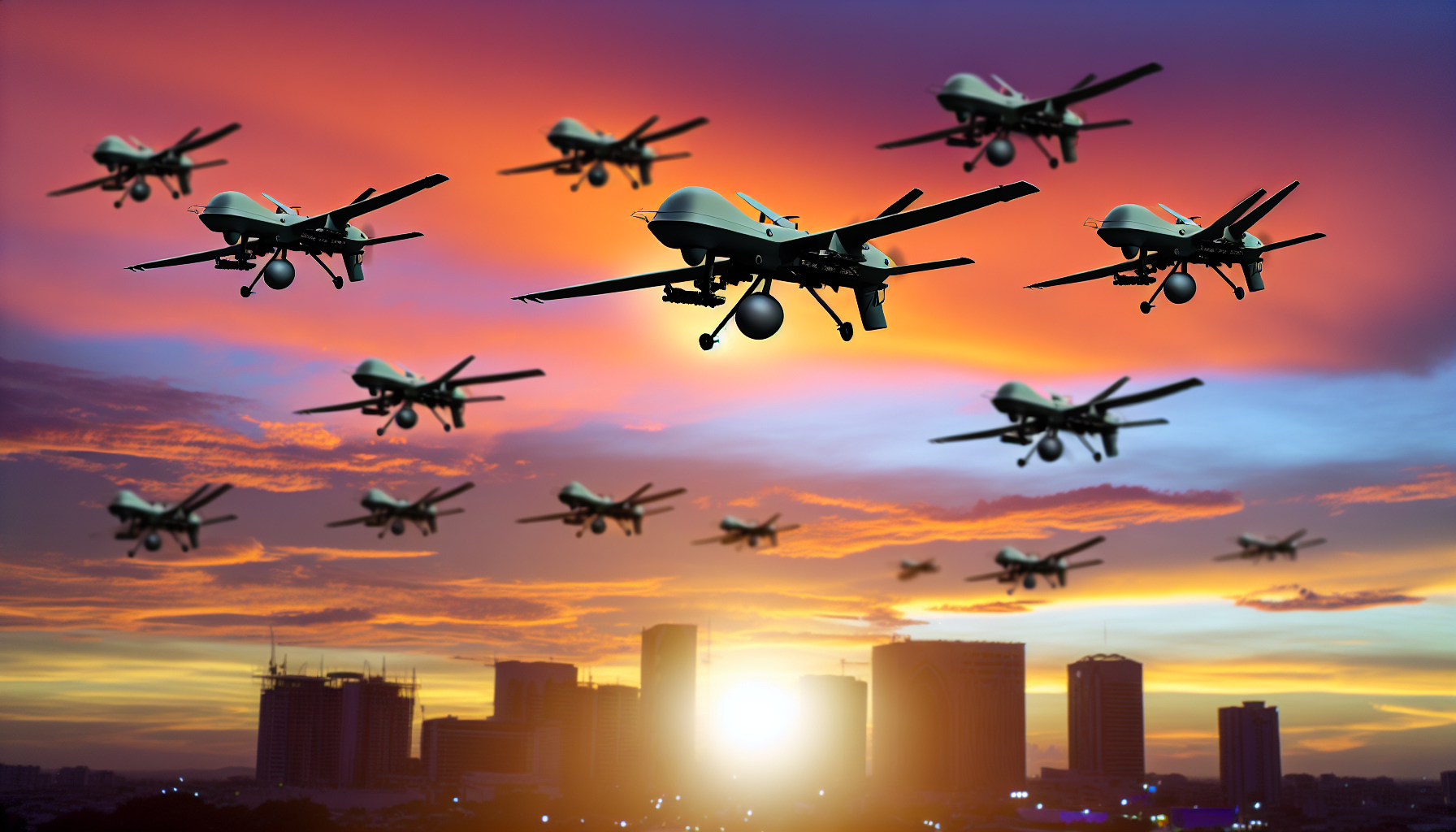
New Delhi’s Bold Acquisition of Kamikaze Drones: A New Era for Indian Defence
Introduction to India’s Military Upgrade
In a significant move to bolster its military capabilities, the Indian Army is poised to acquire 850 kamikaze drones costing approximately Rs 2,000 crore. This acquisition reflects a strategic step forward in modern warfare, influenced heavily by insights gained from the operational successes of India’s ‘Operation Sindoor’ against Pakistan. The decision, anticipated to receive approval from the Defence Acquisition Council later this month, embodies India’s commitment to enhancing its defence posture amidst evolving regional threats.
Focus on Indigenous Technology
The drones slated for acquisition are indigenous, sourced from domestic manufacturers. This aligns with India’s broader vision of self-reliance in defence production, a key component of the government’s ‘Make in India’ initiative. By investing in local manufacturers, the Indian Armed Forces are not only fostering domestic innovation but also reducing dependency on foreign technologies. This initiative is set to empower the Army, Navy, and Air Force with cutting-edge drones tailored to meet the unique challenges of contemporary warfare.
Leveraging Lessons from the Field
The impetus for incorporating these kamikaze drones stems from the Indian Army’s experiences during Operation Sindoor. In this operation, drones played a critical role in identifying and targeting terrorist hideouts based in Pakistan-administered Kashmir, successfully neutralizing multiple terror threats. The operational insights gathered have been pivotal in shaping the current strategy, underscoring the need for precision and efficacy in military operations. Drones enable focused strikes, thereby minimizing collateral damage—a necessity in populated areas where insurgent activities often transpire.
Revolutionizing Warfare with Loitering Munitions
Kamikaze drones, also referred to as loitering munitions, are designed to hover over target areas before delivering precise strikes via explosive payloads. This innovative approach to military engagement allows forces to conduct both surveillance and offensive operations with remarkable efficiency. The cost-effectiveness of these drones, combined with their high-precision capabilities, makes them an essential tool in modern military arsenals. The Indian Army aims to leverage this technology effectively across various fronts, from traditional battles to counterinsurgency operations.
Platoons Dedicated to Modern Warfare
As part of this initiative, the Indian Army plans to equip each infantry battalion with an Ashni platoon—special units dedicated to operating these unmanned aerial vehicles. This is a game changer in how ground forces will engage with adversaries and manage insurgents. The introduction of around 30,000 loitering munitions highlights the commitment to a substantial upgrade in operational capabilities. This strategic deployment is set to enhance the agility and responsiveness of infantry units in the field.
Impact and Future Implications
The effective deployment of these drones is expected to reshape the dynamics of military engagements in the region. The technology will not only empower ground forces but also provide strategic leverage in operations against enemy positions. By utilizing local players like InsideFPV Ventures and Maharshi Industries, the Indian Army underscores its dedication to fostering an indigenous defence industry, which is vital for long-term military sustainability.
An Evolution in Strategic Capabilities
The shift towards kamikaze drones symbolizes a broader transformation in how the Indian military approaches warfare in the 21st century. With lessons learned from past operations and a keen focus on self-reliance, the Indian Armed Forces are adapting to the challenges of a rapidly changing geopolitical landscape. This acquisition is not just about technology; it represents a shift in doctrine, strategy, and the very fabric of military operations in India, ensuring that the nation is prepared to face the complexities of modern conflict.