


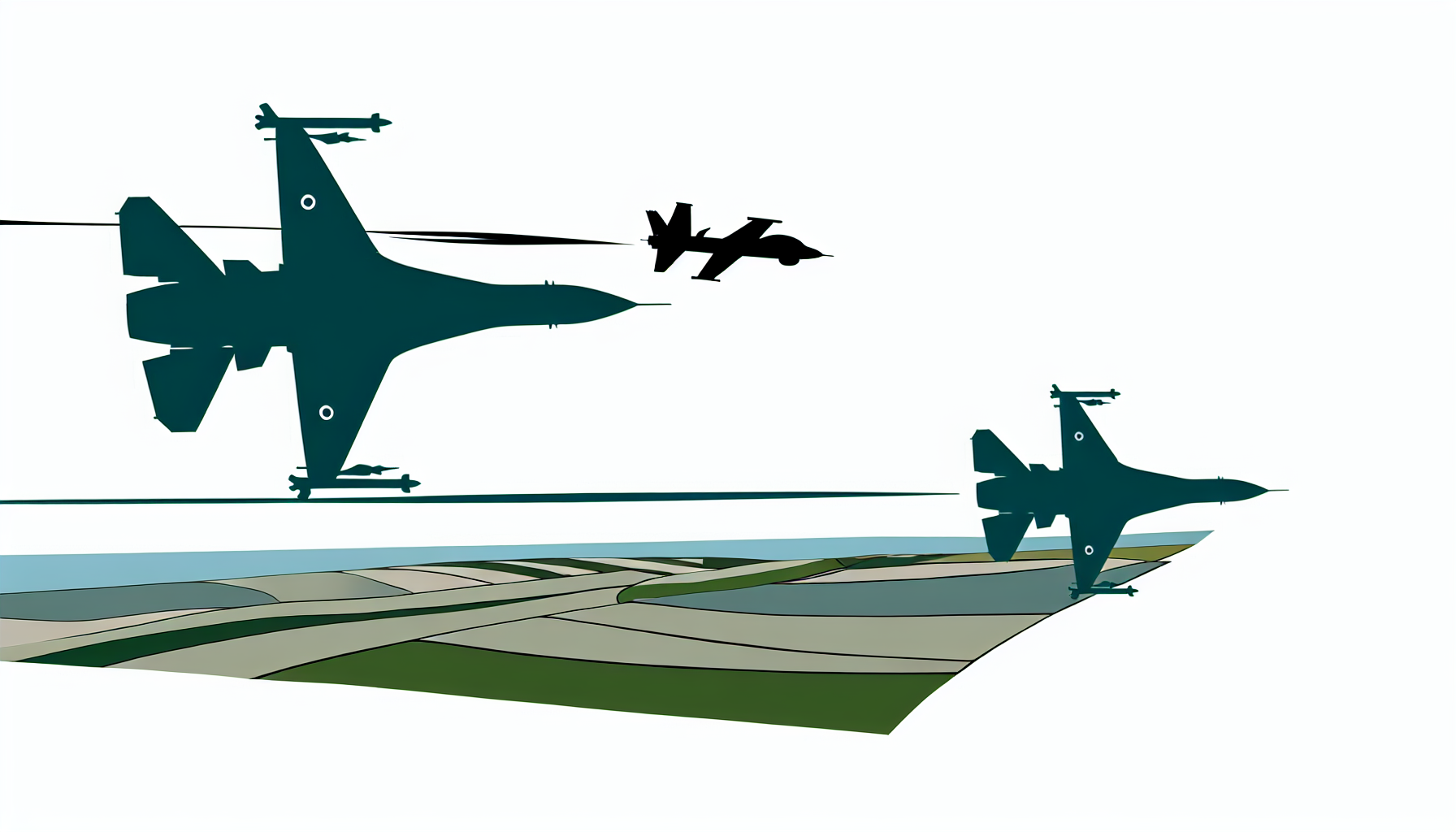
The Turkish Ministry of National Defence is currently conducting a thorough investigation into the origins of an unidentified unmanned aerial vehicle (UAV) that was shot down by Turkish fighter jets on the evening of December 15, 2025. This incident unfolded after the drone violated Turkish airspace, raising immediate concerns regarding national security and regional tensions.
Radar Detection and Scramble
The first indication of trouble arose when early warning radar systems belonging to the Turkish Air Forces detected an unusual air trail over the Black Sea. The radar data suggested an object was moving toward Turkish territory at a rapid pace. In response to this alarming notation, the Eskişehir Combat Air Force Command acted swiftly by scrambling F-16 fighter jets on Quick Reaction Alert (QRA). These jets are designed to respond instantaneously to any perceived threats to national airspace.
Upon interception, F-16 pilots identified the object as an uncontrolled UAV. Following the established rules of engagement, they proceeded to neutralize the vehicle using AIM-9X Sidewinder missiles, specifically designed for within-visual-range combat. This engagement took place approximately 120 kilometers from Ankara, the capital of Turkey, which underscores the potential risks posed by unmonitored aerial vehicles approaching national borders.
Civilian Flight Disruptions
The naval operation necessitated immediate safety measures for civilian aviation. During the intercept and subsequent destruction of the UAV, all arriving and departing flights at Ankara Esenboğa Airport were temporarily put on hold. This precautionary measure ensured the safety of commercial air traffic and passengers during a critical moment. Fortunately, once the airspace was declared secure, normal flight operations resumed, minimizing disruptions and ensuring that civilian safety remained a top priority.
Investigation into Origin
While the Ministry of National Defence has confirmed the neutralization of the UAV, further details regarding its type, capabilities, and country of origin remain undisclosed. Given the flight trajectory observed over the Black Sea, aviation experts speculate that the drone may have originated from Russia or Ukraine, possibly a stray unit from the ongoing conflict in that area. This situation raises pertinent questions about the security implications of such devices operating near national boundaries.
Key Incident Details:
- Interceptor Aircraft: F-16 Fighting Falcon (Eskişehir Command)
- Weapon Used: AIM-9X Sidewinder
- Location of Neutralization: 120 km from Ankara
- Status: Wreckage currently being surveyed by the Air Forces
Currently, military teams are working diligently to recover and analyze the wreckage. A comprehensive examination is underway to identify the drone’s model and functionalities. Investigators are also delving into whether the airspace violation stemmed from a technical malfunction or a deliberate action. As tensions continue to simmer in the region, the findings of this investigation may have far-reaching implications for Turkey’s defense strategy and its response protocols regarding aerial incursions.