


The Intersection of Drone Technology and Border Enforcement: Lessons from Ukraine
Posted: Sunday, December 21, 2025, at 10:00 am
By Alexandra Markovich and P. Nick Curran | Arizona Center for Investigative Reporting
In the far southwestern corner of Ukraine, against a backdrop of stunning church spires and rolling Carpathian landscapes, a soldier known as “Ravik” trained fellow troops to fly drones. These drones, equipped with explosives, have transformed the way modern warfare is fought, showcasing advancements that hold lessons not just for battlefields abroad, but also for law enforcement at home.
The Rise of Drone Warfare
As Ukraine endures its fourth year of conflict against a heavily resourced adversary, it has become the world’s proving ground for drone technologies. In this ongoing war, Ukraine not only utilizes commercially available drones but has adapted them into sophisticated tools for intelligence, reconnaissance, and engagement. “If it flies in Ukraine, it’ll fly everywhere,” remarked Volodymyr Lymanets, a former military training center leader.
The urgency of battlefield needs has spurred rapid developments in drone technology, particularly in countering advanced Russian systems. Ukrainian forces have improved drone capabilities to resist electronic jamming, run custom software, and extend flight duration through enhanced fuel systems. This rapid evolution raises crucial questions about how such military technologies influence domestic operations back in the U.S.
A New Front in U.S. Border Enforcement
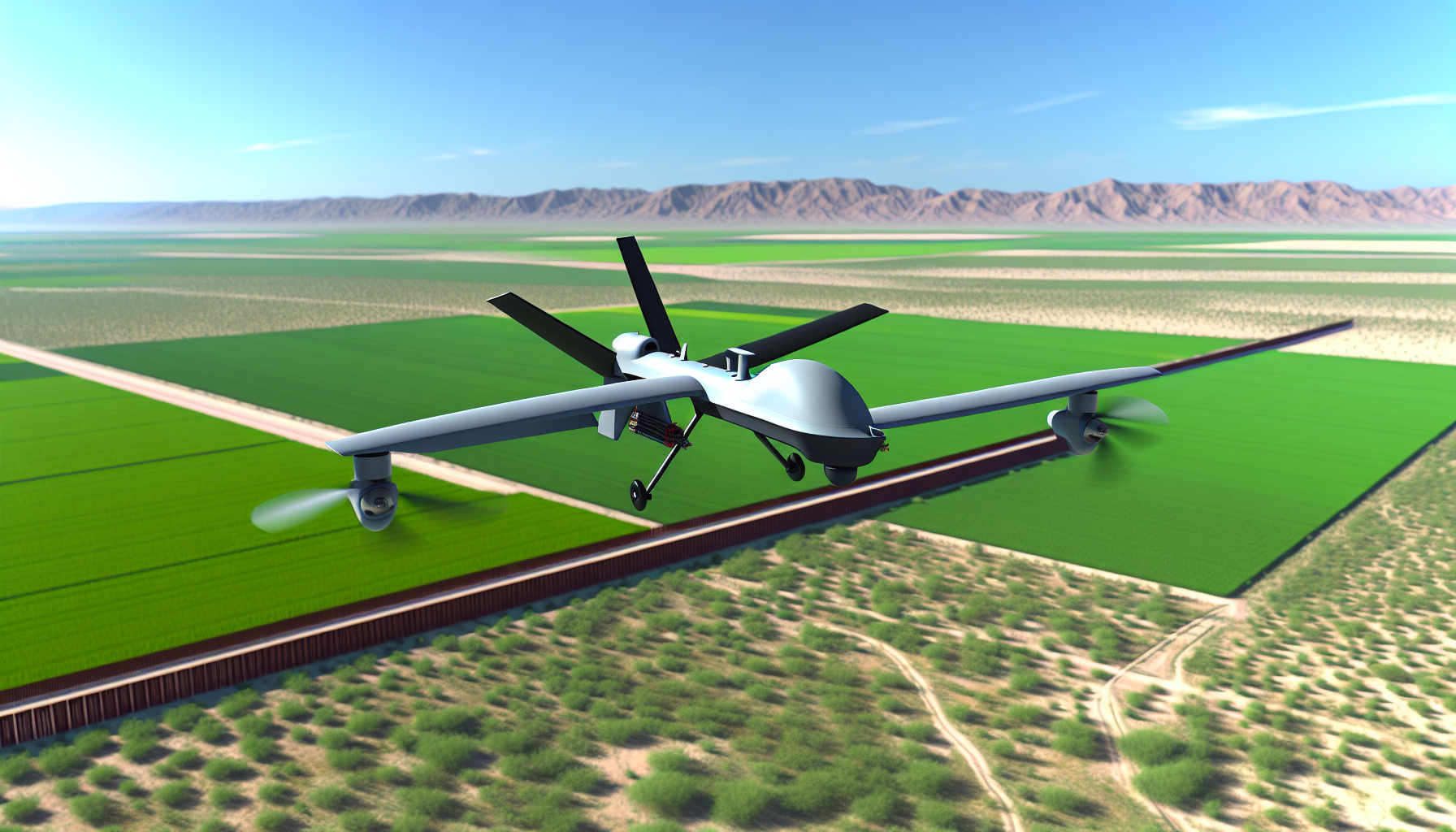
The introduction of drone technologies in border enforcement marks a distinct shift from traditional surveillance methods. The Cochise County Sheriff’s Office in Arizona is at the forefront of piloting U.S. drones designed to enhance border security. These drones, capable of flying for seven hours and carrying significant payloads, signify a potential leap in operational capacities for border management.
The Trump administration’s efforts to fortify border security in light of rising migration rates have reframed the U.S.-Mexico border as a military domain. Experts note that the lines between military and law enforcement are becoming increasingly blurred, allowing advanced surveillance technologies to be deployed domestically. This creates a new paradigm that leverages lessons learned—and technologies developed—from warfare abroad.
Militarization of the Border: A Double-Edged Sword
As domestic agencies deploy technologies initially intended for combat, the implications for civil liberties and rights draw scrutiny. The increasingly militarized approach to border management has resulted in a lack of comprehensive oversight on how these tools are used and whom they affect. Brian Finucane, a senior policy advisor, cautions against the potential of characterizing vulnerable populations as threats, framing a narrative steeped in fear and urgency.
In a world where the rhetoric of an “invasion” saturates policy debates, such tools may not be applied judiciously. “This narrative helps foster a sense of crisis or emergency that justifies further power grabs,” he asserts.
Technological Arms Race: Adapting to New Realities
The U.S. is not only importing drone technology from Ukraine; it is also developing its own systems informed by those battlefield experiences. The Cochise County Sheriff’s Office’s partnership with Canadian manufacturer Draganfly highlights the dual-use nature of modern drone technology. While touted for humanitarian efforts, such as delivering temperature-sensitive medical supplies, concerns remain about how these drones might be adapted for surveillance or enforcement tasks.
Federal agencies are keenly interested in the lessons of adaptability learned in Ukraine, with drone innovations offering new ways to surveil difficult terrains. However, the question remains whether these technologies effectively address the realities of border management or escalate existing tensions.
Regulations and Oversight: A Call for Frameworks
The deployment of drone technology comes amidst a broader call for regulatory frameworks to govern their use. As drone operations proliferate, minimal oversight has led to various state laws and internal policies governing their deployment, often lacking strong privacy protections. Reports have underscored the need for consistent evaluation processes regarding potential biases in surveillance practices, yet many agencies resist reforms, citing resource constraints.
As drone use along the U.S.-Mexico border surges to unprecedented levels, federal oversight lags far behind technological advancements. Customs and Border Protection, with a rapidly expanding fleet of reconnaissance drones, operates without a unified federal standard guiding their actions, allowing for broad discretion in how surveillance information is collected and used.
Broader Implications for Civil Liberties
Emerging from the intersection of military and law enforcement practices is the potential for exacerbating civil rights infringements. Advocates highlight the risk of surveillance technologies disproportionately affecting marginalized communities, with increased discretion often leading to discrimination. Timothy Dunn, an expert on border militarization, warns of a future where enforcement capabilities unchecked by regulations can swiftly spiral into the militarization of domestic law enforcement.
Amidst escalating tensions, the implications of adapting battlefield technologies to border control prompt critical examinations of both ethical boundaries and necessary safeguards. Advocates argue that establishing oversight—and creating accountability structures—is vital to preserve civil liberties in an age of rapidly evolving surveillance capabilities.
This narrative invites contemplation on the broader implications of integrating military-grade technologies into domestic law enforcement, as the global landscape of security and surveillance continues to evolve amidst shifting geopolitical realities.