


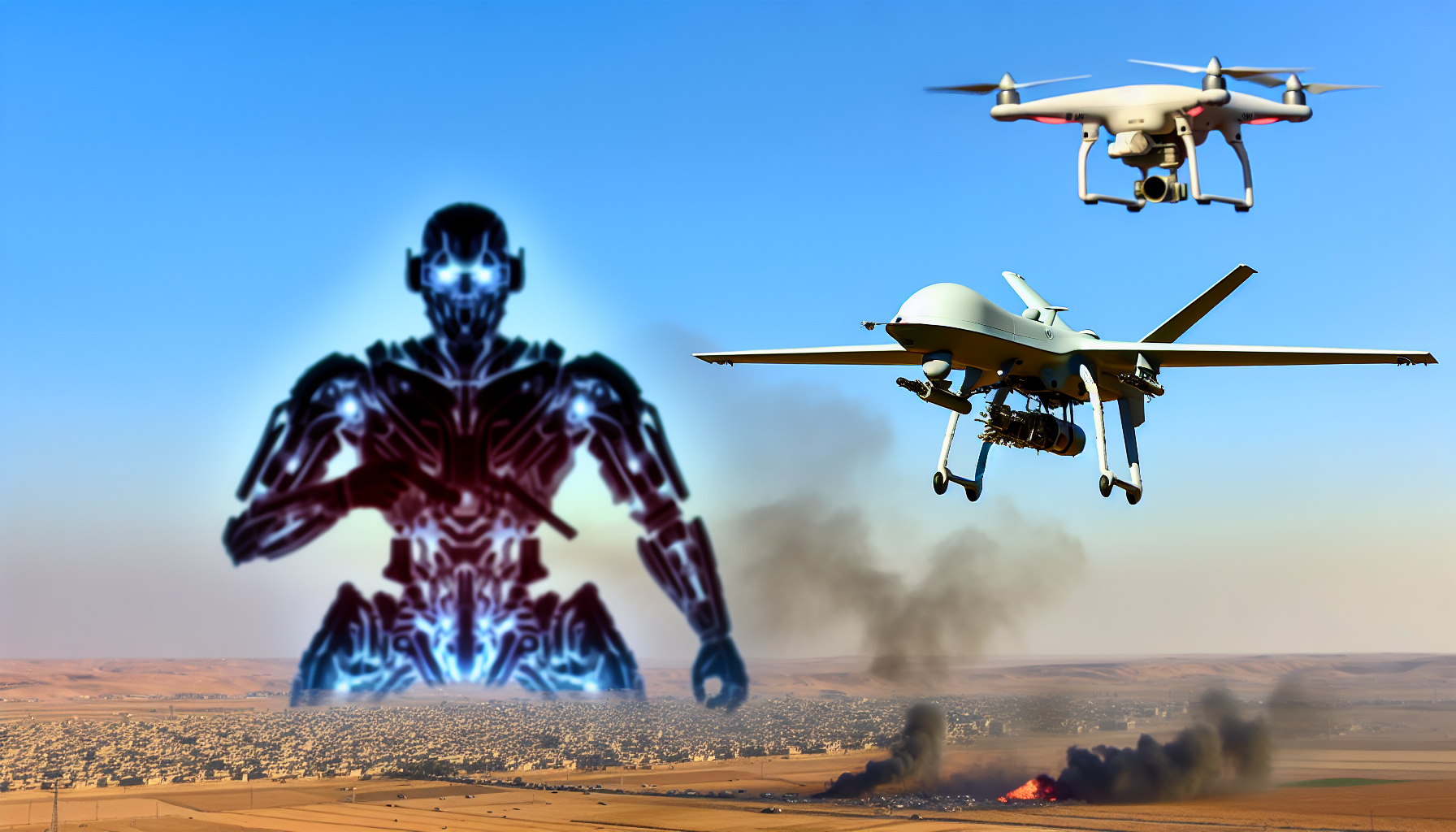
AI and Drones: The Future of Warfare in Ukraine
Introduction
The ongoing conflict in Ukraine has brought numerous challenges to light, especially in the realm of military ethics and technology. Among the most pressing questions is whether this war could serve as a proving ground for drones equipped with artificial intelligence (AI) capable of making life-and-death decisions. This intersection of innovation and morality could redefine warfare as we know it.
The Emergence of AI in Warfare
In the early days of the conflict, reports surfaced that Russian forces were utilizing “kamikaze” drones touted as “hunter-killer robots.” While the companies behind these drones emphasized their AI capabilities, defense analysts largely viewed these claims as exaggerated promotional tactics. The reality, as Paul Scharre, a military expert, notes, is that human operators are still firmly in control of the decision-making process. For the time being, AI hasn’t been integrated into frontline combat in Ukraine to any significant extent.
The Growing Demand for AI in Drones
Despite the current limitations, there’s an insatiable demand for AI in drone technology. The traditional view categorized drones as effective counterterrorism mechanisms suited for conflicts against lesser adversaries. However, the Ukraine war has challenged this perspective, revealing that drones can indeed play critical roles in state-to-state conflict. The evidence suggests that, while humans currently pull the triggers, this situation is likely to evolve.
A Gateway to AI Autonomy
Some analysts describe the Ukrainian conflict as a potential “gateway drug” to the future of AI in warfare. As Joshua Schwartz from Harvard University indicates, the war is paving the way for militaries to explore and eventually utilize AI for combat decisions as they adapt to new conditions and challenges. Given the rapid evolution of technology during wartime, it’s plausible that future conflicts might see AI systems making more independent operational decisions.
Recent Concerns Around Autonomous Weaponry
The conversation surrounding autonomous weapon systems gained traction in 2021 when concerns arose about Turkey deploying the Kargu-2 quadcopter drone in Libya, a machine reportedly capable of autonomously targeting and killing retreating troops. Many experts debated whether discussions should focus on the ethical implications of autonomous warfare or the legality of such actions under international laws. Hitoshi Nasu, a professor at West Point, emphasizes that while ethical considerations are crucial, they should prioritize the ability of drones to distinguish between military targets and civilian lives.
The Ethical Dilemma
Nasu argues that today’s AI-driven systems are designed to minimize civilian casualties, thus framing the ongoing discussion as one that could evolve positively with the right ethical guidelines. However, public perception often leans toward fear influenced by science fiction narratives. Critics raise valid concerns about scenarios where machines may struggle to recognize acts of surrender or humanitarian gestures, complicating ethical warfare.
The Uncertain Timeline for Effective AI
While ongoing advancements in AI technology signal significant progress, experts like Scharre suggest that fully autonomous drones capable of making targeting decisions could still be 5 to 10 years away. Current AI systems lack reliability and the precision required for sophisticated target recognition. Operators currently prefer the human touch, allowing commanders to influence the course and intensity of military actions to prevent large-scale escalations.
Changing Ground Levels
Military professionals are wary of the consequences that arise from over-reliance on AI for combat. The potential shift in how warfare is conducted could drastically alter targeting incentives. Instead of engaging robotic opponents, militaries might opt for strategies that directly affect human populations, potentially leading to widespread escalation and unintended humanitarian crises.
Global Perspectives on AI Warfare
Internationally, apprehensions regarding AI in warfare are mirrored in China and other nations, which are racing to develop comparable military technologies. This AI arms race points to a broader concern: Will the use of AI in conflict situations reduce the perceived costs of military actions? Experts have cited how an over-reliance on AI could lower the bar for initiating military engagement and escalate conflicts.
Old Problems with New Solutions
Despite the focus on transformative technology, the Ukraine conflict exhibits many characteristics common to 20th-century warfare, emphasizing the importance of traditional combat tactics. Scharre points out that, fundamentally, battles remain dominated by practical circumstances rather than advanced technological systems. Even the most sophisticated weaponry harbors risks that were once confined to old-school methods.
Ethical Constraints and Intentions
Ultimately, the question remains: Is a weapon ethical based solely on its technological capabilities, or does its ethical framework depend more on the intentions behind its deployment? In the hands of those who prioritize humanitarian considerations, these technologies can be seen as tools for strategic advantage rather than avenues for indiscriminate violence.
By examining the current state of warfare in Ukraine, one can gain insights into the philosophical and practical challenges that lie ahead as militaries across the globe navigate the intricate balance between advancing technology and preserving ethical standards in combat.