


The Future of Warfare: UK’s Autonomous Drone Swarm Trial
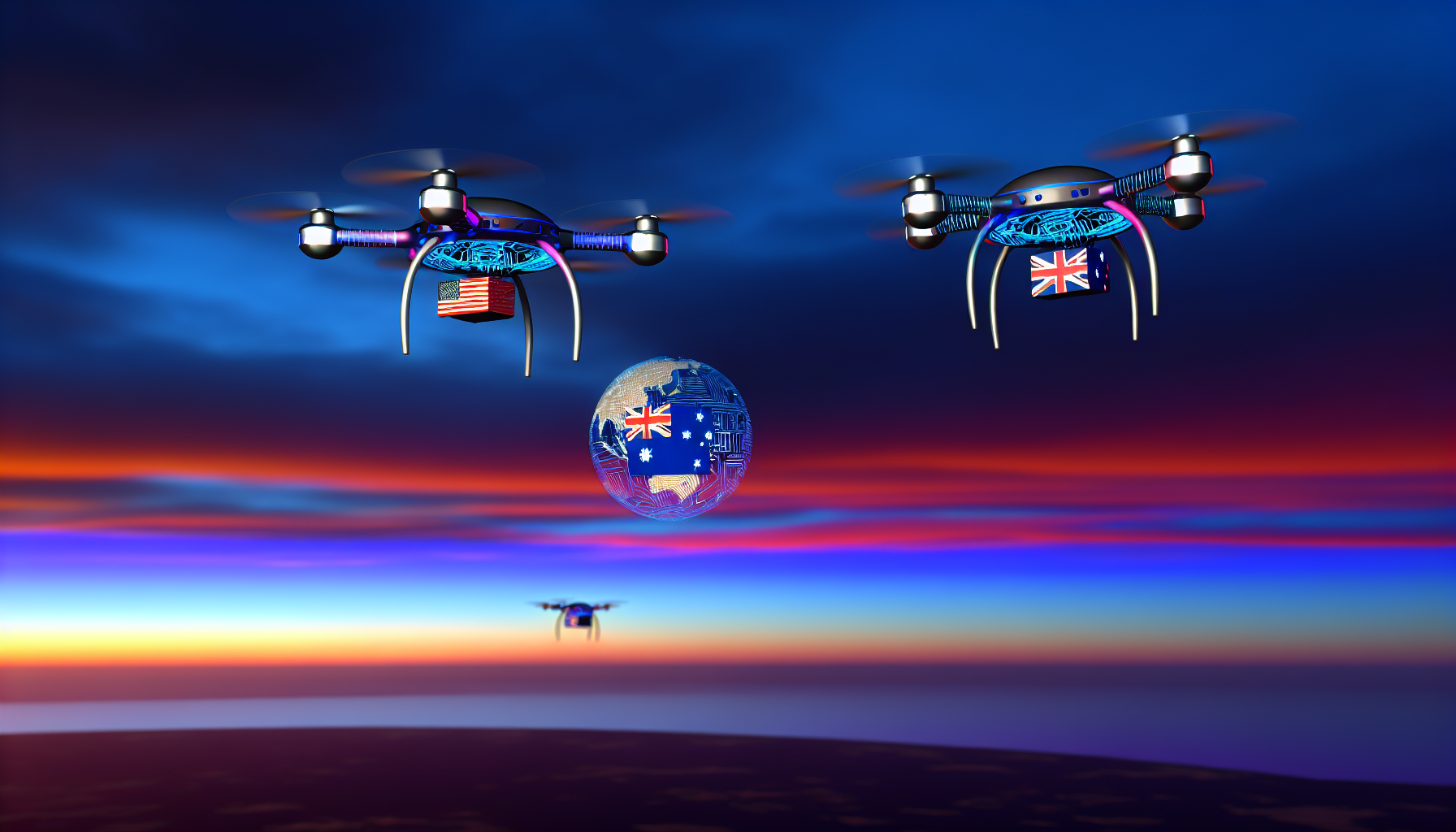
In an ambitious move to redefine military capabilities, the UK government has rolled out a “collaborative swarm” of autonomous drones to detect and track military targets. This initiative, powered by artificial intelligence (AI), is part of a landmark joint trial with Australia and the United States, aimed at enhancing security cooperation among these allies. Organized by the UK’s Defence Science and Technology Laboratory (Dstl), the trial took place in April 2023, marking a significant step forward in military innovation.
Real-Time AI Learning
One of the standout features of this trial was the practical implementation of AI training. The drones operated within a real-time, “representative environment,” which allowed for mid-flight retraining of their machine learning models. This adaptive learning capability is revolutionary, showcasing the potential for drones to respond to dynamic battlefield conditions effectively. The ability to adjust to new information quickly enhances the drones’ efficacy in target identification, making them formidable assets in modern warfare.
Collaborative Machine Learning Models
The trial also embraced collaboration beyond national borders, involving the “interchange” of various machine learning models between the drones operated by the participating countries. Additionally, these models were deployed in ground vehicles to assess their target identification capabilities further. This cooperative approach significantly amplifies the potential for success in joint military operations, as shared resources and knowledge can lead to improved strategy formulation and execution.
The UK Ministry of Defence (MoD) noted, “The ML models were quickly updated to include new targets and shared among the coalition,” emphasizing the speed and efficiency of this collaboration. Such teamwork ensures that all nations involved can leverage each other’s advancements in AI technology, ultimately enhancing coalition military capability.
AUKUS Agreement and its Implications
This trial is a key component of the AUKUS agreement—a trilateral security pact between Australia, the UK, and the US focused on enhancing military cooperation in the Indo-Pacific region. Under the framework of this pact, efforts are concentrated on cutting-edge areas like AI and hypersonic technologies. This trial showcases how AUKUS aims to accelerate collective understanding and application of AI in military contexts, thereby improving operational effectiveness.
Lieutenant General Rob Magowan, the UK deputy chief of defence staff, remarked on the significance of this trial, stating that it illustrates the military advantages of AUKUS advanced capabilities. The cooperative endeavor positions the nations involved to counter potential adversaries more effectively by leveraging the speed and reach of autonomous systems.
The Ethical Debate Surrounding AI in Warfare
While the advantages provided by AI in military operations are apparent, they are accompanied by pressing ethical concerns. The MoD’s Defence Artificial Intelligence Strategy, unveiled in June 2022, outlined a commitment to responsible AI development. Although specific guidelines around autonomous weapons systems remain vague, the Ministry has asserted that systems operating without necessary human oversight would be deemed unacceptable.
The growing discourse surrounding the ethical implications of AI in warfare raises critical questions about accountability and compliance with international law. A report from the Congressional Research Service highlights the concerns of over 30 countries and numerous NGOs advocating for a preemptive ban on autonomous weapons. Their objections stem from apprehensions about the potential for lethal decisions made by machines without proper oversight or the ability to adhere to well-established humanitarian laws.
Scrutinizing AI Weaponization
In January 2023, the House of Lords initiated an inquiry into the development and deployment of AI-driven military systems. This committee aims to explore the ethics surrounding these technologies, the risks of conflict escalation, and their compliance with global laws. As the committee delves deeper into the intricacies of AI weapon systems, notable voices within the discussions raise valid concerns about how these technologies interact with principles of war, especially when operated by non-state actors, such as multinational corporations.
Experts emphasize the unpredictability and rapid escalation potential of AI in military applications. For instance, Kenneth Payne from King’s College London posits that the nature of machine decision-making in warfare can lead to unforeseen responses, complicating traditional deterrence strategies.
Collaborative Efforts in AI Development
The committee discussions underscore a broader call for countries to collaborate in developing regulations that govern the use of AI in warfare. These dialogues highlight the necessity to balance technological advancement with ethical considerations and accountability. The conversation emerges not only around governmental frameworks but also pertains to the role of the private sector in AI development.
Payne suggests enhancing academic research opportunities in AI as a way to democratize and stabilize the landscape, pushing back against corporate dominance in military AI technologies.
With the considerable implications of AI on warfare, the ongoing developments in drone technology and autonomous weapon systems require careful consideration, not only of their tactical merits but also of the moral landscape they inhabit. As this technology continues to evolve, it promises to reshape both military strategy and international diplomacy in unprecedented ways.