


China’s Military Drills: A Show of Strength around Taiwan
The Context of the Exercises
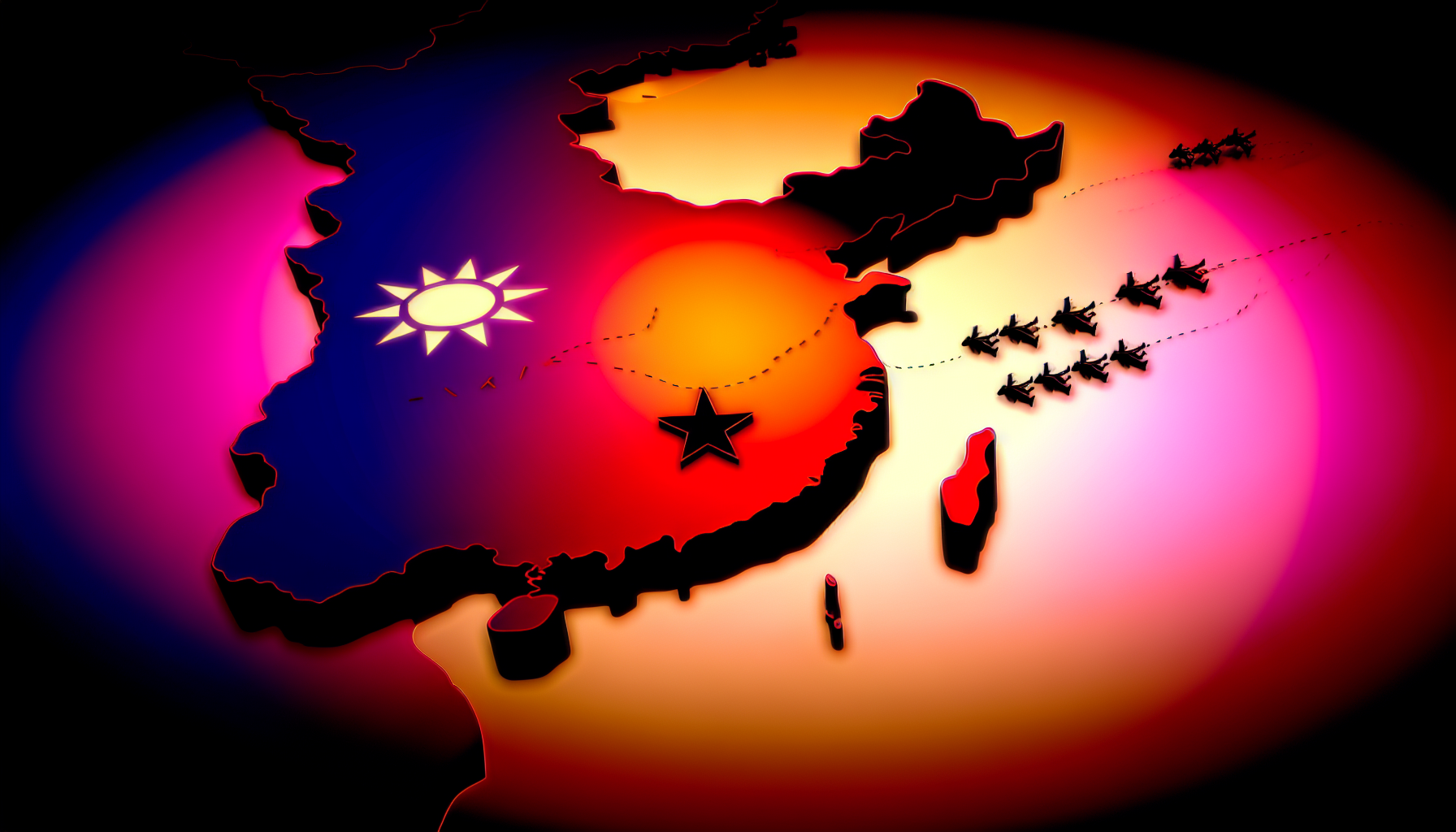
On December 29, 2023, China initiated its most extensive military drills yet around Taiwan, signaling a significant escalation in its efforts to assert sovereignty over the self-governed island. The Eastern Theatre Command of the People’s Liberation Army (PLA) categorized these drills under “Justice Mission 2025,” aiming to showcase its military capability to isolate Taiwan from potential external support in a conflict scenario. This display was specifically designed to test Taipei’s resolve and assess the effectiveness of its American-made weapons arsenal.
Scale and Scope of the Drills
The exercises involved a wide array of military assets, including troops, warships, fighter jets, and artillery. For the first time, drills were conducted across seven designated zones, making it the largest military operation of its kind in terms of geographic coverage and proximity to Taiwan. While initial plans included live-fire activities in five zones, the expansion indicated a more aggressive posture by China. The drills were scheduled to extend into December 30, further amplifying the pressure on Taiwan.
Historical Context and Motivation
These developments mark China’s sixth significant round of military exercises since the beginning of 2022, particularly following notable events such as former U.S. House Speaker Nancy Pelosi’s visit to Taiwan. The situation is exacerbated by rising tensions in the region, especially after Japanese Prime Minister Sanae Takaichi suggested that a Chinese attack on Taiwan could provoke a military response from Japan. This backdrop illustrates the complex geopolitical dynamics at play.
Taiwan’s Response and Military Preparedness
Taiwan has categorically rejected China’s claims of sovereignty, stating that the future of the island should be decided by its own people. Hsieh Jih-sheng, Taiwan’s deputy chief of general staff for intelligence, emphasized the need for preparedness against potential military pressure. He noted that live-fire drills in the Taiwan Strait could have broader implications for both regional stability and international relations.
U.S. Arms Sales and Tensions
Adding fuel to the fire, the U.S. recently announced a significant arms package worth $11.1 billion for Taiwan, the largest ever, which sparked protests from China’s Defence Ministry. This move highlights the intricate web of alliances and the growing military cooperation between Taiwan and the United States, further complicating the strategic landscape.
A Blurred Line: Training vs. Preemptive Action
Observers are increasingly alarmed at how China’s military drills blur the lines between standard training exercises and preparations for potential conflict. The intention behind these operations seems clear: to convey a message of deterrence to the U.S. and its allies while simultaneously testing their readiness for a possible assault. Analysts warn that this could create a scenario where military intervention comes with minimal warning.
Technological Advancements and Military Strategy
Compounding these concerns, the PLA has showcased advanced technology, including humanoid robots, microdrones, and weaponized robotic dogs in their drills—technologies that had not been publicly presented before. Experts, like Fu Zhengyuan from the Academy of Military Science, justify these exercises by citing increased interoperability between Taiwanese and U.S. combat systems, which could escalate tensions further.
Taiwan’s Countermeasures
In retaliation to the drills, Taiwan’s government condemned the actions and highlighted its own military capabilities. The Defence Ministry released a video featuring advanced weaponry, including the U.S.-made HIMARS rocket systems, capable of reaching targets within China. This arsenal not only serves as a deterrent but also underscores Taiwan’s commitment to defending its sovereignty.
Maritime and Aerial Responses
As military activities intensified, Taiwan’s coast guard mobilized large vessels in reaction to the presence of Chinese coast guard ships near its waters. The island’s aviation authority also prepared contingency plans for disrupted air traffic due to China’s designation of a “temporary danger zone” for the live-fire drills. This proactive approach reflects Taiwan’s commitment to maintaining safety in its air and maritime operations.
Increased Chinese Military Presence
The PLA’s escalation included 89 military aircraft and numerous vessels operating near Taiwan, some of which engaged in stand-offs with Taiwanese forces. Taiwan’s military remains on high alert, prepared for rapid-response exercises that ensure swift troop movements in case of an actual attack scenario.
Public Sentiment in Taiwan
Despite the seriousness of the situation, public reactions within Taiwan paint a nuanced picture. For many, like teacher Lin Wei-ming, the drills are perceived as more of a scare tactic rather than an immediate threat. The sentiment suggests a broader understanding that political resolutions must come from Taiwan’s leadership rather than military intimidation from China.
Propaganda and Psychological Warfare
In tandem with the drills, the Chinese military released propaganda materials portraying their capabilities and intentions. Posters detailing targets across Taiwan and declarations of deterrence underscore the psychological aspect of these military exercises, aiming to instill fear while promoting a narrative of inevitability regarding Taiwan’s reunification with China.
Conclusion of Military Drills
Ultimately, these military exercises are not just routine but represent a significant strategic shift in China’s approach to Taiwan, emphasizing the need for close attention to regional dynamics and the implications for global security. The situation continues to evolve, with both sides preparing for an uncertain future.