

Iran and Venezuela: A Rising Axis of Influence in the Western Hemisphere
Introduction to an Unlikely Partnership
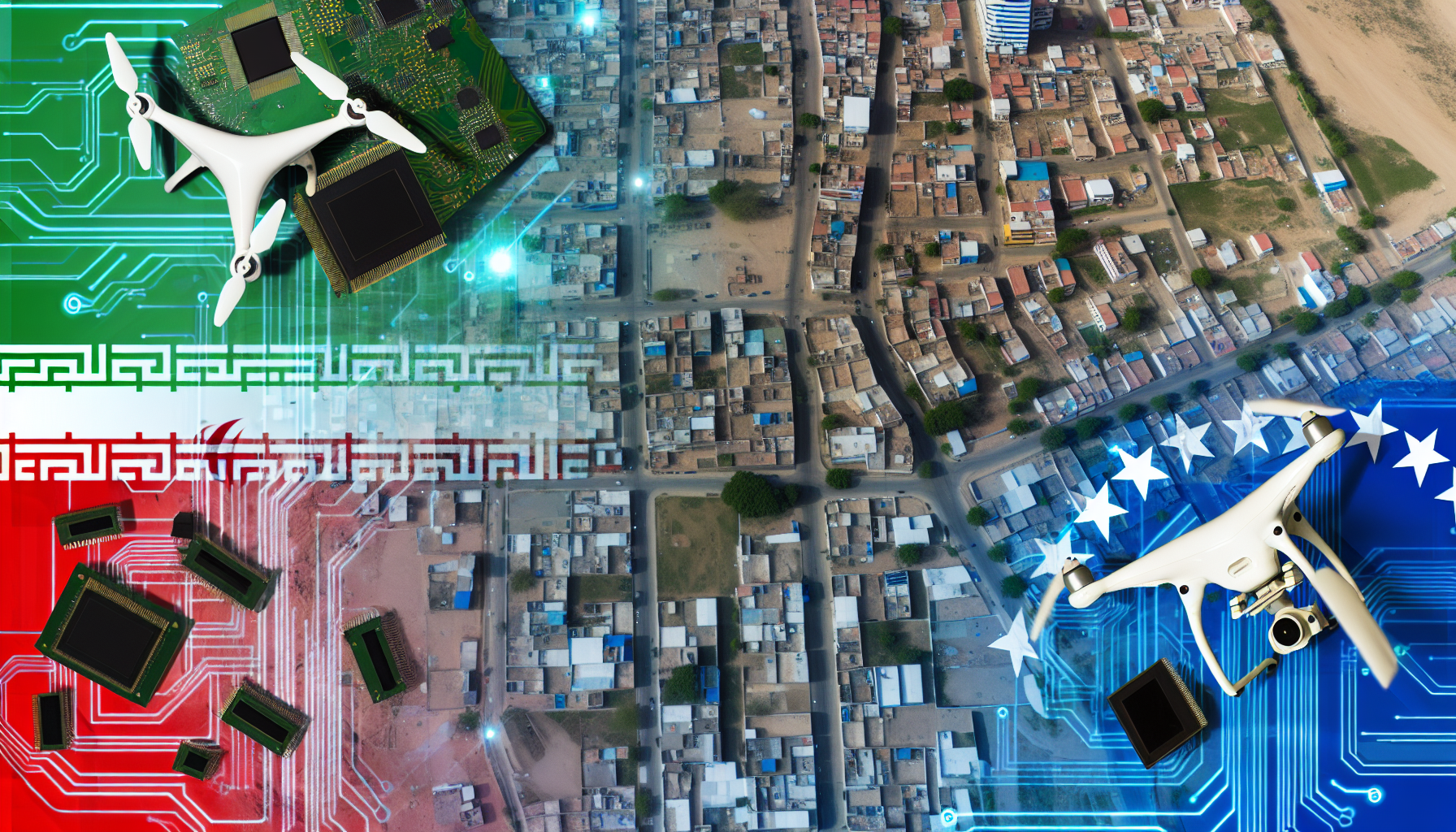
In recent years, the relationship between Iran and Venezuela has raised eyebrows, particularly among U.S. policymakers. The Center for a Secure Free Society (SFS) asserts that Iran is leveraging Venezuela as a strategic launching point to establish a drone pipeline closer to U.S. territory. This development poses potential threats not only to regional stability but also to U.S. national security, representing a significant shift in geopolitical dynamics.
U.S. Sanctions as a Response
On Tuesday, the U.S. Department of the Treasury’s Office of Foreign Assets Control (OFAC) took a decisive step by sanctioning a range of individuals and entities linked to the burgeoning arms trade between Iran and Venezuela. The sanctions are based on the premise that this partnership poses a considerable threat to U.S. interests in the Western Hemisphere. Notably, the sanctions target the Empresa Aeronautica Nacional SA (EANSA) and its chairman, Jose Jesus Urdaneta Gonzalez, who are central figures in the assembly of Iranian drones in Venezuela.
The Emergence of Drone Technology
Iran has been active in the drone technology sphere, particularly through its Qods Aviation Industries (QAI). The sanctions specifically highlight EANSA’s role in facilitating the assembly and maintenance of Iran’s Mohajer-series UAVs in Venezuela, which have been rebranded as the ANSU series. The ANSU-100 drone, capable of launching guided bombs, illustrates the growing military capabilities being transferred to the region.
The Strategic Implications
SFS’s recent report, titled “Venezuela as Bridgehead,” underscores the significance of the U.S. sanctions, lauding them as a pivotal moment in recognizing Iran’s usage of Venezuela as a proxy to challenge U.S. interests. This is a groundbreaking acknowledgment that draws attention to a deeper, more troubling relationship between these two countries.
Tehran-Caracas Relations
The report points out that the partnership between Tehran and Caracas has evolved into a complex industrial and logistical network. This network not only encompasses the transfer of drone technology but also extends to military capabilities that are being established right in the Western Hemisphere. This operational architecture marks a significant departure from traditional alliances, indicating a more aggressive posture between the two nations.
Historical Context of Cooperation
The foundations for this partnership were laid under the late Venezuelan leader Hugo Chávez, during which Iran gained substantial influence in Latin America. Chávez’s administration fostered deep ties with Iran, transforming the country from an ideological ally into a strategic operational hub for Tehran. Historical documents indicate that under Chávez, Iran’s regional presence expanded, establishing communication channels and diplomatic ties.
Political and Military Infrastructure
The relationship has been shrouded in a cloak of bilateral agreements, often couched in terms of economic cooperation. These agreements have, over time, provided political cover for facilitating the movement of military resources and personnel. Security circles have even dubbed the air corridor connecting Caracas, Damascus, and Tehran as “aeroterror,” illustrating the extent of this calculated partnership.
Broader Implications for Regional Security
SFS has identified the evolving relationship as one that provides significant ideological and tactical advantages, emphasizing that Tehran’s presence in Latin America is both deliberate and conflict-oriented. The sanctions broaden the scope of U.S. involvement, advocating for a more robust approach to counteracting this axis, which includes not only Iran but also its allies like China and Russia.
A Call for Expanding Sanctions
In light of these developments, SFS advocates for the Trump administration to expand its list of sanctions to include further individuals and entities sustaining the Iran-Venezuela partnership. This expansion should encompass countries like China and Russia, which are also propping up the Maduro regime.
The Central Lesson
The key takeaway from the SFS report hinges on the realization that Iran’s influence in the region is not just ideological but infrastructural and increasingly kinetic. This calls for a reevaluation of how the U.S. perceives and interacts with the dynamics in Latin America, particularly as they relate to national security issues.
Forward-Looking Strategies
Beyond mere sanctions, SFS recommends a multi-faceted approach to combating this growing threat. Suggestions include enhancing customs controls, blocking dual-use components, and rethinking deterrence strategies. This holistic perspective redefines the crisis not as an anomaly but as a model of operation pursued by authoritarian regimes seeking to expand their influence and weaken U.S. presence in the region.
Conclusion
As Iran and Venezuela deepen their relationship, the implications for U.S. national security become increasingly complex. With the drone capabilities being assembled in Venezuela and the historical cooperation established over decades, the time has come for a rigorous reassessment of strategies to protect and advance U.S. interests in the Western Hemisphere.