


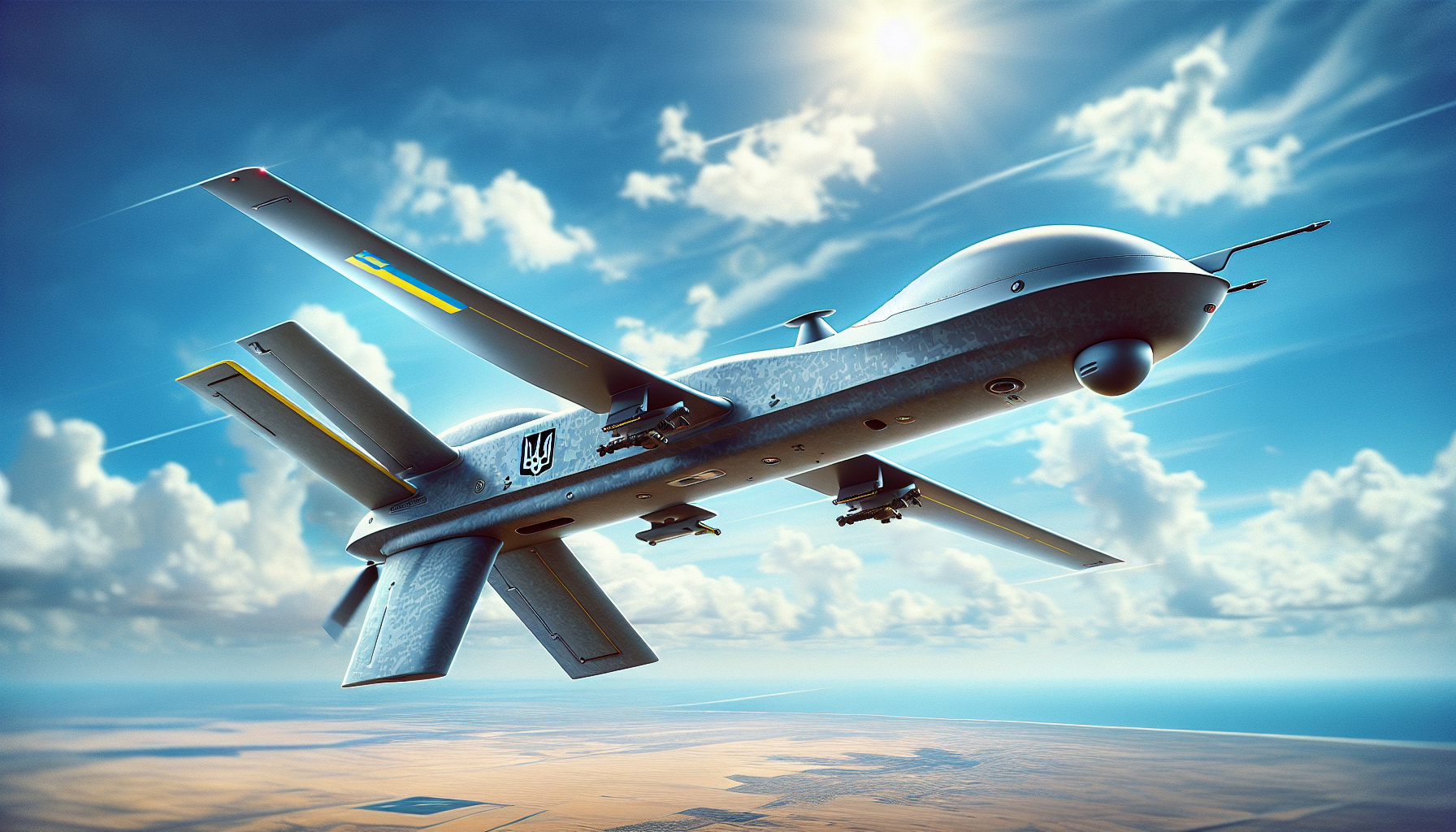
### The Rise of Drone Warfare: Insights from Ukraine’s Armed Forces
On January 6, Commander-in-Chief Oleksandr Syrskyi of the Armed Forces of Ukraine provided a compelling assessment of unmanned systems units in December 2025. This month marked a notable shift in operational effectiveness, as Ukrainian unmanned systems neutralized an estimated number of Russian personnel that coincided with Russia’s monthly draft numbers. Syrskyi’s remarks highlighted a pivotal moment in which technology and strategy converged on the battlefield.
#### Personnel Losses and Realities on the Ground
Syrskyi reported that the enemy has experienced over 33,000 personnel losses, a figure that emphasizes the destructiveness of modern warfare. This number is based solely on confirmed video evidence, suggesting that actual losses could be significantly higher. In stark contrast, Russia has not offered recent figures on its casualties, with the last official number dating back to September 2022, when 5,937 soldiers were reported killed.
The contrast is sharp: while Ukraine is transparent about the impact of unmanned systems, Russia’s lack of disclosure raises questions about the true cost of the conflict for their troops.
#### A Year of Progress
Reflecting on the previous year, Syrskyi declared 2025 as a “year of a major leap forward” in the integration of unmanned systems into military operations. The Ukrainian military has seen a notable increase in its unmanned aerial units’ capabilities, positioning these forces not just as support systems but as integral components of their overall strategy.
Looking ahead to 2026, the plans to further enhance these capabilities are ambitious. The ongoing evolution of unmanned systems is not confined to Ukraine; Syrskyi acknowledged that Russia is also investing significantly in this area.
#### Russian Developments in Drone Warfare
Syrskyi noted that the Russian military has been creating specialized unmanned systems troops, which have grown from 80,000 to a projected 165,500 by next year. By 2030, the expected troop strength could reach nearly 210,000. The numbers reveal a significant commitment by Russia to adapt its military strategies in the face of drone warfare.
Moreover, state orders for the production of long-range drones in Russia exceeded targets by 106%. With daily production numbers surpassing 400 unmanned aerial vehicles (UAVs), the implications for future conflicts are considerable. As Syrskyi stated, understanding these advancements is crucial for Ukraine’s tactical planning.
#### Key Tactical Objectives
In light of these developments, Syrskyi underscored the need for specialized units aimed at identifying and neutralizing the enemy’s sophisticated drone units, command centers, and UAV crews. The emphasis on technological superiority is clear: the side with the greatest quantity and quality of drones retains an advantage in preserving its forces and executing effective strikes.
The statistics from December emphasize Ukraine’s momentum: roughly 339,000 tasks were completed by unmanned aerial complexes, and ground robotic units accomplished nearly 2,100 missions. Notably, the Ukrainian forces increased the number of enemy personnel targeted by more than 25%.
#### Financial Impact of Drone Operations
The Unmanned Systems Forces reported offensives resulting in over 168,000 attacks on Russian targets over seven months, representing an estimated economic impact of $20 billion. This figure underscores not only the cost of warfare but also the critical role that unmanned systems play in the operational success and strategic planning of military engagements.
### Prospects for Unmanned Systems Development
The leadership’s insights highlight an unequivocal trend: unmanned technologies are becoming increasingly pivotal in military operations. Ukrainian Defense Forces are poised to continue expanding their unmanned capabilities, firmly establishing this trend as a cornerstone of their military strategy.
Priorities for the coming years include enhancing tactical deployment of drones, fostering collaboration across military divisions, and scaling up operations involving FPV (First-Person View) and long-endurance drones. The dividends of these improvements are already visible, with UAV units showing marked growth in executing complex tasks, reinforcing Ukraine’s command in drone warfare, and laying a solid foundation for advancements in defense technology and military analytics.