



Revolutionizing Drone Warfare: Ukraine’s Response to Russian UAV Tactics
The Growing Threat of Russian Drones
Russian reconnaissance drones have become a significant threat for Ukrainian infantry on the front lines. These uncrewed aerial vehicles (UAVs) provide crucial aerial surveillance, enabling Russian assaults to be meticulously planned and executed. With aerial support disrupting troop movements and rotations between trenches, Ukrainian forces have had to adapt quickly to counter this evolving threat.
The Russian military uses drones to monitor rear areas, actively seeking out Ukrainian tanks, artillery, communication systems, and electronic warfare setups. To counter this, Ukrainian infantry, as well as artillery and tank crews, have integrated pump-action shotguns and portable electronic warfare kits into their arsenals. These measures aim to neutralize Mavic drones and first-person view (FPV) UAVs while safeguarding personnel and positions from air attacks.
Limitations of Existing Measures
Despite efforts to create a protective aerial umbrella, these strategies are not foolproof. Maintaining continuous electronic warfare coverage is challenging, and relying on shotguns requires consistent human performance. Moreover, intercepting drones with expensive counter-UAV systems—especially when cheaper, more cost-effective FPVs are on the field—poses a logistical dilemma.
Innovating Defense: The Ukrainian Military’s Response
Faced with these challenges, the Ukrainian military developed an innovative approach to combat Russian quadcopters and FPV drones. Ukrainian drone pilots realized that these relative vulnerabilities of enemy drones could be exploited, enabling them to use their drones as offensive weapons against others.
Initially, drone pilots sought to take down Russian drones by ramming them. This direct confrontation, however, led to a simple “drone-for-drone” exchange without preserving the attacking drone for future operations.
DroneShotguns: A New Frontier in Aerial Defense
The next phase in this drone warfare evolution involved attaching shotguns to Ukrainian drones, allowing them to return after engagements. While this strategy maximized the potential for preserving assets, it introduced new challenges—namely, the limitations of shotgun firepower and the risk of recoil causing mid-air instability.
Ukrainska Pravda interviewed Andrii Pavlovskyi, a Ukrainian engineer who pioneered one of the first “drone shotguns.” Initially focused on logistics and bomb-disposal robots during the early days of the conflict, he quickly pivoted to tackling the aerial combat arena.
Pavlovskyi innovated a recoil-free shotgun shell, which produces minimal kick, allowing drones to maintain stability during firing.
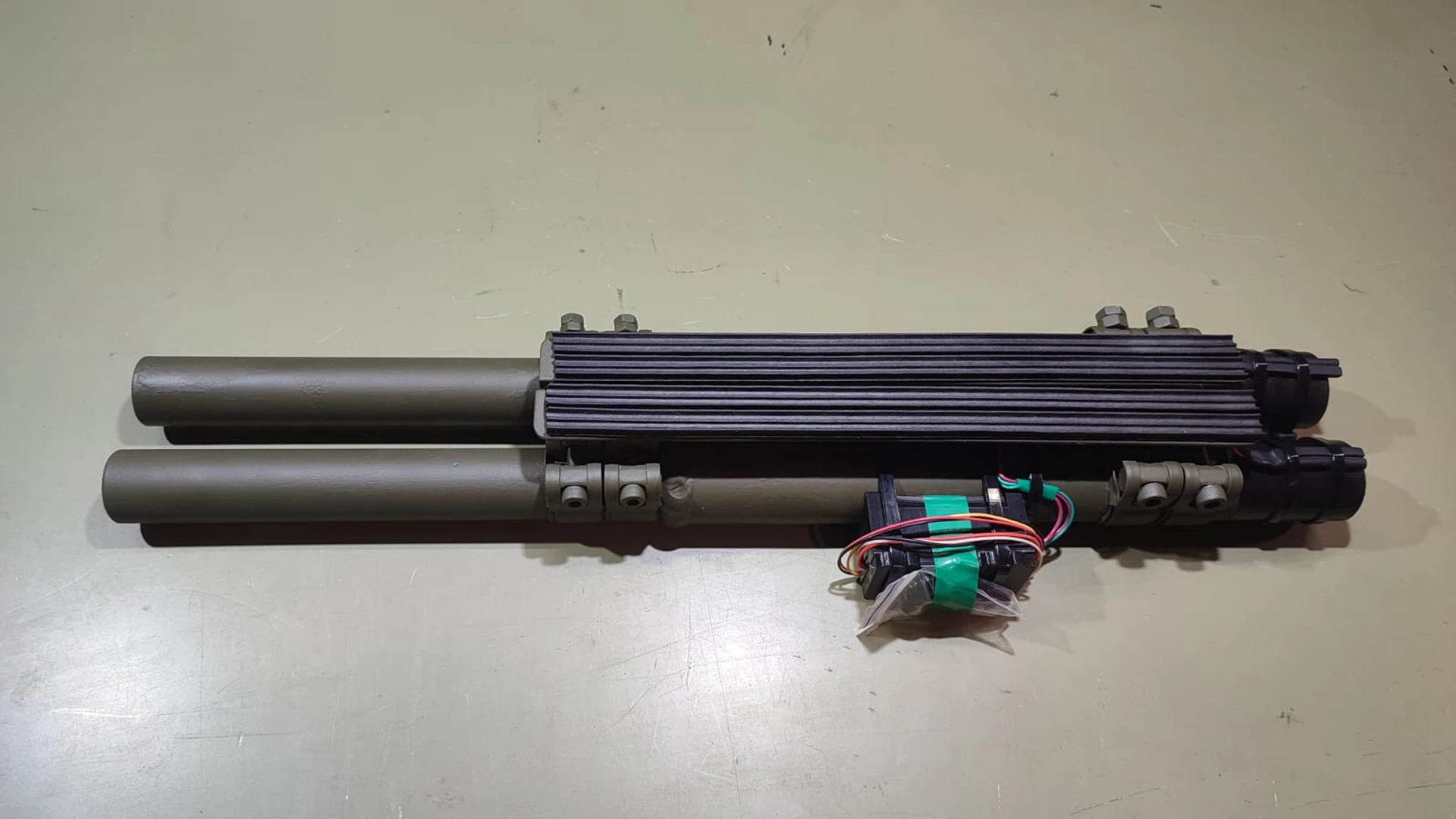
The Sting system for hunting DJI Mavic drones and damaging electronic warfare antennas.
Photo: Andrii Pavlovskyi
Introducing Aero Trawl
In addition to shotgun systems, Pavlovskyi conceived a simpler, cost-effective device—Aero Trawl. This not only shot down enemy UAVs but enabled their capture for intelligence purposes. Priced at roughly $18.50, the Aero Trawl became a vital asset for the Ukrainian forces.
The Mechanics of Aero Trawl
The device is purely mechanical, lacking any electronic components, and is mounted on quadcopters with a frame size of 10 to 15 inches. Its design resembles a sea trawl—a net-like structure—but instead of conventional mesh, it uses vertical slings made of thin, high-strength cords aimed at snagging the enemy drones’ propellers.
Weighing only 300 grams, considerably lighter than shotgun setups, Aero Trawl’s design preserves the drone’s aerodynamics, enhancing its effectiveness.
The system can be affixed to a drone in under a minute, making it operational immediately upon takeoff.
“Aero Trawl is most effective when the carrier drone is equipped with a thermal imaging camera, allowing the operator to approach the target stealthily,” Pavlovskyi explained. At the moment of capture, the Russian operator remains unaware, as the trawl remains invisible until it’s too late.
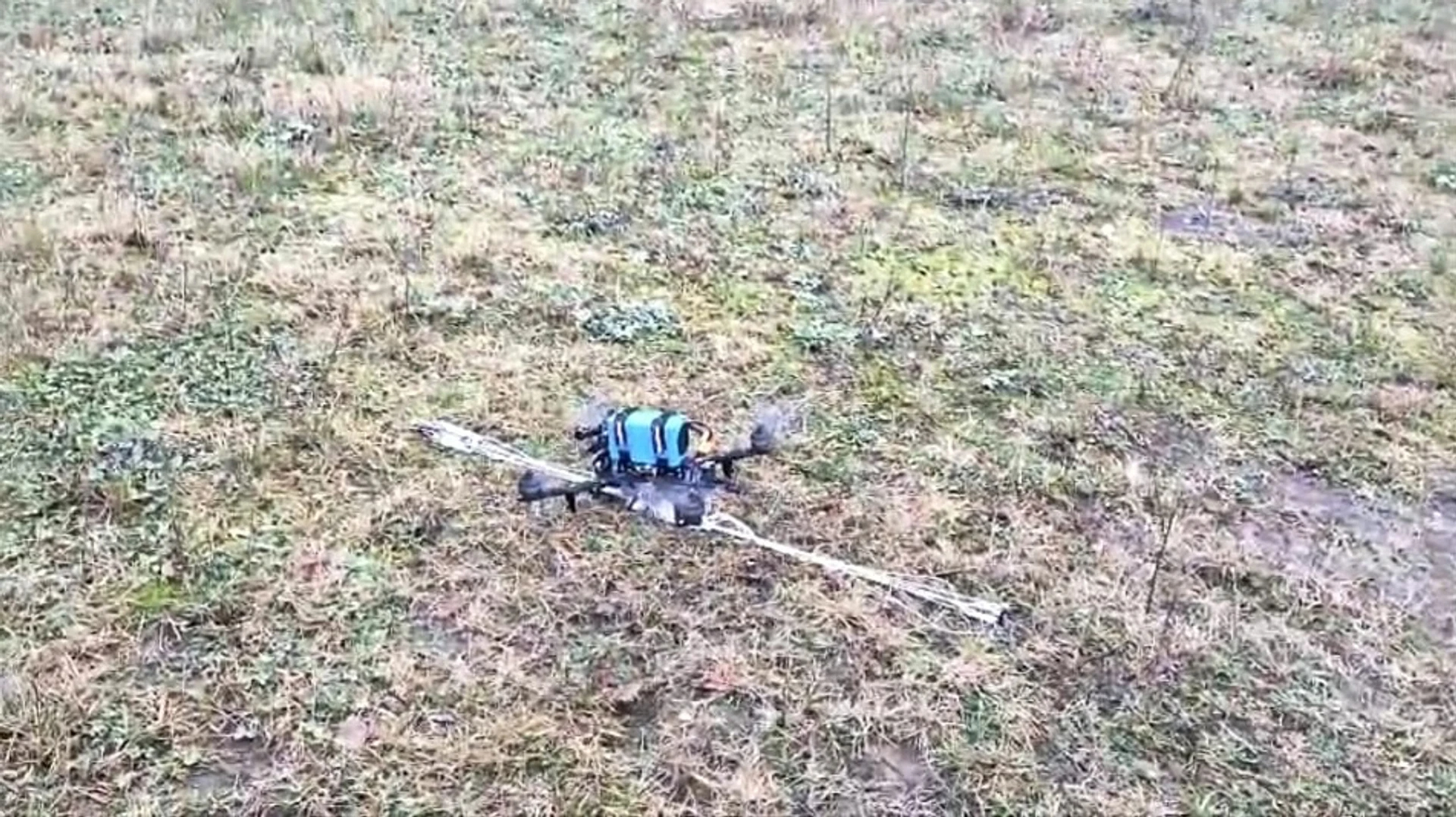
A quadcopter equipped with the Aero Trawl system before take-off.
Photo: Andrii Pavlovskyi for Ukrainska Pravda
Operational Effectiveness
The Aero Trawl system includes two options for handling captured drones: either detaching the trawl upon disabling the enemy UAV, causing it to fall, or transporting it back for intelligence purposes once its battery runs flat. The complete setup weighs 450 grams.
One military unit effectively utilized Aero Trawl in a trial, successfully capturing 14 Russian UAVs in just 15 sorties.
“A Russian ambush drone costs around $1,000–$1,500, while a DJI Matrice 4T goes for about $5,000, and the Aero Trawl system only costs about $20,” stresses Pavlovskyi.
Beyond capturing drones, he has adapted the Aero Trawl to deliver explosive charges, enabling targeted strikes on antennas, communication towers, and artillery positions.
Scaling Up Production
Currently, several hundred Aero Trawl devices are in use among frontline military units. This deployment helps refine tactics, train drone operators, and gather feedback for further improvements.
“This system is essential for infantry units entrenched against the constant threat posed by enemy reconnaissance drones,” Pavlovskyi noted, expressing a focus on special forces engaged in frontline operations.
While he handles production at a small scale, he envisions scaling up manufacturing to meet increasing demands, allowing for wide distribution among Ukrainian forces.
Comparison with Russian Counterparts
Interestingly, the Russian military has begun experimenting with similar anti-drone systems. Observations from Sumy Oblast reveal Russian units deploying net-equipped drones. However, the design challenges of their systems—such as maneuverability issues and the inability to transport captured drones or explosives effectively—point to significant shortcomings compared to the Aero Trawl.
Pavlovskyi’s approach improves upon past experiments, leveraging lessons from both Russian trials and the Dronarium team’s earlier attempts at capturing drones.
“I have resolved shortcomings found in earlier designs, and expert feedback has integrated Aero Trawl into training programs,” he concluded.
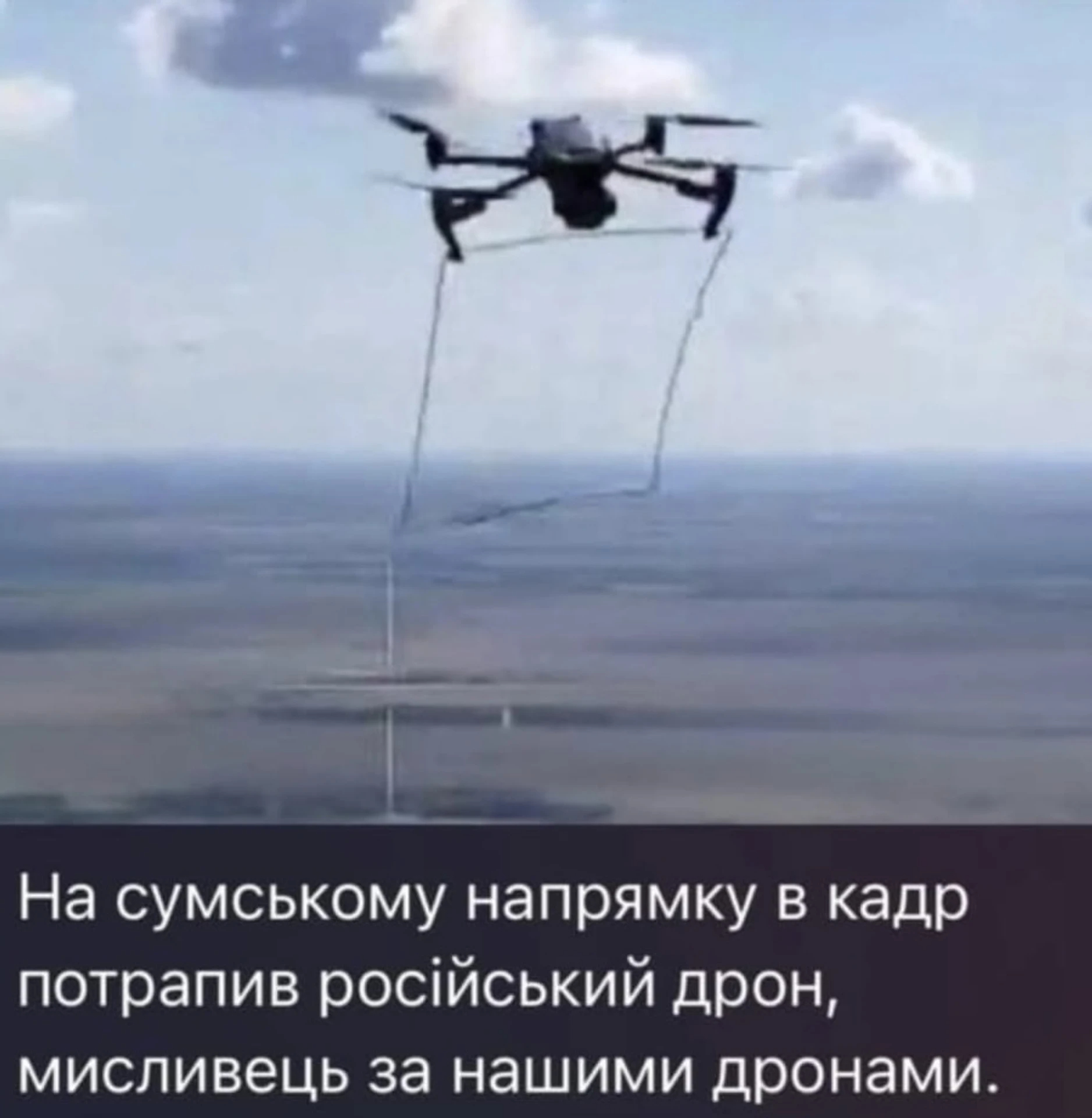
A Russian drone hunter equipped with a net.
Photo: Serhii “Flash” Beskrestnov
With such advancements, Ukraine continues to navigate the complex and evolving battlefield landscape, utilizing ingenuity and resourcefulness to overcome technologically advanced adversaries in the age of drone warfare.