


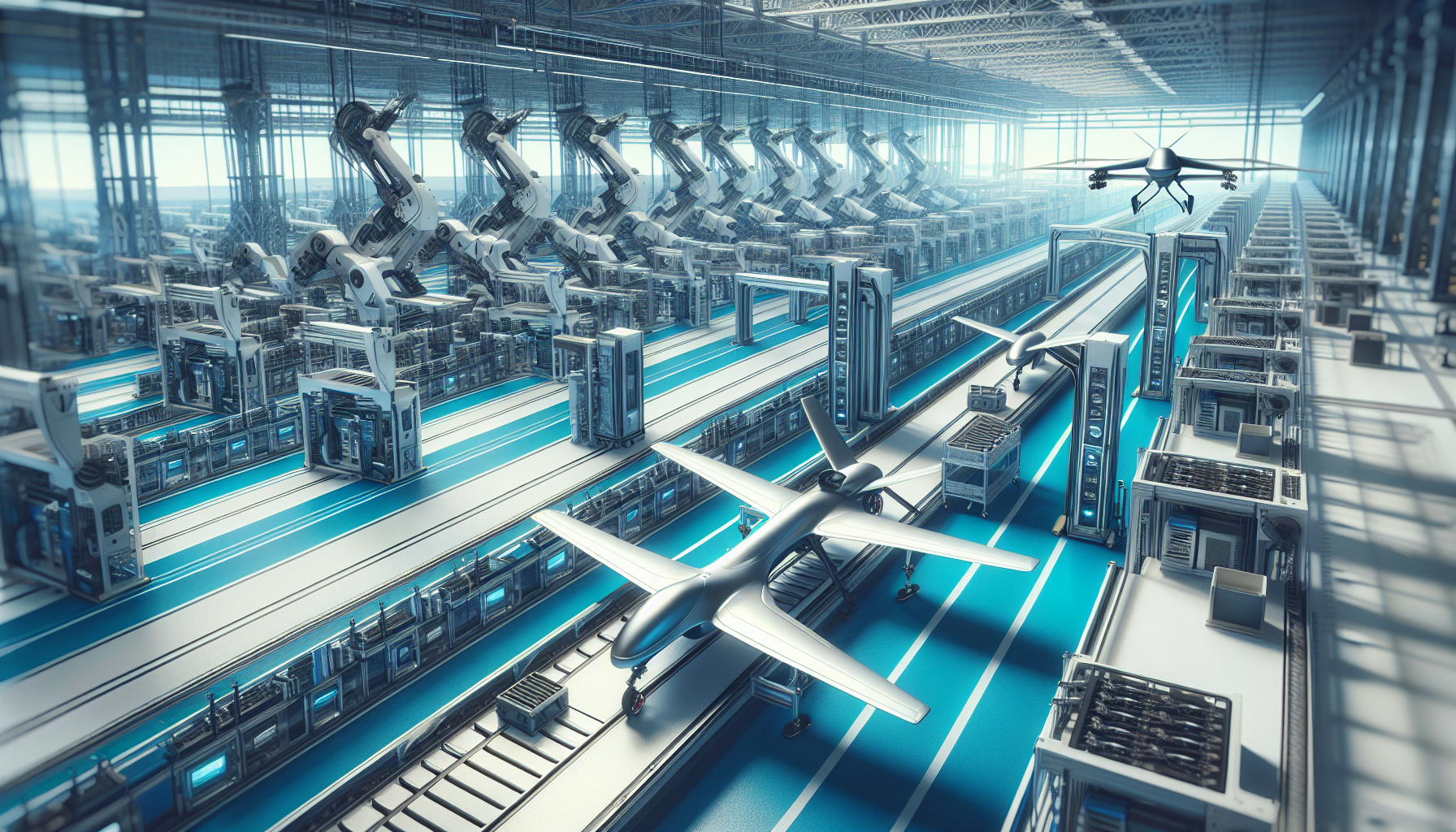
Renault’s Entry into Drone Manufacturing: A New Chapter in French Defense
The landscape of military technology is rapidly evolving, and one of the most notable developments comes from the French automotive giant Renault. Under a strategic contract with France’s General Directorate for Armaments, Renault has initiated the production of long-range attack drones, marking a significant milestone in its diversification into the defense sector. Partnering with the local company Turgis Gaillard, Renault aims to create a domestically produced drone that will enhance France’s military capabilities.
The AAROK Drone: Specifications and Capabilities
The newly developed drone, named AAROK, boasts impressive specifications. With an ability to remain airborne for approximately 24 hours, it can carry around 1.5 tons of munitions and fuel. This drone is designed to cruise at speeds of 450 km/h, rivaling renowned systems like Israel Aerospace Industries’ Heron and Elbit Systems’ Hermes 900. The AAROK drone’s long endurance and payload capacity are poised to provide France with significant operational advantages.
A Shift from Dependency
Historically, France has relied on foreign drones for its military operations, particularly Israeli and American systems. The introduction of the AAROK aims to diminish this dependency, providing France with its first domestically manufactured unmanned strike capability. Turgis Gaillard, a relatively small company, managed to develop the AAROK in record time with a focus on affordability, making it a practical solution for the French military.
Strategic Insights from Renault’s Leadership
Fabrice Cambolive, Renault’s Chief Growth Officer, spoke about the initiative during an interview with BFM TV. He mentioned that the French Ministry of Defense reached out to Renault to spearhead the development of the country’s drone industry, citing Renault’s strengths in industrial manufacturing and design as key assets. This partnership represents a strategic move by the French government to bolster its defense industry by integrating civilian expertise into military applications.
Industrial Capabilities at Play
Although Renault is primarily known for automobiles, its experience in large-scale industrial manufacturing is an asset that can be beneficial in defense manufacturing. The ability to scale production and manage complex manufacturing processes is crucial as NATO responds to increased threats on European soil, particularly from Russia. The need to connect defense systems with civilian industries is more pressing than ever, underscoring Renault’s role in this transition.
Historical Context of Automotive Contributions to Defense
Renault’s venture into drone production is reminiscent of the automotive industry’s historical contribution to wartime efforts. During World War II, Renault manufactured tanks, while American companies like Ford produced bombers, and Volkswagen contributed to missile technology. This historical precedent serves as a reminder of how civilian manufacturing capabilities can be repurposed for national defense, particularly during times of heightened military activity.
In summary, Renault’s involvement in drone production exemplifies a strategic pivot in France’s defense capabilities. By leveraging existing industrial expertise and fostering local innovation, France is taking important steps toward self-reliance in military technology. The development of the AAROK drone marks the beginning of a new era in the French defense landscape, one that may resonate well beyond its borders.