


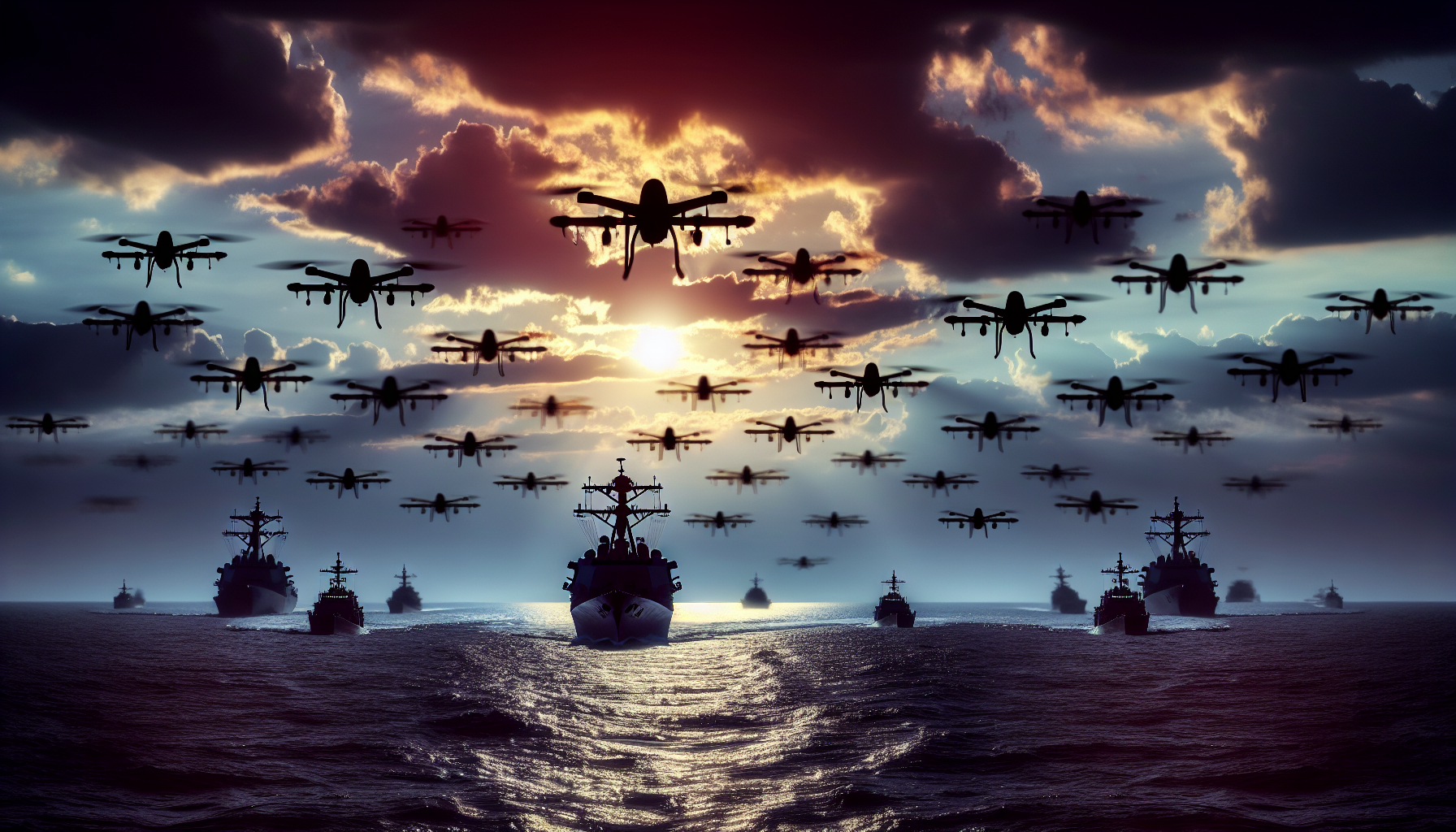
Iranian Drone Swarms: A Rising Threat to U.S. Naval Assets
In a stark warning that underscores the evolving landscape of modern warfare, Cameron Chell, CEO and co-founder of Draganfly, a leading drone design and manufacturing company, highlighted the credible threat posed by Iranian drone swarms to U.S. naval assets. As the United States moves to bolster its military presence in the West Asia region, Chell’s assertions resonate with growing concerns about the effectiveness of cutting-edge defense systems against these innovative drone tactics.
The Growing Drone Capabilities of Iran
Chell emphasized that Iran’s military capabilities include a sophisticated drone fleet worth tens of millions of dollars. This development signifies a shift in the balance of power, particularly in asymmetric warfare, where less technologically advanced forces can pose significant challenges to high-tech military assets. He articulated that Iranian drones could potentially be launched in massive numbers, overwhelming U.S. naval defenses.
“If hundreds are launched in a short period of time, some are almost certain to get through,” Chell explained. Traditional defense systems, designed to counter conventional attacks, find themselves ill-equipped to handle these saturation assault strategies. This presents a dire scenario for U.S. surface vessels in proximity to Iranian shores, especially the USS Abraham Lincoln aircraft carrier strike group.
Concerns on U.S. Naval Defense Readiness
With the USS Abraham Lincoln heading towards the Indian Ocean, questions arise regarding its readiness to counter multiple drones operating in formation. Chell pointed out that these naval assets are large, slow-moving, and easily identifiable on radar—factors that make them prime targets for Iranian drone attacks. The unique design of Iranian drones, particularly one-way strike models crafted to detonate upon impact, enhances their threat profile against U.S. vessels.
Chell’s concerns underscore an urgency within military circles to develop tactics and technologies capable of neutralizing this new wave of threats. The vulnerabilities evident in current naval defense strategies may need reevaluation to address the complex drone warfare landscape effectively.
The Response from Iran’s Military Command
On the Iranian side, Brigadier General Seyyed Majid Mousavi, a senior military commander in the Islamic Revolution Guards Corps (IRGC), issued a potent response to perceived threats from the U.S. His remarks, made during a meeting for National Guards Day, resonate with a commitment to confront and counter U.S. military actions.
Mousavi’s statements reflect a broader sentiment within Iranian military leadership, which views U.S. rhetoric as provocations that warrant a decisive response. He echoed President Trump’s remarks about confronting perceived threats, upholding a firm stance against any potential military actions. This dynamic suggests a precarious balance of power where rhetoric and military preparedness intermingle, further complicating the geopolitical landscape.
Iran’s Domestic Situation and Military Posturing
As tensions rise externally, Iran grapples with internal strife stemming from economic protests. Iranian authorities have alleged that these protests have been infiltrated by foreign elements, receiving sustained support from U.S. and Israeli intelligence. In response, Mousavi claimed that the IRGC has successfully apprehended ringleaders and is prepared to utilize its full military capabilities.
The IRGC’s Aerospace Division, as stated by Mousavi, has reached peak readiness, bolstered by an increase in the production of aerospace hardware. This preparedness is framed as a direct consequence of lessons learned during confrontations with U.S. and Israeli forces. The division’s upgraded capabilities reflect Iran’s strategic focus on leveraging asymmetric tactics, especially in light of contemporary conflict dynamics.
Conclusion: The Complexity of Modern Warfare
The dual realities of Iranian drone advancements and U.S. military responses foster a complex battlefield where traditional notions of warfare are rapidly evolving. As both nations navigate this fraught landscape, understanding the implications of drone technology and military preparedness will be paramount for maintaining strategic balance in the region.
Engaging with such developments invites deeper discussions about the future of military engagement, regional security, and the evolving role of technology in warfare. The interplay between innovation and defense readiness underscores a pivotal moment in contemporary military strategy, raising essential questions about preparedness for the challenges of tomorrow’s conflicts.