


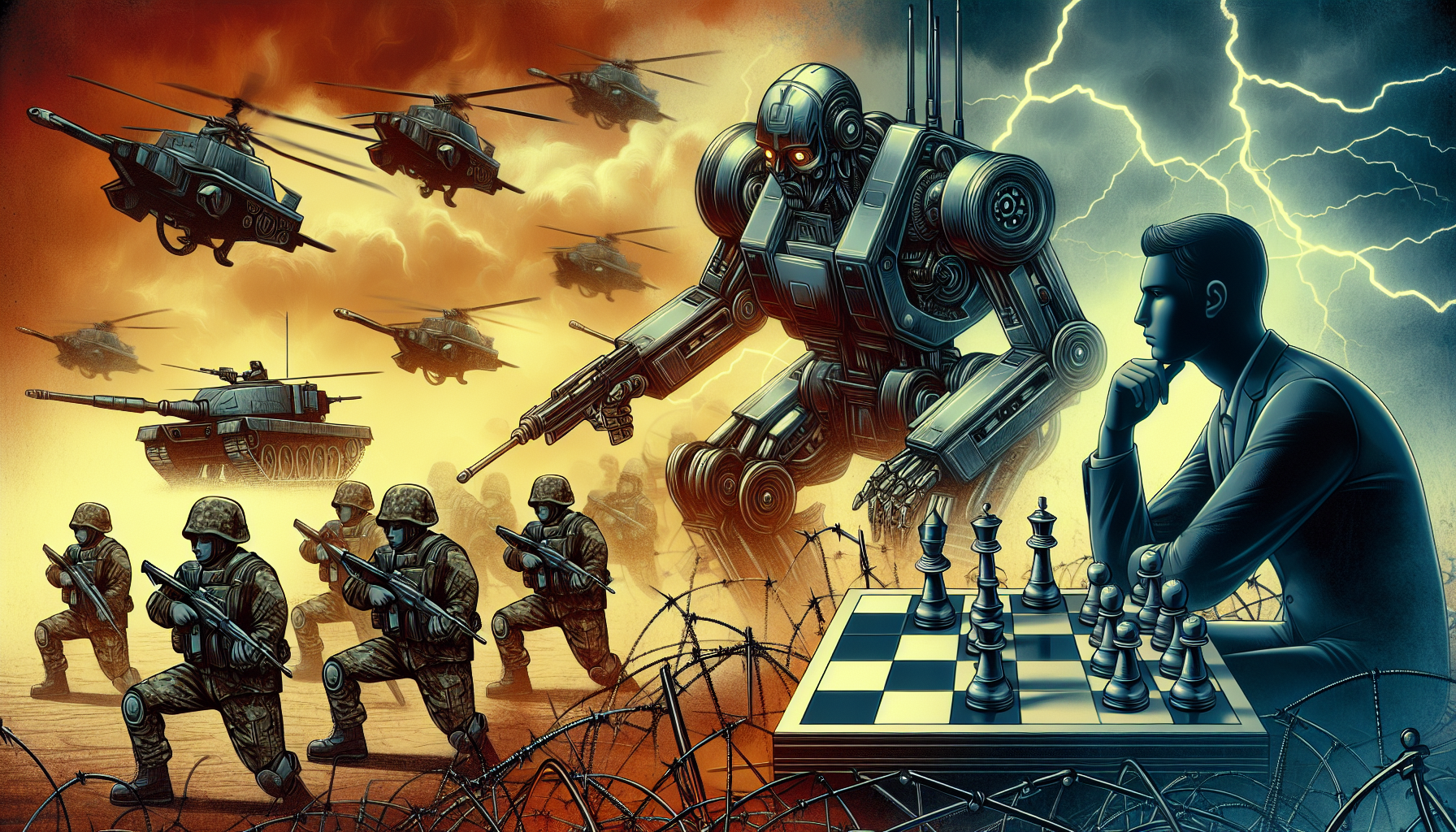
The Ethics of War: A Chessboard or a Battlefield?
Long before delving into formal studies of warfare, I had a naive yet compelling notion about the resolution of conflicts. Back in primary school, I shared with friends my idea: why not settle disputes like chess players—by engaging in a match instead of sending young men and women to fight? The notion seemed simple and, in my youthful imagination, a pragmatic solution that could save countless lives. However, as I later learned from thinkers like Machiavelli, the idea is fraught with complexities. Sacrificing national interests or the lives of soldiers based on a game feels not only impractical but irresponsible.
Nevertheless, the concept of reducing casualties in warfare continues to attract attention. Historically, various approaches have aimed to mitigate the brutality of conflict, from champions engaging in single combat—like the pivotal encounters between Siamese King Naresuan and Burmese Prince Mingyi Swa in the 16th century—to international treaties like the Hague and Geneva Conventions that restrict the methods of warfare. Today, the pursuit of “risk-free” combat has reached a new pinnacle with emerging technologies, particularly robotics.
The proliferation of military robots, from armed drones to bomb disposal units, presents a novel avenue for engagement in warfare. The advantages of these machines are stark: they can be deployed where human lives would be at great risk. President Barack Obama, defending drone strikes in regions like Pakistan and Yemen, emphasized that it was impractical to use special forces for every operation, particularly when such missions pose dangers to both troops and civilians. Casualty numbers from drone strikes vary widely, highlighting the challenges in balancing effectiveness with the ethical implications of warfare conducted from the sky.
As technology evolves, so do the capabilities of military robots, progressing from semi-autonomous machines to the potential of fully autonomous combatants reminiscent of science fiction’s Terminator. The argument for these robots gains traction as they promise not just to spare human soldiers from deadly scenarios but also to reduce the likelihood of civilian casualties. In the frenzied environment of battle, the human brain is often overwhelmed, leading to split-second, life-or-death decisions. Robots, unaffected by fear or adrenaline, could theoretically possess a clearer ability to differentiate between combatants and non-combatants, preventing unnecessary bloodshed.
This brings us to the crux of the moral dilemma that military robotics introduces: the delegation of life-and-death decisions to machines. By turning this weighty issue over to robots, we may unwittingly absolve ourselves of the sticky moral consequences of such actions. Albert Camus, in his play Les Justes, grapples with the ethical ramifications of assassination within a revolutionary context. He proposes that the moral weight of killing is intrinsically linked to the willingness to face death oneself. Thus, avoiding personal risk raises questions about the legitimacy of one’s actions.
While Camus’ perspective might be viewed as oversimplified—since not all willing participants in a deadly cause have moral justification—it raises essential points about accountability in warfare. In contemporary conflicts, determining where justice lies becomes increasingly ambiguous. This complexity demands the involvement of humans who grasp the moral seriousness of warfare. Soldiers who internalize the weight of their actions serve as a counterbalance against the potential for reckless violence, especially as political leaders wield the power to engage in military actions with little regard for the consequences.
The moral calculus of war is layered and fraught with uncertainties. Consider the implications of risk-free robotic warfare: the essential elements that ground military action—conscience, honor, and ethical responsibility—might become lost in translation. Mechanized warriors, regardless of sophistication, lack the capacity to feel remorse or engage in ethical introspection. For many, this removes a key safeguard against the brutal nature of warfare.
War is a potent reflection of our collective values. It lays bare the stark realities and moral convictions that individuals and societies hold dear. To distance ourselves from the moral weight of conflict—suppressing the emotional and intellectual understanding of war—carries consequences of its own. We may become desensitized, failing to acknowledge the depths of suffering and sacrifice involved in combat.
The emotional and spiritual significance of sending loved ones to war cannot be understated. It spurs us to hold leaders accountable, question the necessity of conflicts, and nurture gratitude for those who defend our values. Machines might one day carry out our military agendas, making conflicts feel more abstract. However, an absence of emotional engagement with what war entails might ironically lead us to a deeper moral crisis—one that society must grapple with as it embraces increasingly sophisticated military technologies.