


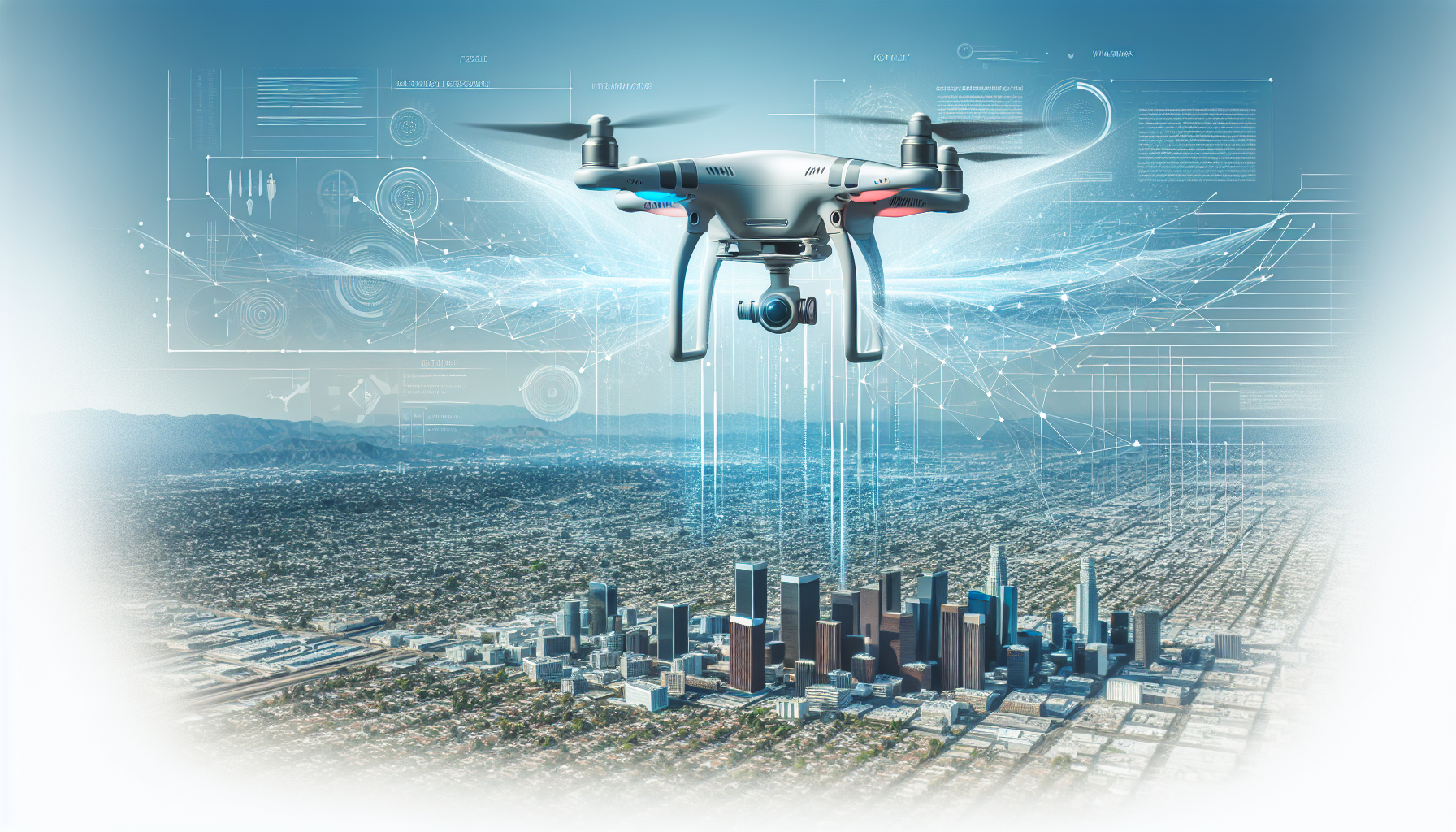
Los Angeles Police Department’s Drone Initiative: A Technological Leap Forward
In a significant advancement for law enforcement, the Los Angeles Board of Police Commissioners recently voted unanimously to approve a $2.1 million donation aimed at enhancing emergency response through the use of drones. This decision reflects a growing trend in utilizing technology to augment public safety measures, particularly in complex urban environments.
Funding Source and Approval Process
The donation, sourced from the Los Angeles Police Foundation, will empower the LAPD to acquire drones and docking stations, as well as cover the installation costs across various police stations. However, the allocation of these funds isn’t finalized just yet; it will require approval from the Los Angeles City Council in an upcoming meeting. This step signifies a collaborative effort between city governance and law enforcement in integrating new technologies for public safety.
The Role of Assistant Chief Emada Tingirides
Leading the charge on this initiative is Assistant Chief Emada Tingirides of the LAPD Office of Operations. In a recent report, she highlighted the strategic allocation of not only the $2.1 million donation but also an additional $1.8 million retail theft grant. These funds will help secure a three-year contract with Skydio Inc., a company recognized for its cutting-edge drone technology. This partnership will provide the LAPD with essential equipment, warranty coverage, and ongoing service.
Pilot Program Success
The “Drone as First Responder” program has been in pilot mode since June 2025, allowing authorities to assess its feasibility while experimenting with various vendors and equipment platforms. The positive outcomes of the pilot program have led the Office of Operations to identify Skydio as the most suitable vendor for this ambitious project. Key locations for drone docking stations have been strategically chosen to maximize coverage across LAPD’s 21 geographic areas.
Drone Docking Stations
The initiative proposes installing 17 drone docking stations at selected LAPD divisions including Northeast, Hollywood, Olympic, and Wilshire, among others. Each of these locations will have varying numbers of docks to ensure optimal responsiveness. Notably, high-traffic public areas, such as Palisades Village and The Grove, will also feature docking stations, allowing drones to be deployed efficiently for emergency situations.
Real-Time Emergency Response
The purpose of the Drone as First Responder program is multilayered. Drones equipped with high-definition cameras and thermal imaging capabilities will be able to arrive at emergency scenes faster than ground officers. This technology offers live video feeds that provide officers with essential situational awareness, enabling them to assess threats, locate suspects, and identify potential hazards without needing to engage directly.
Enhancing Officer Safety and Efficiency
Proponents of the program argue that it significantly improves response times and situational awareness, thus facilitating a safer environment for officers responding to calls. This technological advancement seeks to enhance the LAPD’s capabilities, allowing them to not only respond more efficiently but also assist in de-escalation efforts when necessary. By leveraging aerial technology, officers can gather critical information without putting themselves or the public at unnecessary risk.
Concerns About Surveillance
While many celebrate the advancements brought on by the drone initiative, there’s a growing chorus of critics who express concerns. Opponents argue that the use of drones by police could lead to an expansion of surveillance over regular citizens, raising ethical questions about privacy and civil liberties. They contend that the program should be scrutinized closely to ensure that it doesn’t infringe on the rights of individuals within the community.
Looking Forward
As Los Angeles takes innovative steps toward integrating drone technology into public safety, the community remains divided on the implications of such advancements. With the upcoming City Council meeting looming, discussions surrounding the balance between technological progress and civil rights will take center stage. As this initiative unfolds, it will undoubtedly pave the way for further conversations on the future of law enforcement and accountability in urban settings.