


The Evolving Stance of Elon Musk on Autonomous Weapons
The Initial Warning
In 2017, Elon Musk took a bold stand by signing an open letter urging the United Nations to implement a ban on the development of autonomous weapons. The letter warned, “We do not have long to act. Once this Pandora’s box is opened, it will be hard to close.” This statement underscored Musk’s concerns about the ethical implications and unpredictable consequences of merging artificial intelligence with warfare.
The Pledge Against Lethal Machines
The following year, Musk deepened his commitment by signing a pledge from the Future of Life Institute. This pledge asserted that “the decision to take a human life should never be delegated to a machine” and vowed not to participate in or support the development of lethal autonomous weapons. Musk’s strong ethical stance resonated with many in the tech and advocacy communities, generating dialogue about the moral responsibilities tied to rapidly advancing technologies.
A Shift in Focus: Profit vs. Principle
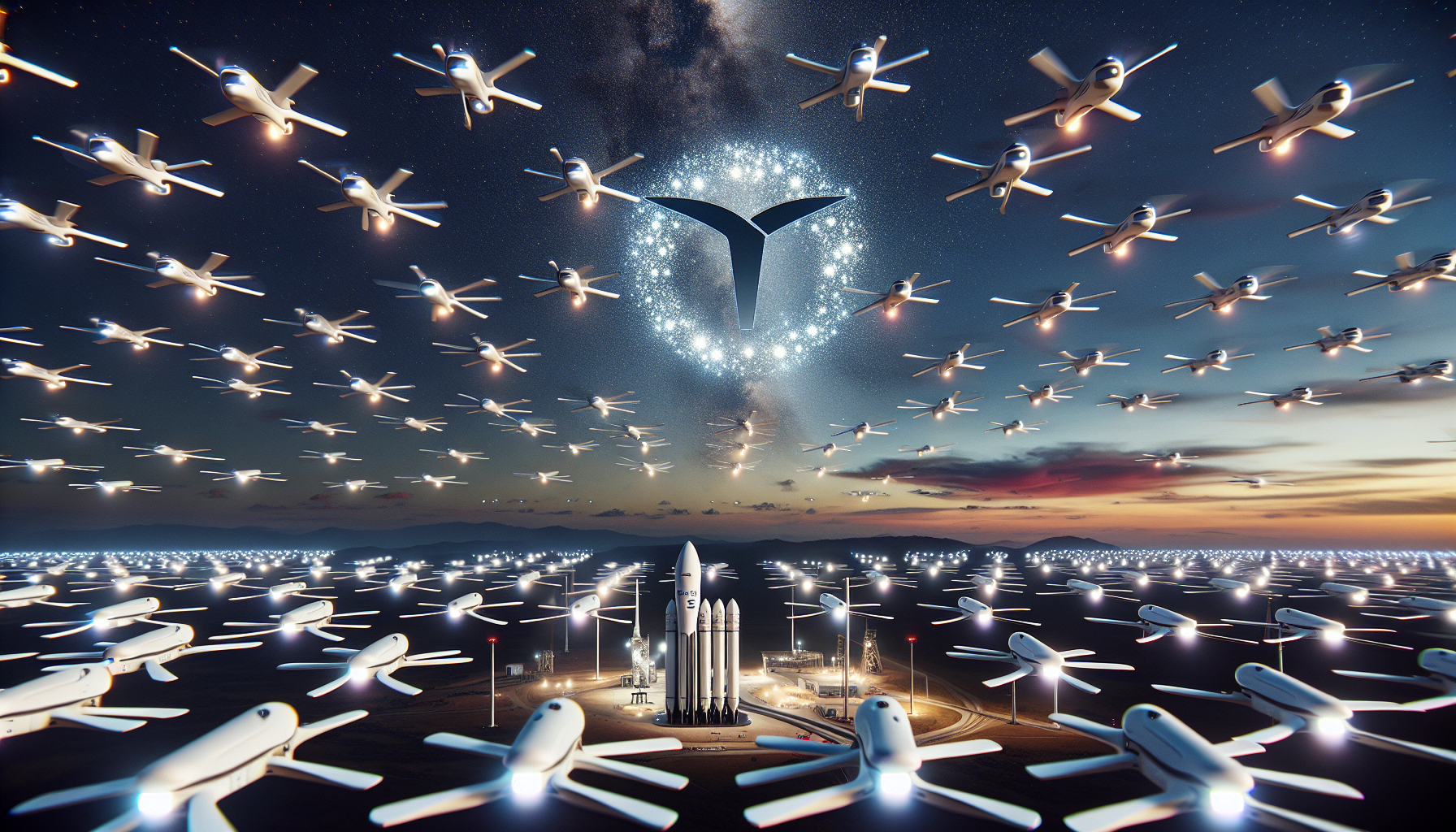
Fast forward to recent developments, and Musk’s position appears to be shifting. Reports indicate that SpaceX and xAI, the latter of which Musk integrated into SpaceX, are now competing in a Pentagon contest aimed at creating voice-controlled, autonomous drone swarming technology. This competition, incentivized by a $100 million prize, marks a significant pivot from Musk’s previous stances against warfare automation.
The Pentagon’s Ambitious Goals
The Pentagon’s contest, part of the Trump administration’s Defense Autonomous Warfare Group (DAWG), as well as the Defense Innovation Unit, aims to revolutionize drone warfare by developing software that enables drones to act on voice commands simultaneously. While coordinated drone movement is already established, managing a swarm of autonomous drones effectively presents a myriad of challenges, especially when it involves targeting decisions that require impeccable judgment and accuracy.
Ethical Concerns about AI Command and Control
Experts have voiced significant concerns regarding the application of generative AI in commanding lethal drones. Current large language models are known for their issue with “hallucinations,” where they generate inaccurate or fabricated information. This raises alarms about the reliability of AI systems tasked with making life-or-death decisions, especially in high-pressure scenarios like warfare.
Transitioning from Software to Real-World Applications
The initiative to develop this technology will unfold across five phases, progressively moving from software testing to real-world applications. This ambitious undertaking implies that the drones will not simply be used for reconnaissance missions but will also hold offensive capabilities. This blurring of lines underscores the evolving nature of warfare in the age of AI and raises questions about accountability, ethics, and safety in military applications.
SpaceX’s New Strategic Directions
Traditionally, SpaceX has focused on government contracts related to space exploration and satellite deployments, staying away from arms and weapon systems. This new direction represents a shift towards militarization and may shine a light on the increasing intertwining of tech companies with defense needs.
Financial Considerations Amidst Ethical Questions
Musk’s xAI recently signed a significant $200 million contract with the US military for the use of its Grok chatbot and has been actively seeking engineers with security clearance. This move raises eyebrows, especially when considering Musk’s earlier public stances against the development of autonomous weapons. With speculation around a potential SpaceX IPO looming, valued at an astounding $1.25 trillion, how investors will perceive this takeover of military contracts remains uncertain.
Musk’s Vision of Integrated Innovation
Despite these new military endeavors, Musk has expressed a vision for SpaceX becoming an “ambitious, vertically-integrated innovation engine on (and off) Earth,” encompassing AI, space exploration, and various communication technologies. However, the strategic implications of developing drone swarm capabilities have been notably omitted from his broader narrative, suggestive of a complex balancing act between innovation and ethical concerns.
A Changing Landscape of Technology and Warfare
As the landscape of military technology evolves, Musk’s journey—from advocating against autonomous weapons to participating in their development—illustrates the challenging intersection of ethics, profit, and societal impact in the age of technology. The dialogue on this subject is far from over, and the ramifications of these choices will likely unfold in unpredictable ways across the coming years.