


How the U.S. Military Academy Is Preparing for Future Conflict
By Lt. Gen. Steven W. Gilland, U.S. Army & Brig. Gen. Shane R. Reeves, U.S. Army
The U.S. Military Academy at West Point is a symbol of history and martial excellence, known for its deep-rooted traditions and commitment to the values of “Duty, Honor, Country.” While some may perceive this steadfast adherence to tradition as outdated, West Point demonstrates that it is anything but rigid. The Academy is actively transforming to meet modern challenges and prepare cadets for leadership in an evolving battlefield landscape.
A History of Transformation
Reformation has been integral to West Point’s legacy. A notable figure in this narrative is Douglas MacArthur, who served as West Point’s superintendent in the 1920s. Convinced that the Academy was lagging behind contemporary demands, he championed a series of sweeping reforms. MacArthur questioned the Academy’s method of preparing for conflicts of the past and sought to modernize its approaches in both leadership and education.
He reformed the notorious fourth-class system, shifting from punitive measures towards a leadership model that emphasized personal development and accountability. This shift was aimed at fostering self-confident officers capable of making sound decisions. Moreover, MacArthur undertook a revival of the academic curriculum that included not only military science but also humanity courses, blending technical education with a strong grounding in social sciences. His vision was to create leaders who were both intellectually and physically equipped for the complexities of modern warfare.
West Point 2050
As the geopolitical landscape becomes increasingly complex, West Point is once again at a pivotal moment, embracing transformation with an eye toward the future. The Academy is focusing on the implications of Artificial Intelligence (AI) and other emerging technologies in order to maintain a strategic advantage in national security.
Central to this modernization is the Cyber and Engineering Academic Center, a 136,000 square foot facility designed to advance education in science, technology, engineering, and mathematics (STEM). This new center will house cutting-edge technology, making it easier for cadets to engage with subjects vital to contemporary defense strategies. Initiatives such as these form the backbone of West Point’s commitment to adapt to the future of warfare.
Other significant renovations include the planned modernization of various academic buildings and barracks, reinforcing the Academy’s reputation for excellence. One noteworthy project is the renovation of Thayer Hall, which will focus on the humanities, ensuring that cadets receive a well-rounded education integral to effective leadership.
The Curriculum: Adapting to New Realities
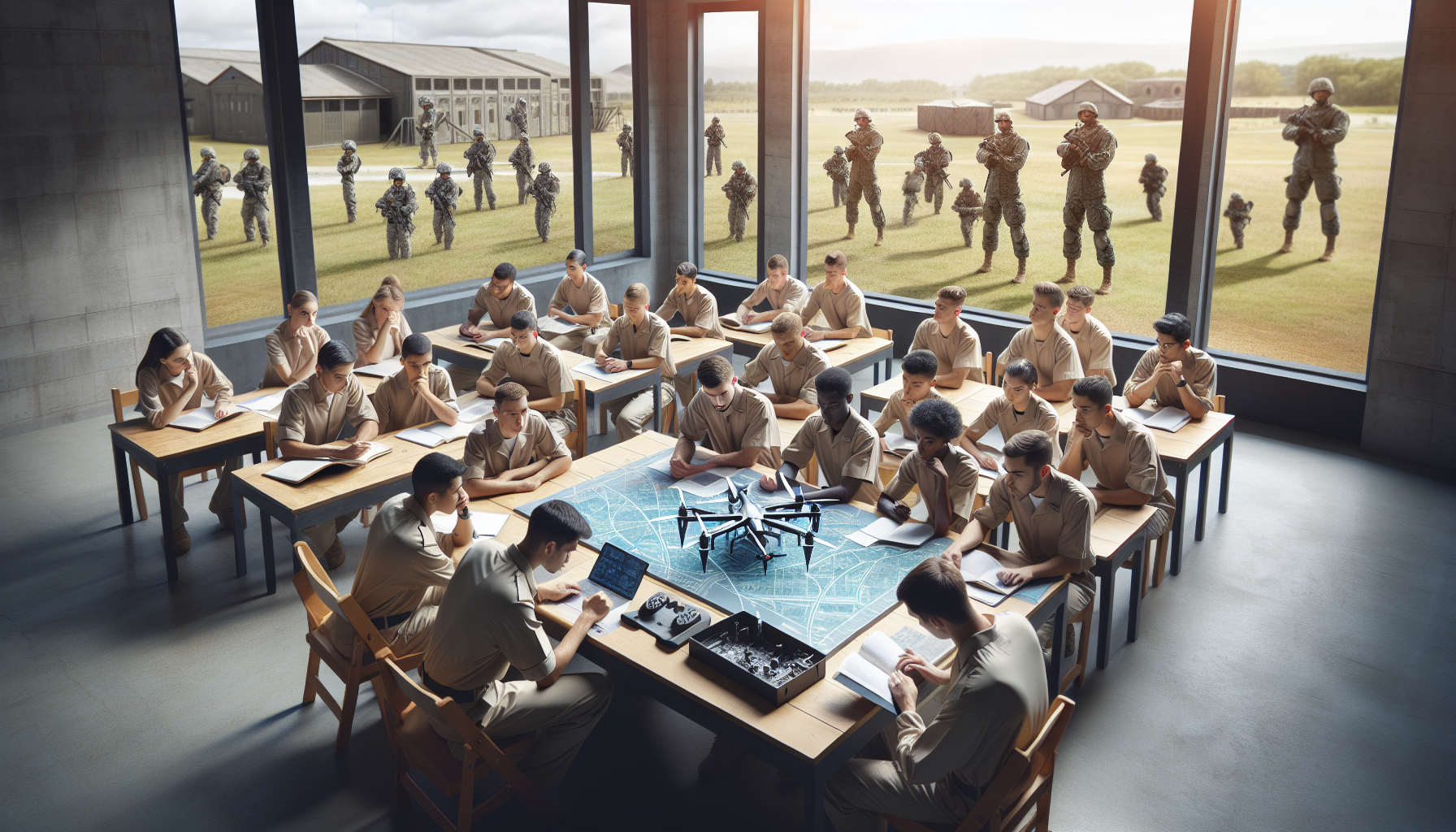
The Academy’s recent academic review has culminated in its first major curriculum overhaul since 1989, prompting substantive changes across all disciplines. The creation of a Department of Mechanical and Aerospace Engineering aims to familiarize cadets with advancements in space and drone technology, areas increasingly relevant in modern combat scenarios.
Furthermore, recognizing the significance of space as a combat domain, West Point is establishing a space “community of practice.” This interdisciplinary approach will bring together experts from various fields—such as mathematics, data science, and ethics—to analyze and develop strategies for employing new space technologies in military operations.
Strategic Sustainability
In tandem with technological advancements, West Point is putting greater emphasis on sustainability within military operations. A newly formed sustainability community of practice aims to enhance the Army’s energy resilience and operational sustainability, vital for maintaining combat effectiveness under challenging conditions.
These initiatives extend to improving survivability on multidomain battlefields, affirming that resilience and sustainability directly correlate with military lethality.
The Role of Humanities
In a future dominated by AI and technology, the human element remains crucial. Cadets are being prepared for leadership not just through technical education but also through an intensive study of the humanities. A newly combined Department of English and World Languages will ensure that leaders can communicate effectively and navigate the socio-political complexities inherent in military leadership.
Courses will encompass cross-cultural competence and critical thinking skills, equipping cadets to interpret the human experience, which is vital in understanding global conflicts.
Legal and Ethical Preparedness
An equally important aspect of cadet training is the integration of ethical and legal considerations into their military education. The newly combined Department of Law and Philosophy will challenge cadets to confront the legal intricacies of modern warfare, including robotics and AI. This education ensures that future military leaders are well-versed in making sound ethical judgments in critical situations.
Continuous Engagement with National Security
While undergoing transformation, West Point remains active in research related to national security. Faculty and cadets continue to produce scholarship that influences contemporary military strategy and addresses real-world defense issues. The establishment of the West Point Press supports this goal by promoting scholarly discourse and publishing peer-reviewed research.
The West Point Werx Innovation Hub
The recently launched West Point Werx Innovation Hub will further amplify the Academy’s interdisciplinary initiatives. Positioned within the larger Army and Department of Defense innovation ecosystem, this hub will foster collaborative projects that address complex challenges across various sectors, including space and cyber technology.
The Innovation Hub will serve as a bridge, allowing cadets to engage hands-on with emerging technologies and develop the skills necessary for effective leadership in multifaceted operational environments.
In summary, the U.S. Military Academy at West Point stands committed to a future of dynamic leadership and technological sophistication. As the Academy embraces profound changes across its curriculum and facilities, it ensures that its graduates are adeptly prepared for the complexities of contemporary and future conflicts.