


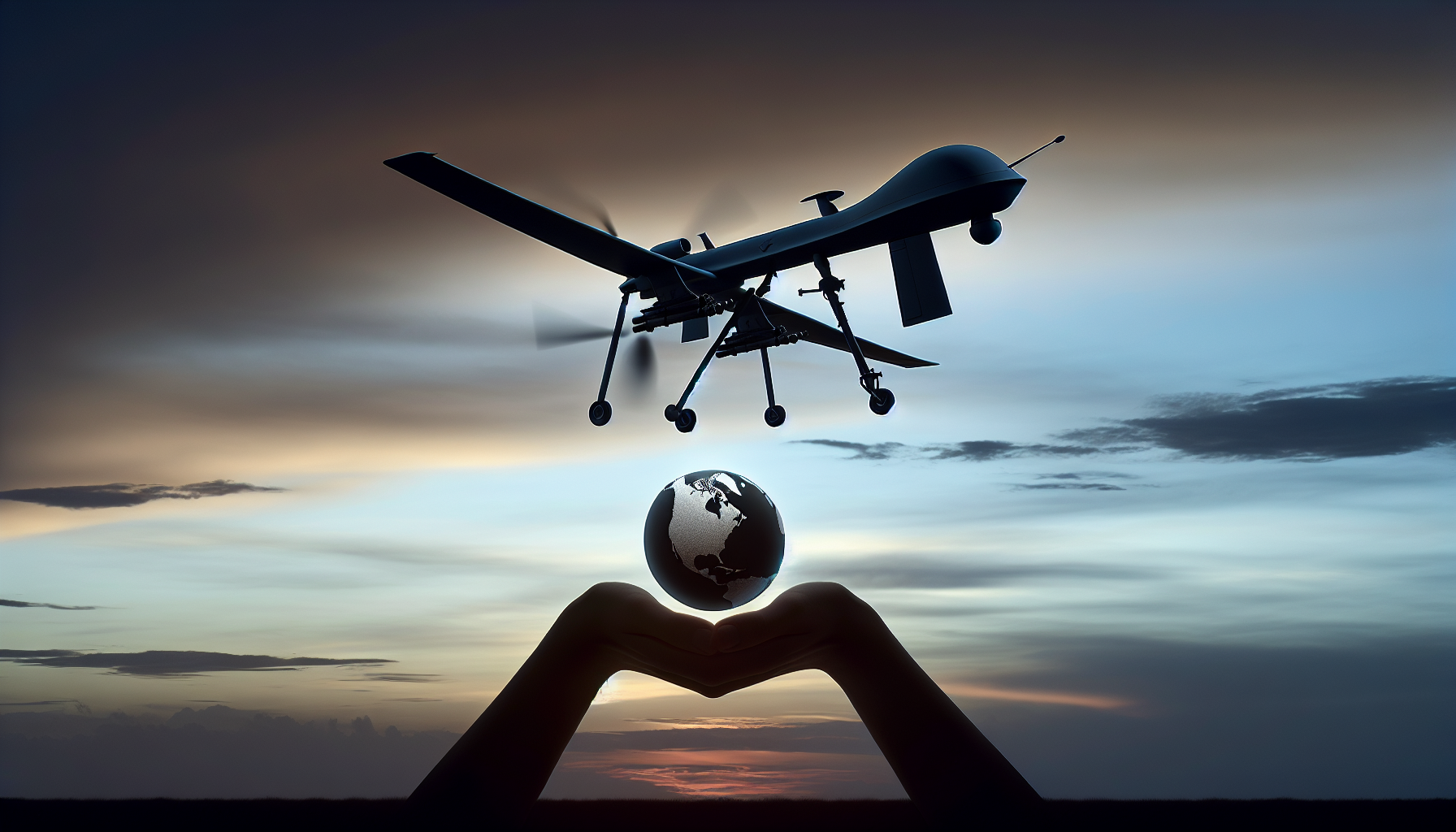
The Rise of Autonomous Military Drones: A New Frontier
Remote-controlled drones have carved out a complex place within U.S. military strategy, but the advent of fully autonomous aircraft like the Northrop Grumman X-47B suggests a deeper, more provocative chapter is unfolding. This robotic plane marks a significant leap forward in military aviation technology, aiming to operate without direct human control. As advancements in technology continue, the ethical implications and operational challenges of these innovations become increasingly significant.
An Overview of the X-47B
The Northrop Grumman X-47B represents an evolution in unmanned aerial vehicles (UAVs). This aircraft is not just designed for surveillance or reconnaissance; it’s engineered to perform autonomous take-offs and landings, follow pre-defined flight paths, and even refuel itself in mid-air. The promise of such capabilities is staggering, suggesting a future where drones can conduct missions with minimal human intervention. The X-47B has already completed its first flight and is progressing toward key milestones, including carrier landings and mid-air refueling demonstrations, scheduled for 2013 and 2014, respectively.
The Ethical Quandary of Autonomous Weapons
While the technical feats of the X-47B are impressive, they raise troubling ethical questions, particularly concerning weaponization. Although the Navy has stated that it has no immediate plans to equip the X-47B with weapons, the aircraft’s design includes a weapons bay capable of carrying up to 4,500 pounds. This potential for future armament stirs anxiety among ethicists, military strategists, and the public alike. The very idea of a weaponized drone operating independently is disconcerting.
Robotics expert Noel Sharky emphasizes the challenges in establishing accountability in the event of a drone-related incident. If an autonomous drone were to commit an act of aggression or cause unintended harm, pinpointing responsibility—whether it lies with the manufacturer, military personnel, or the algorithm itself—becomes extraordinarily complex. This lack of transparency could undermine international laws designed to protect human life during conflict.
The Role of Humanitarian Law
The intersection of technology and humanitarian law is an evolving discussion, particularly as countries explore the use of autonomous weapons. The International Committee of the Red Cross (ICRC) has begun conducting studies on how autonomous weapon systems might adhere to established humanitarian principles. The main concern revolves around ensuring that such systems can distinguish between combatants and non-combatants, a fundamental requirement under international law.
Even if autonomous drones are programmed to follow the rules of war, the unpredictable nature of warfare makes compliance difficult. The potential for error in decision-making algorithms raises the specter of unintended casualties, which becomes a moral burden on societies and governments.
Public Perception and Acceptance
As the technology behind autonomous drones progresses, so too does public discourse surrounding their use. Many believe that the notion of unmanned combat raises the stakes in warfare, possibly making military engagement more palatable. If risking human lives is replaced by machines carrying out missions based on artificial intelligence, will countries be more inclined to resort to military action?
Conversely, there is growing concern that increasing reliance on automated weapons could lead to an erosion of ethical considerations in military operations. The shift from human decisions to machines might foster a detachment from the consequences of warfare, potentially normalizing violence in ways that challenge our collective moral framework.
Comparisons to Civilian Technology
In the civilian sector, technologies like self-driving cars are subject to rigorous regulations and ethical debates, albeit under a different context. While people have embraced the notion of vehicles navigating traffic autonomously, concerns about accountability and safety mirror those in military applications. How do we establish safeguards and ethical frameworks in both realms to ensure responsible use of technology?
While the capabilities of the X-47B may seem extraordinary, the conversation surrounding autonomous drones invokes a sense of urgency and complexity that cannot be overlooked. As we tread deeper into the realm of automated warfare, the dialogue about ethics, accountability, and the human impact of such technologies will undeniably shape future policies and public perception.