Introduction
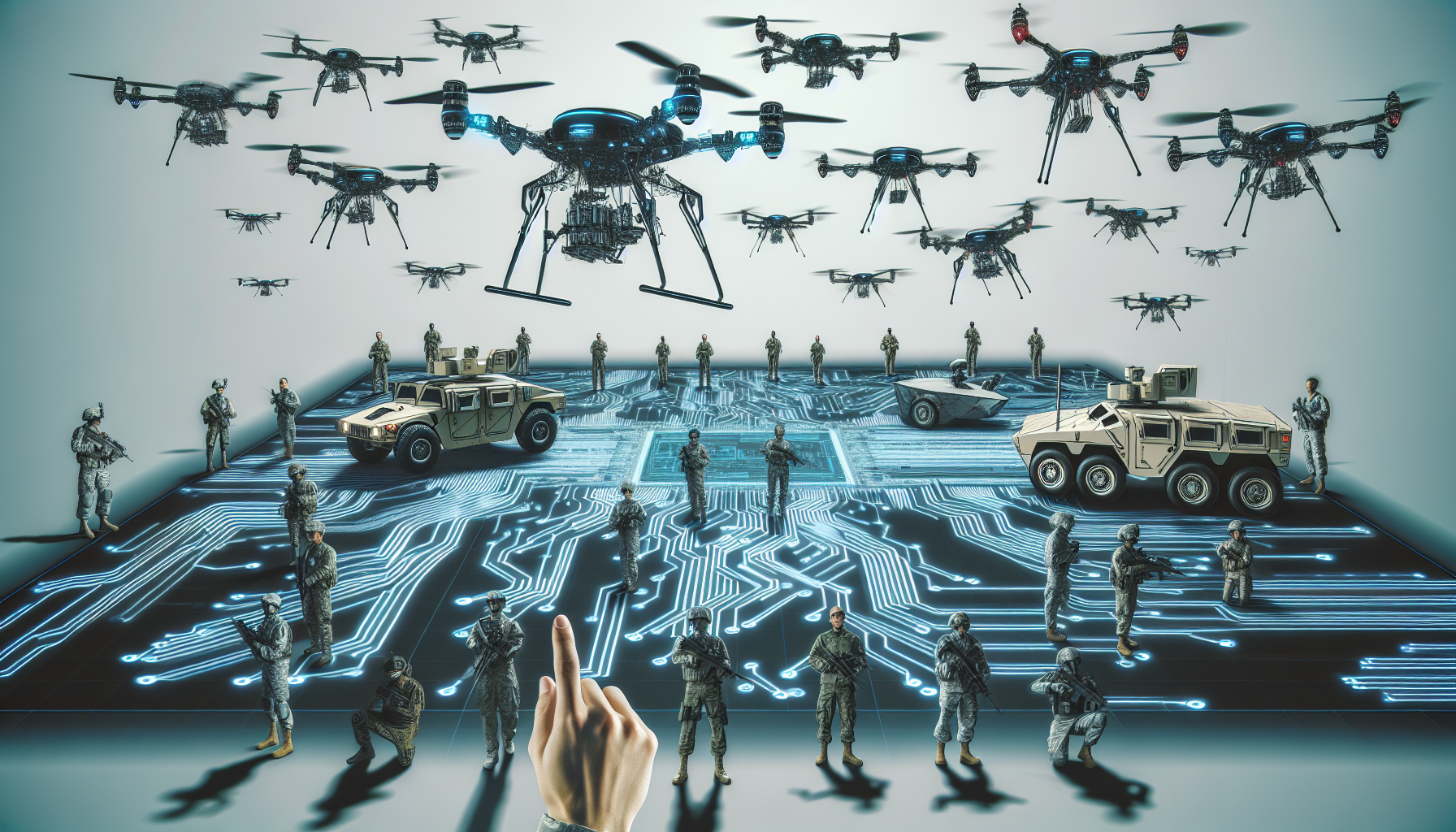
Artificial Intelligence (AI) in military statistics represents a revolutionary development in defense operations, harnessing technologies such as machine learning, robotics, natural language processing, and computer vision. The impact of AI is seen in its ability to enhance decision-making, operational efficiency, and tactical advantages across a variety of military applications. This includes autonomous drones, cybersecurity defenses, predictive logistics, and advanced training simulations.
The integration of AI into military frameworks is fundamentally reshaping the landscape of defense strategies and operations. While the benefits are significant—improving operational precision and reducing risks—the deployment of AI in military contexts also raises crucial ethical and legal questions, especially concerning autonomous weaponry and the delegation of critical decisions to machines. Addressing these concerns is imperative for shaping the future of defense mechanisms and international security dynamics.
Editor’s Choice
- The global artificial intelligence in the military market revenue reached USD 8.9 billion in 2023.
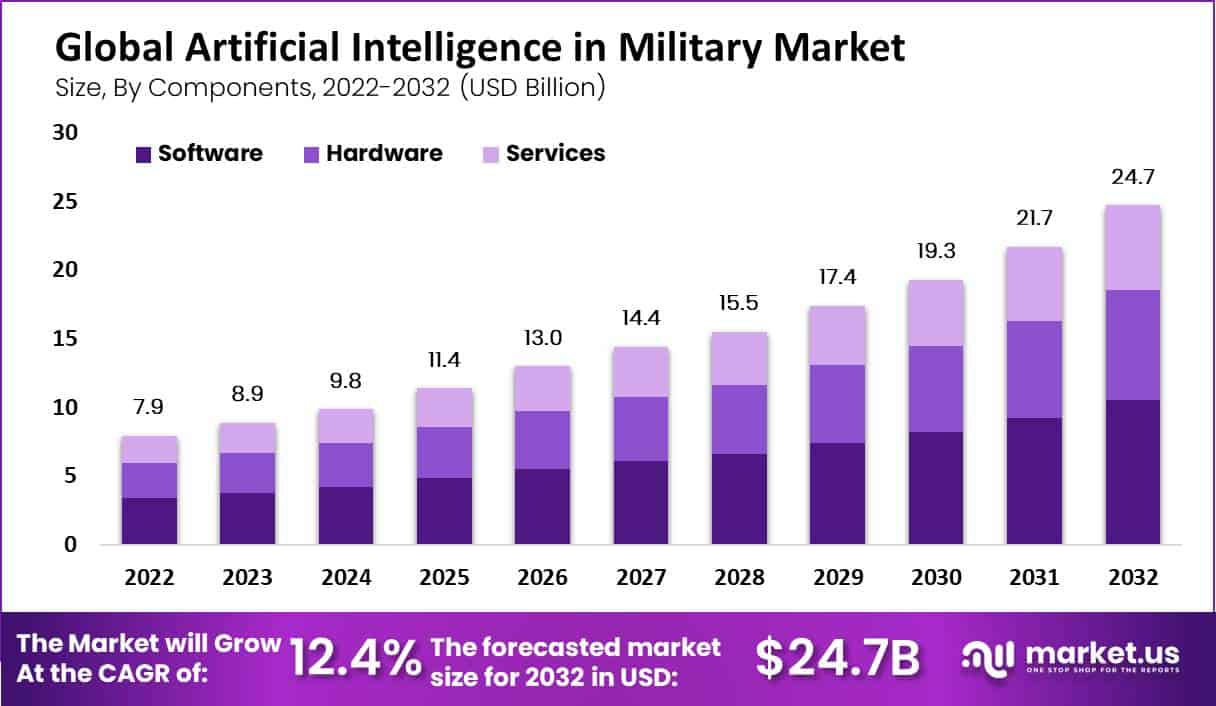
- By 2032, the market is projected to reach USD 24.7 billion, with revenues across software, hardware, and services totaling USD 10.52 billion, USD 8.00 billion, and USD 6.18 billion, respectively.
- Space platforms currently dominate the market share with 33%, highlighting significant investments in satellite technologies and space surveillance.
- In 2018, 44% of organizations utilized AI for detecting and deterring security threats, emphasizing its crucial role in safeguarding digital infrastructures.
- The United States leads in military expenditure globally, spending approximately $877 billion, which constitutes 3.5% of its GDP.
- Following advancements in AI, the Pentagon has revised its autonomous weapons policy, signifying its impact on Pentagon operations.
- However, 59% of respondents cite a lack of data-science specialists as a primary barrier to implementing big-data-driven AI technologies.
AI in Military Market Overview
Global Artificial Intelligence in Military Market Size Statistics
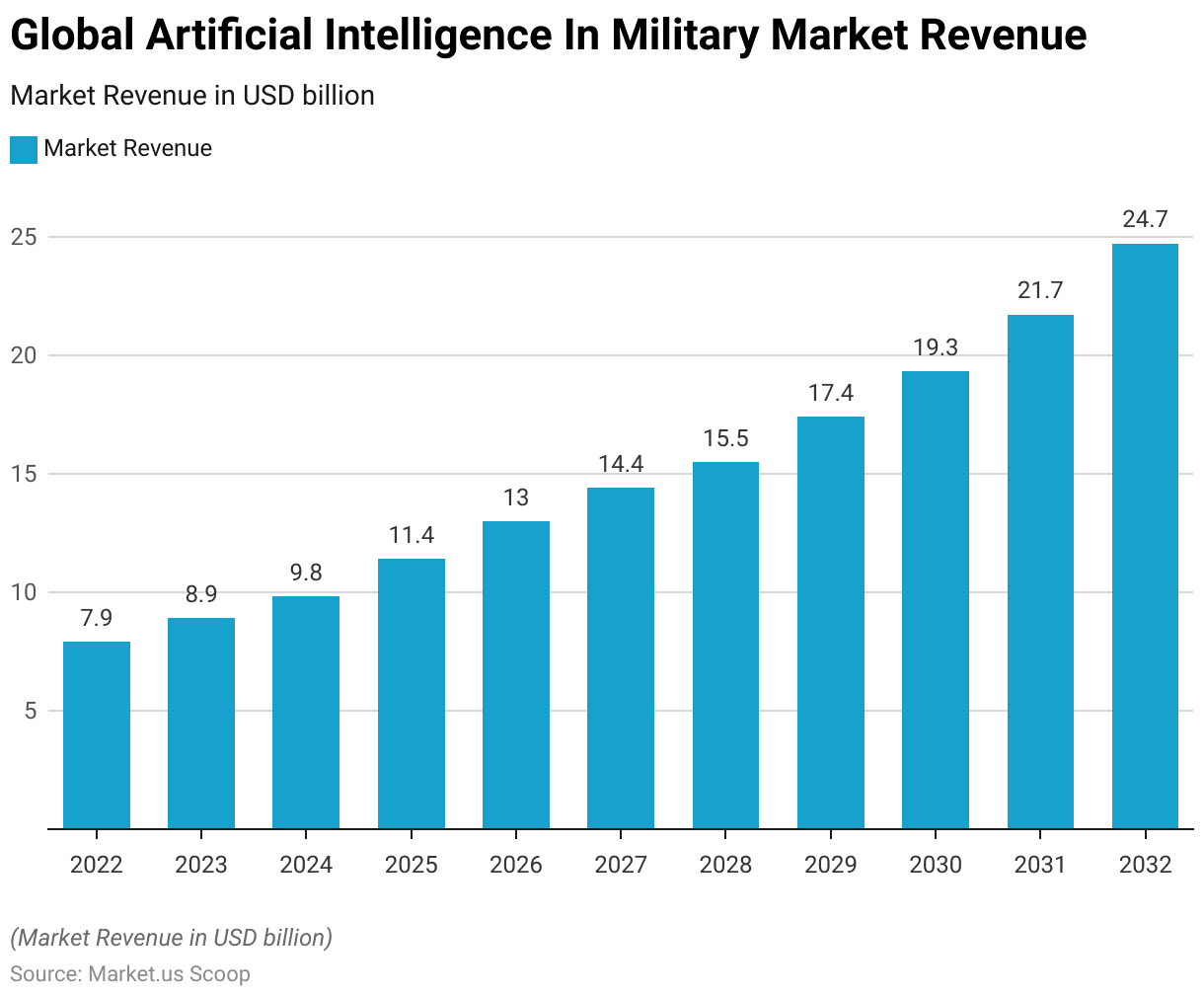
- The global AI in the military market has demonstrated steady growth, exhibiting a CAGR of 12.4% from 2022 to 2032.
- Starting at USD 7.9 billion in 2022, the market rose to USD 8.9 billion in 2023 and USD 9.8 billion in 2024.
- Further growth projected will see the market reach USD 11.4 billion in 2025, USD 13.0 billion in 2026, and USD 14.4 billion in 2027.
- Looking forward, predictions suggest the market could achieve USD 24.7 billion by 2032.
(Source: Market.us)
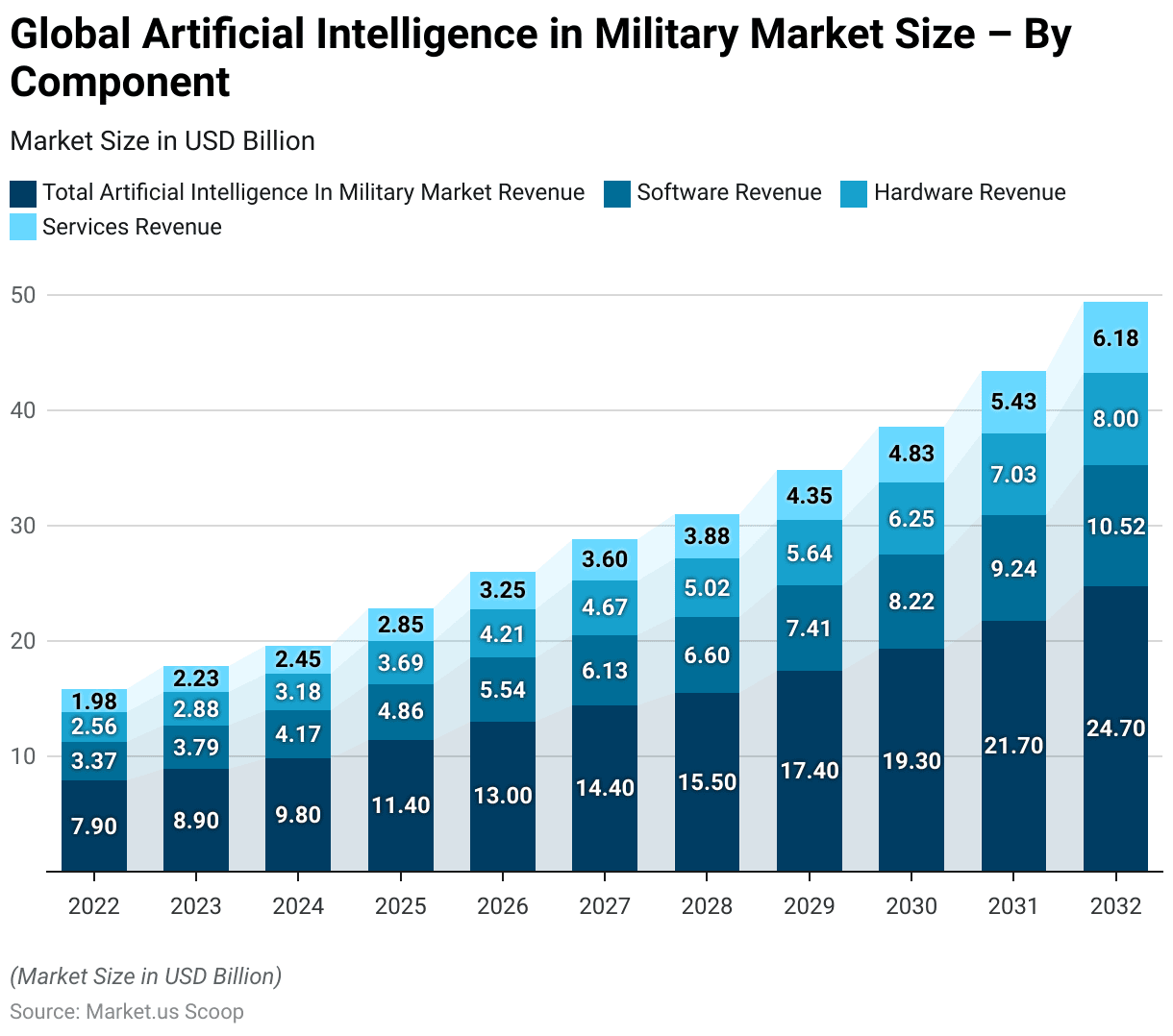
Artificial Intelligence in Military Market Size – By Component Statistics
- In 2022, total revenues of USD 7.9 billion were distributed into software (USD 3.37 billion), hardware (USD 2.56 billion), and services (USD 1.98 billion).
- By 2023, revenues grew to USD 8.9 billion, with software revenues increasing to USD 3.79 billion.
- This growth continued through 2024, 2025, and beyond, projecting increases across all three segments with significantly rising figures each year.
- By 2032, projected revenues indicate strong growth in software, hardware, and services at USD 10.52 billion, USD 8.00 billion, and USD 6.18 billion, respectively.
(Source: Market.us)
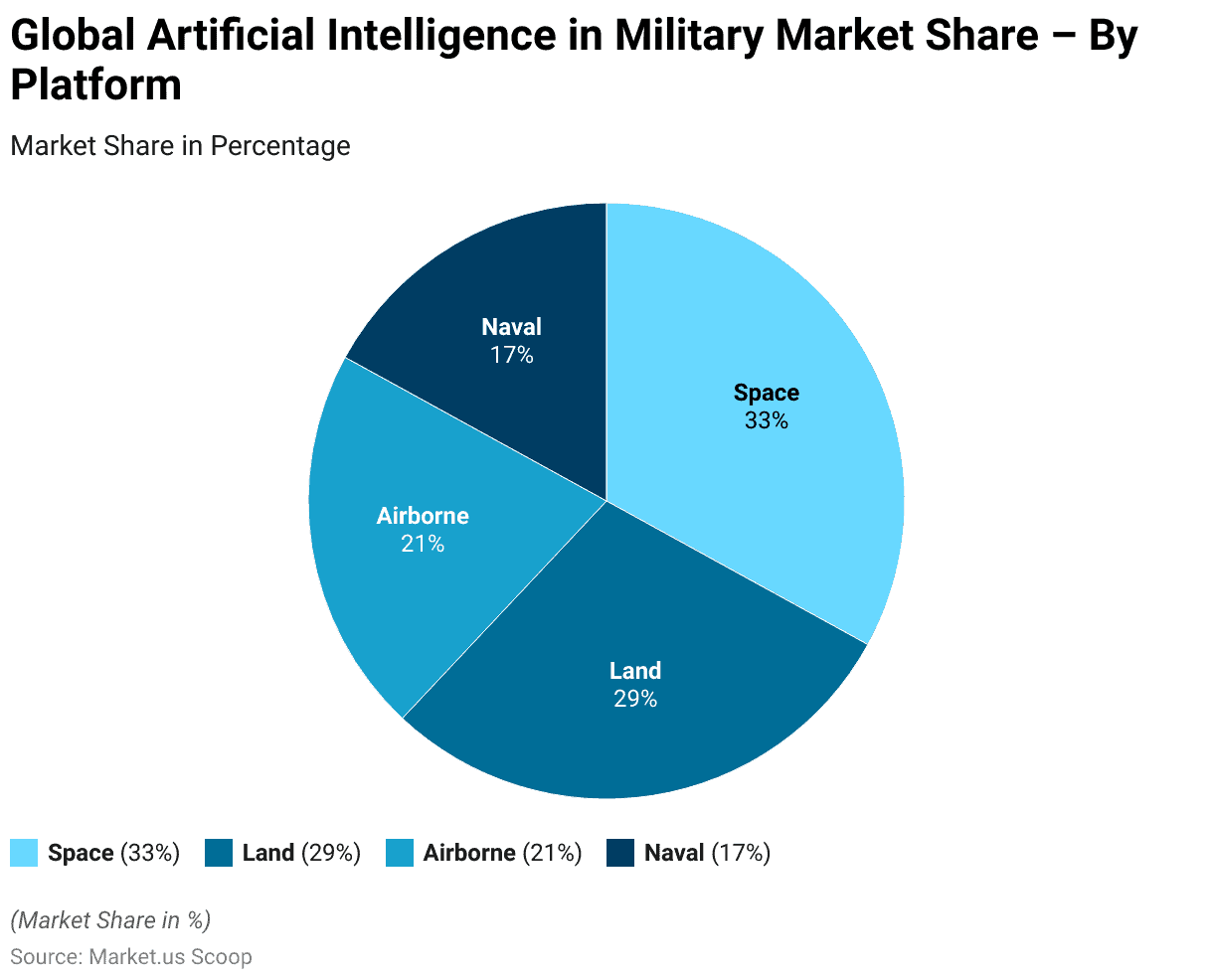
Global Artificial Intelligence in Military Market Share – By Platform Statistics
- Space platforms represent the largest share at 33%, highlighting a robust investment in satellite technologies and surveillance capabilities.
- Land platforms follow closely, holding a 29% share, indicating significant use in ground operations such as autonomous vehicles and robotics.
- Airborne platforms account for 21%, illustrating the crucial role of drones and aerial support systems in military strategies.
- Naval platforms, constituting 17%, reflect increasing AI investments for unmanned underwater vehicles and maritime surveillance.
(Source: Market.us)
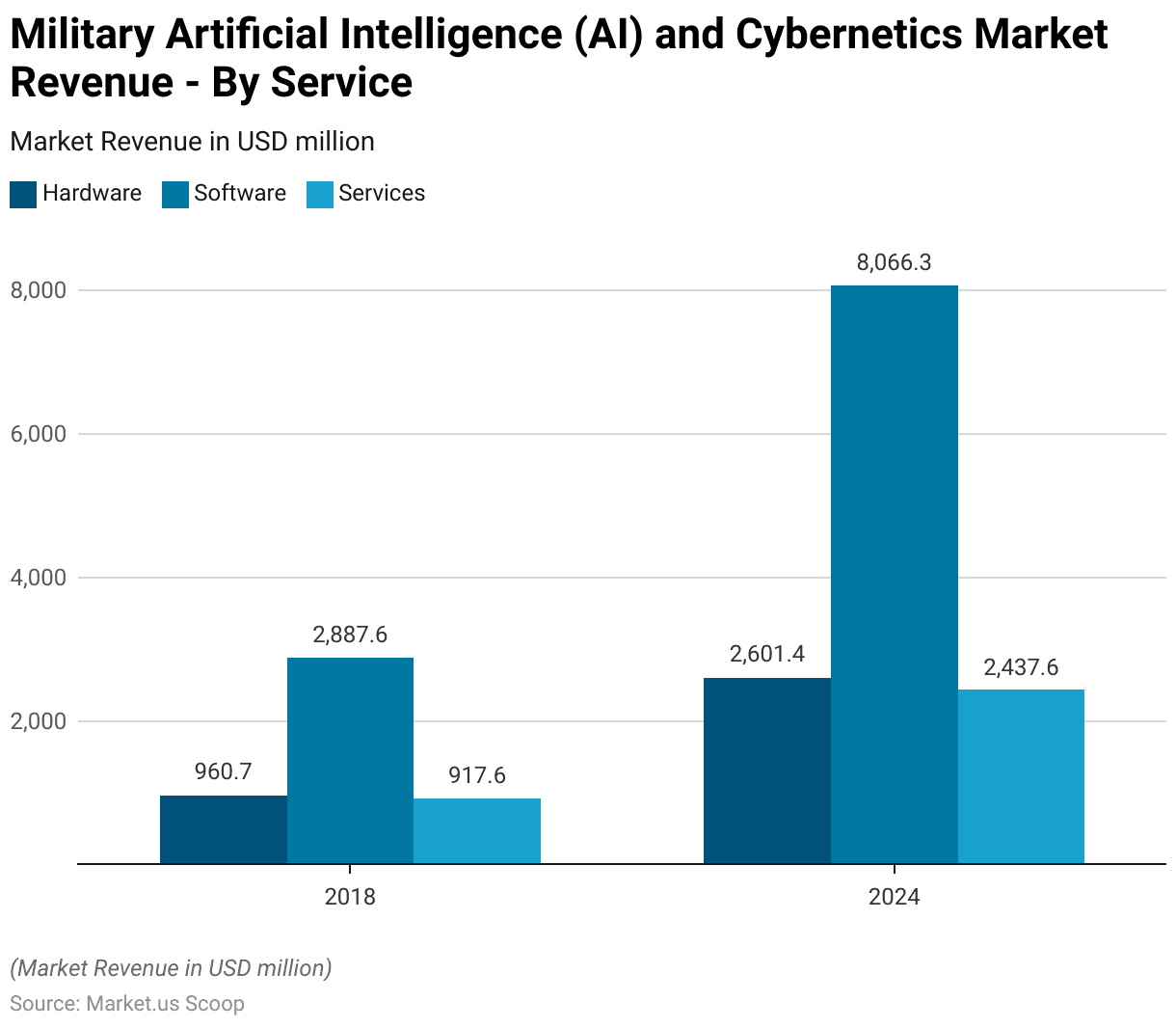
Military Artificial Intelligence (AI) and Cybernetics Market Revenue – By Service Statistics
- Between 2018 and 2024, revenues in the military AI and cybernetics market grew substantially across various service categories.
- Hardware services jumped from $960.7 million to $2601.4 million by 2024.
- Software services also surged, hitting $8066.3 million in 2024, up from $2887.6 million in 2018.
- This trajectory emphasizes the ongoing investment and adoption of AI technologies in response to evolving security challenges.
(Source: Statista)
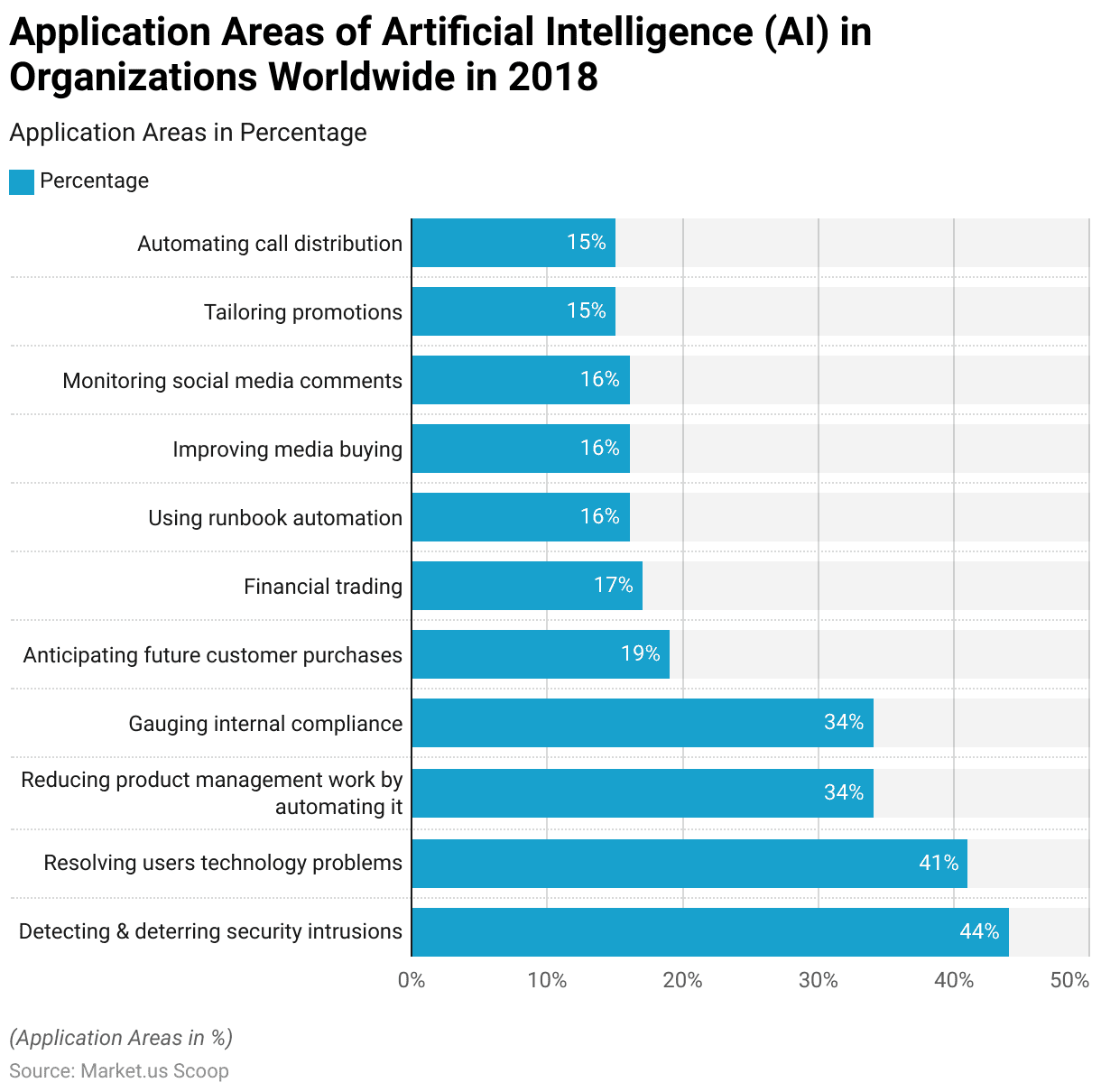
Application Areas of Artificial Intelligence (AI) in Organizations Worldwide
- In 2018, 44% of organizations deployed AI for security intrusion detection, highlighting AI’s pivotal role in digital infrastructure safety.
- Approximately 41% of organizations utilized AI to improve user technology support, showcasing efficiency in IT operations.
- AI’s capability to streamline processes was evident in 34% of organizations applying it to reduce product management workloads.
- Predictive analytics in customer purchasing behaviors was a focus for 19%, demonstrating the technology’s influence on understanding consumer actions.
- Financial trading and automating workflows saw usage rates of 17% and 16%, respectively.
- Other sectors, including marketing strategies and customer service operations, also utilized AI technologies extensively.
(Source: Statista)
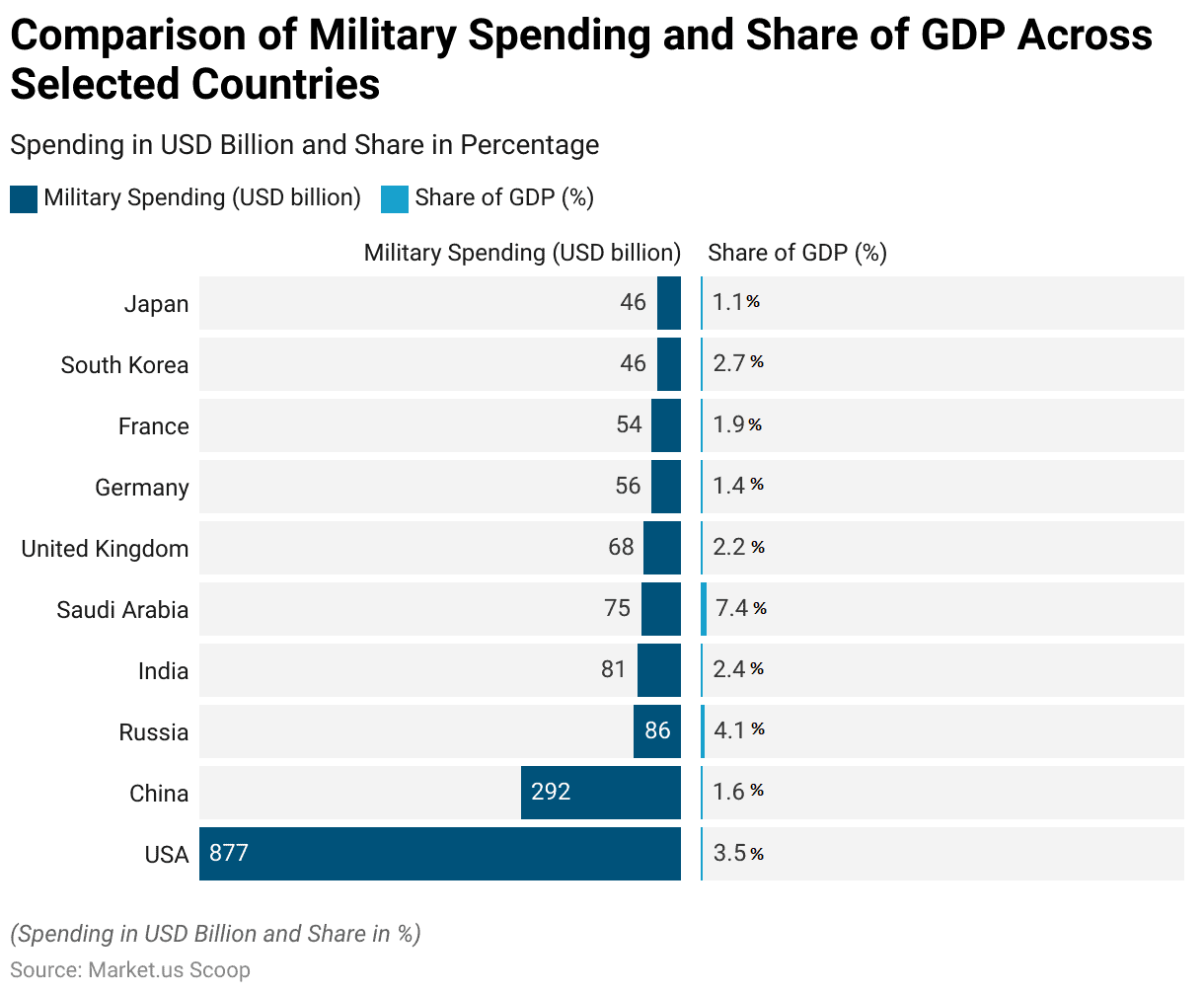
Military Spending of Various Nations
- The United States leads global military spending at approximately $877 billion, constituting 3.5% of its GDP.
- China follows with $292 billion, representing 1.6% of its GDP.
- Russia allocates $86 billion, a significant 4.1% of its GDP, while India spends $81 billion, accounting for 2.4%.
- Saudi Arabia has the highest GDP share for military spending at 7.4%, amounting to $75 billion.
- UK and Germany spent $68 billion and $56 billion, respectively.
- Various nations exhibit diverse approaches in military budget allocation relative to their economic capabilities and security needs.
(Source: Wisevoter)
Military Applications of AI
Warfare Systems
- AI advancements in warfare systems, including weapons, sensors, and surveillance, are providing enhanced operational efficiency while minimizing human dependencies.
- AI automation reduces human error and aids personnel in focusing on critical tasks, contributing to overall operational success.
- The Pentagon’s revised autonomous weapons policy reflects ongoing advancements in AI, ensuring ethical deployment procedures.
(Source: Defence News)
Drone Swarms
- Swarm intelligence is redefining military drone operations, allowing multiple drones to coordinate and share information, enhancing effectiveness dramatically.
- Such drone swarms are pivotal in simulations, training exercises, and real operational missions due to their dynamic decision-making abilities.
(Source: Sentient Digital, Inc.)
Target Recognition
- AI vastly improves target recognition accuracy, enabling comprehensive operational insights through rapid data analysis.
- AI facilitates predictions of enemy behavior and optimal mission strategies, aiding military personnel in decision-making processes.
(Source: Sentient Digital, Inc.)
Threat Monitoring
- AI-driven unmanned systems enhance threat monitoring and situational awareness, assisting in the detection of potential risks in military operations.
- These systems improve the security of installations and personnel, ensuring operational safety during missions.
(Source: Sentient Digital, Inc.)
Transportation
- AI optimizes logistics and transportation of military resources, increasing efficiency and reducing manual intervention.
- Self-driving vehicles, driven by advancements in AI and computer vision, have promising applications for improving military logistics.
(Source: Sentient Digital, Inc.)
Challenges and Concerns
- 59% of respondents point to a shortage of data-science specialists as a critical challenge to implementing AI technologies.
- Moreover, 76% of leaders cite data bias and transparency issues as highly concerning in AI adoption.
- Obstacles like costs and insufficient expertise are significant barriers for 40% of executives.
- Lastly, 37% of business leaders believe a lack of understanding of AI technologies by management hampers positive returns on investment.
(Source: MicroSourcing)
Recent Developments
Acquisitions and Mergers:
- A leading defense contractor acquired an AI startup in September 2023 to bolster its autonomous systems capabilities.
- A merger between AI-focused firms occurred in December 2023, aiming to advance collaborative military solutions.
New Product Launches:
- In January 2024, defense manufacturers introduced autonomous drones with advanced navigation and target recognition capabilities.
- By March 2024, several companies launched AI-based support systems for command and control operations.
Funding Rounds:
- A Series C round raised $100 million in February 2024 for an AI defense contractor focused on military applications.
- Seed funding of $20 million was secured in April 2024 for AI research targeted at defense technology advancements.
Partnerships and Collaborations:
- A November 2023 collaboration between a military research agency and a tech consortium aimed to develop autonomous vehicle technologies.
- A partnership in March 2024 integrated AI threat detection capabilities into military networks.
Technological Advancements:
- Ongoing AI algorithm development for predictive maintenance of military equipment showcases the potential for improved operational uptime.
- Advancements in simulation technologies integrate AI for interactive training experiences, significantly benefitting military personnel.
Investment Landscape:
- In 2023, venture capital investments in AI military startups totaled $3.5 billion focused on innovative solutions.
- Strategic partnerships and acquisitions represented 60% of the total investment activity in the sector.
FAQs
Artificial intelligence in the military refers to the use of AI technologies such as machine learning, natural language processing, robotics, and computer vision to enhance decision-making, operational efficiency, and tactical capabilities within military contexts.
AI is utilized in various military operations including autonomous vehicle navigation, surveillance, target recognition, threat analysis, cybersecurity, and logistical optimizations, enabling swift data processing and improved decision-making.
Benefits include enhanced operational efficiency, reduced human casualties, improved precision in targeting and reconnaissance, and faster processing of information for better situational awareness.
Ethical concerns include the autonomy of lethal systems, potential malfunctions or hacks of AI-controlled weapons, transparency in decision processes, and broader implications for international relations and conflict escalation.
Autonomous weapons systems are regulated by both national and international laws, with ongoing efforts to establish guidelines ensuring compliance with humanitarian and ethical standards in their deployment.
Discuss your needs with our analyst
Please share your requirements with more details so our analyst can check if they can solve your problem(s).