


The call for drone dominance in the military realm has gained remarkable traction recently. Secretary of War Pete Hegseth has unveiled an ambitious initiative, spearheading plans to outfit combat units with tens of thousands of unmanned systems by 2026. The long-term vision aims for hundreds of thousands more by the end of 2027. This push underscores a shift in modern warfare, emphasizing the necessity of integrating drones as essential tools for operational success.
At the heart of Hegseth’s strategy is a philosophy of “adopting new technologies with a fight tonight mindset,” which emphasizes immediate application and integration of innovation. The urgency of this initiative reflects a critical understanding: in conflict scenarios, having cutting-edge tools at the soldiers’ disposal isn’t just an advantage; it can mean the difference between victory and defeat.
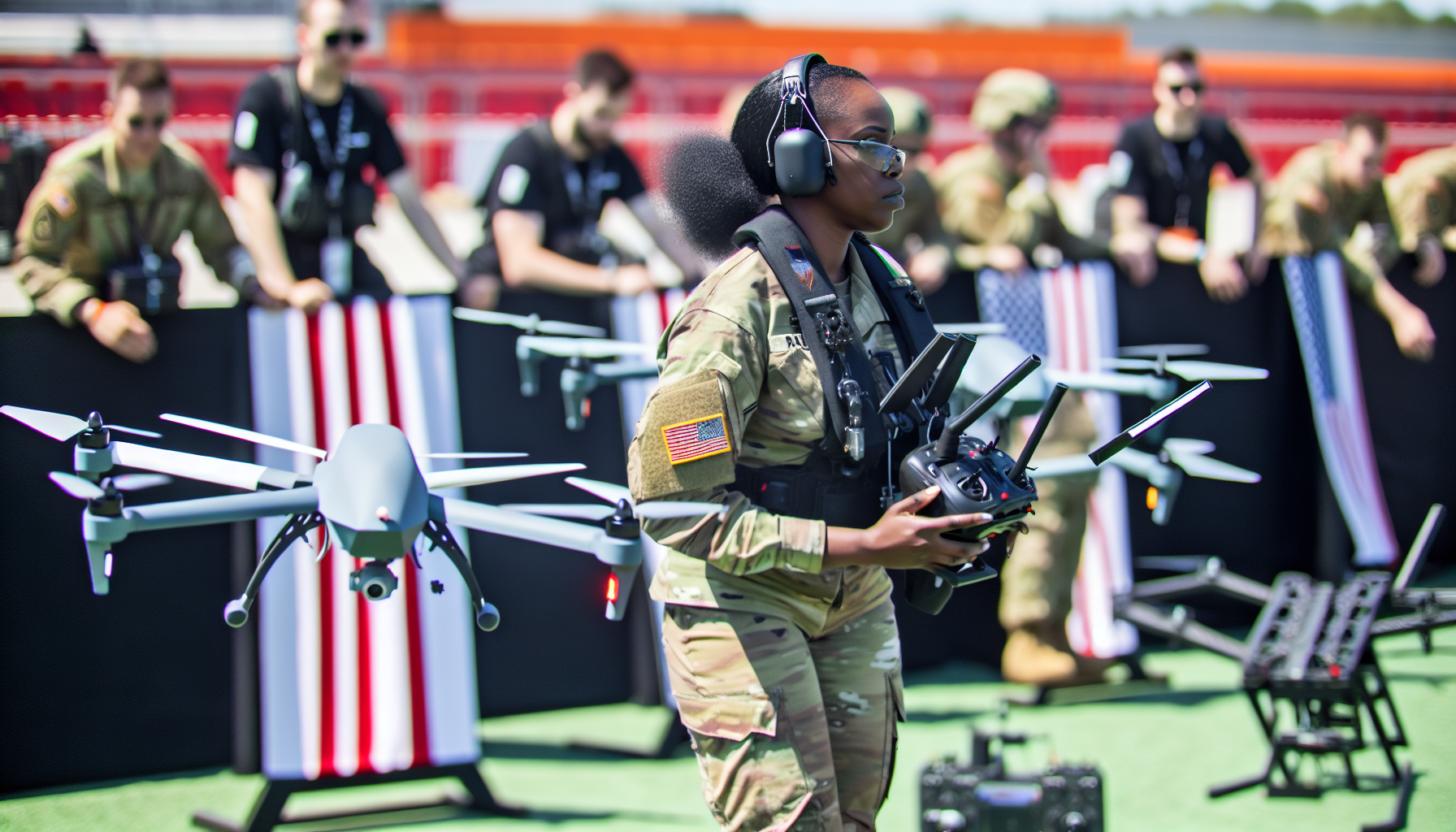
The Army Drone Team is already putting this vision into practice. Recently, they showcased their capabilities at the Drone Maneuver Competition during the National Drone Association Conference held at Full Sail University in Winter Park, Florida, on December 2-3. This event featured head-to-head competitions against drone pilots from various military branches and civilians, demonstrating the significance of unmanned systems in redefining battlefield dynamics. As Captain Jacob Bickus, the officer in charge, pointed out, the convergence of innovation, agility, and tactical application is reshaping military strategies.
Formed informally, the Army Drone Team had its initial experience in operational contests earlier this year, including participation in the International Drone Racing Tournament in the U.K. and a drone crucible event in Avon Park, Florida. Bickus highlighted these early events as crucial in identifying the need for a more structured recruitment process, leading to the establishment of a systematic application through the U.S. National Drone Association.
From over 120 applicants, a rigorous selection process led to the choice of 20 primary team members and 10 alternates. This diversity is key, as the team comprises soldiers from various Army formations, including infantry, aviation, military police, and cyber specialists. Such a mixed background allows for knowledge sharing and a comprehensive approach to drone operations, enhancing their effectiveness on future missions.
Among the selected soldiers is Army Sgt. 1st Class Stephan Ringsmuth, an unmanned aircraft systems instructor-writer stationed at Fort Huachuca, Arizona. Ringsmuth discovered his passion for drones earlier this year while attending the Special Operations Robotics Capability Course, sparking his interest in the hobby and enhancing his skills. He emphasizes that the competitions extend beyond mere racing; they cultivate vital instructional capabilities necessary for future operational success.
His perspective underscores the notion that while drone racing may seem like a recreational activity, it serves a foundational purpose. The structured phases of competition, described as “crawl-walk-run,” are essential for developing an effective flight instruction framework. This method not only fosters collaboration among team members but also cultivates the teamwork required for high-stakes operations.
Additionally, there’s Army Capt. Nathan Rosenberger, a military intelligence officer and artificial intelligence technician at the Army’s Artificial Intelligence Integration Center in Pittsburgh. Rosenberger’s role combines hardware expertise with piloting skills, focusing on first-person-view (FPV) flying. His year-and-a-half experience in competitive drone racing has sharpened his precision flying skills, demonstrating how even seemingly disparate activities can yield valuable military applications.
Rosenberger is pragmatic about the relevance of racing but notes that the pursuit of accuracy in fast-paced environments translates directly into essential battlefield skills. His insights also point to a broader objective: enhancing public awareness about the Army’s innovative initiatives, which he believes can serve as a compelling recruiting tool for future generations.
At the competition, the Army Drone Team’s performance was commendable, with pilots securing three of the top four spots. Rosenberger achieved the fastest time, while his teammates, Army Sgt. Kyle Brower and Army Staff Sgt. Brandon Schiller, showcased commendable skills and determination. Their impressive results illustrated both technical proficiency and the ability to remain focused under pressure, crucial attributes for any military operation.
The experience garnered from such competitions extends beyond accolades. According to Bickus, each team member walks away with practical flying experience and enhanced capabilities, which they will apply in their respective units. This integration of competitive spirit and military acumen reflects the ongoing evolution of warfare, where cutting-edge technology and skilled operatives collaborate to redefine battlefield strategies.