


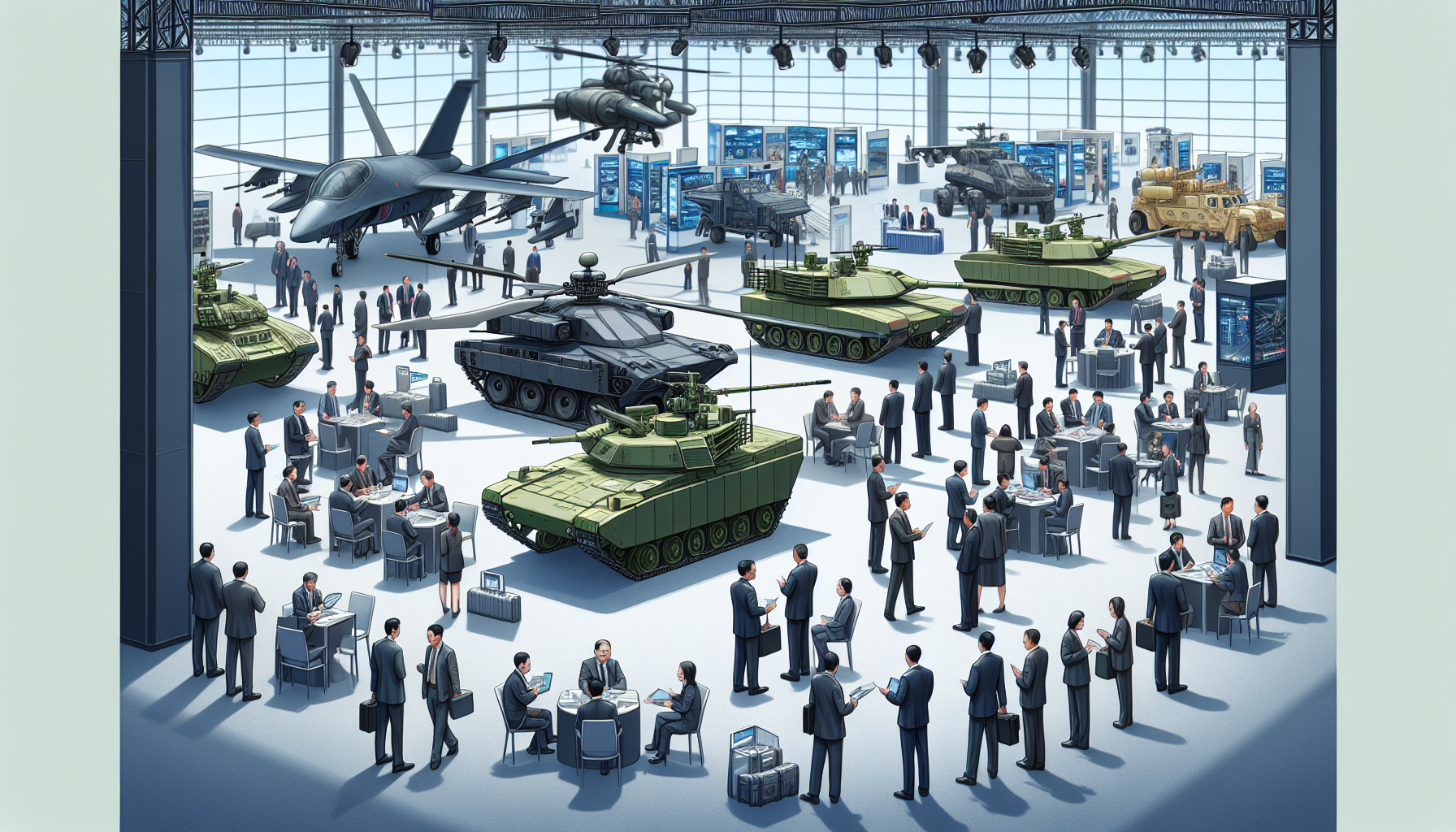
The Rise of Asian Defense Firms in a Tumultuous Geopolitical Landscape
As the world grapples with soaring geopolitical tensions, particularly marked by recent military actions from the U.S. and escalating defense expenditure across various nations, Asian defense firms find themselves emerging as significant players in a reshaped market. This article delves into the intricate factors contributing to this transformation, painting a picture of a rapidly evolving defense landscape.
A Surge in Global Defense Expenditures
The year 2025 witnessed a notable surge in defense spending globally, with countries increasing their military budgets in response to heightened security concerns. NATO countries pledged to spend an impressive 2.8% of their GDP on defense by 2026, aiming for 5% by 2035—a goal that has particularly resonated with Germany, which targets 3.5% by 2029. Meanwhile, Japan’s ambition to double its defense budget to 2% of GDP by 2027 reflects a broader paradigm shift in military priorities. The U.S., under President Trump, is projecting a massive growth in its military budget, eyeing a staggering $1.5 trillion for 2027, up from $901 billion for 2026.
In this heightened climate, defense companies across the globe are witnessing significant stock performance. Notably, European defense exchange-traded funds nearly doubled in value from early 2025 into 2026, while major U.S. tech stocks, dubbed the Magnificent Seven, saw an appreciation of just over 20%. Asian defense stocks have soared even higher, rising around 75% during the same period, compared to a respectable 50% return for their American counterparts.
The Strategic Advantage of Asian Defense Firms
As we look ahead, Asian defense companies are poised for even greater success compared to their European counterparts. This optimism largely stems from two crucial trends: the expanding export market to the European Union and the notable rise in domestic defense production among Asian nations seeking to reduce dependency on imports.
Notably, South Korean defense firms are at the forefront of this transformation, positioning themselves as viable alternatives to traditional suppliers like the U.S. As the 10th-largest arms exporter, Korea accounted for 2% of global arms exports from 2020 to 2024, with a significant proportion—53%—of its defense exports flowing to Europe. Countries like Poland are increasingly favoring South Korean products for their reliability and competitive pricing.
The Landscape of Arms Production in Asia
An eye-opening statistic comes from SIPRI’s report, which lists 23 Asian firms among the world’s top 100 arms producers. This group includes eight Chinese, five Japanese, four South Korean, three Indian, and one each from Taiwan, Singapore, and Indonesia—most of which have reported meaningful revenue growth over the past year. With South Korea leading the charge, these firms are capitalizing on a combination of innovation and cost-effectiveness, directly challenging traditional Western defense manufacturers.
Rising “insourcing” trends in Asian nations further bolster this defense manufacturing renaissance. Recognizing the pivotal link between national security and a robust domestic military-industrial landscape, many Asian countries are aggressively pushing for increased local production. For instance, Indonesia aims to escalate local content in major defense equipment from 40% in 2026 to 60% by 2030, while Vietnam aspires to enhance domestic inputs in defense technologies from 32% to 50% by the same timeline.
Leading the charge in “defense indigenization” is India, which aspires to manufacture 70% of its defense equipment locally by 2027. With a current figure around 65% in local manufacturing achieved by 2025, India has steadily reduced its dependence on Russian imports, reflecting a broader move towards self-sufficiency.
Attractive Valuations of Asian Defense Stocks
Beyond geopolitical considerations, Asian defense stocks present attractive investment opportunities, particularly in comparison to their Western peers. A review of 20 notable firms from SIPRI’s list reveals that a significant proportion of those qualifying as “cheap”—based on forecast earnings growth in relation to their price-to-earnings multiple—are Asian companies. This group includes heavyweights like Korea Aerospace, Hanwha Aerospace, and Hyundai Rotem, among others. Notably, four of the five companies projected to experience the highest earnings growth within this segment are South Korean.
Challenges Ahead for Asian Defense Firms
However, while Asian defense firms stand to benefit from their rising prominence, significant challenges loom on the horizon. Although they are gaining ground, American and European firms still lead in key technological domains like artificial intelligence, quantum communications, hypersonics, and advanced autonomous systems. The race for technological supremacy remains a crucial area of competition.
Moreover, supply chain vulnerabilities pose substantial risks. Recent incidents, such as China’s suspension of exports of rare earth materials, remind us of the fragility of supply chains essential for manufacturing defense equipment.
Ensuring a steady flow of critical materials coupled with robust investments in research and development will be vital for sustaining the growth trajectory of Asian defense companies.
As investors become increasingly enamored with the potential for substantial growth in the Asian defense sector, the shifting tides of the global defense industry promise to reshape long-standing dynamics and create new opportunities for market leaders.