


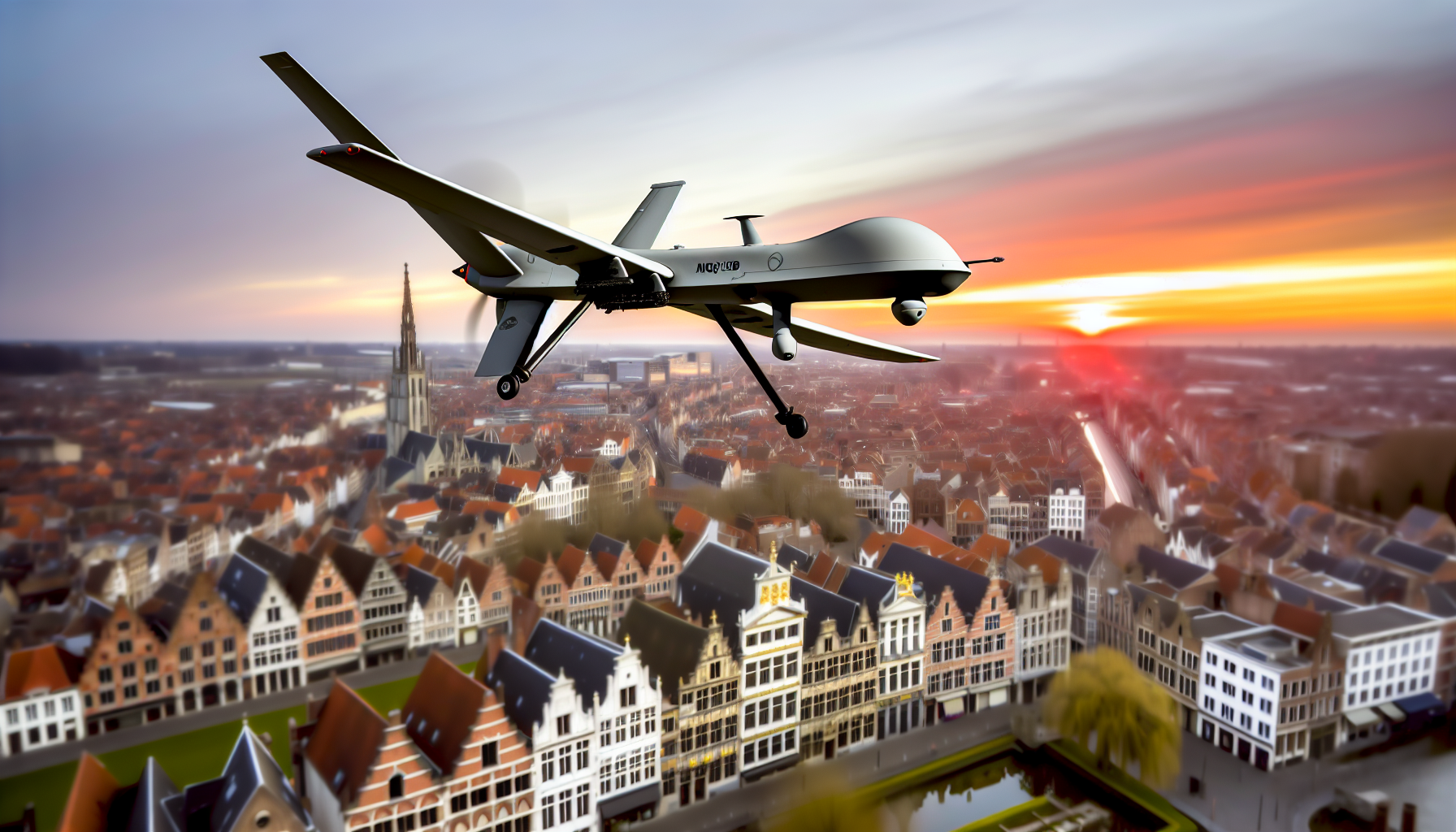
The Inauguration of the MQ-9B SkyGuardian in Belgium
On September 23, 2025, the Belgian Air Force took a significant leap into the future of aerial warfare and surveillance by inaugurating its first MQ-9B SkyGuardian drone at Florennes Air Base. Defense Minister Theo Francken graced the occasion, underscoring its importance in Belgium’s journey toward modernizing its air defense capabilities. This initial drone marks the beginning of a planned fleet of six units expected to be operational by 2028, representing a pivotal investment in enhancing NATO’s collective surveillance capabilities.
Modernization Efforts and Infrastructure Development
The inauguration isn’t just about acquiring advanced drones; it also reflects a broader commitment to modernize Belgium’s Air Component. At Florennes, new facilities have been constructed to accommodate control stations and train personnel specifically for the operation of these remotely piloted aircraft. This investment is part of Belgium’s strategy to bolster its intelligence, surveillance, and reconnaissance (ISR) capabilities, aligning with the technological advancements embraced by NATO allies.
The MQ-9B SkyGuardian: A Technological Marvel
The MQ-9B SkyGuardian stands out as a sophisticated evolution of the MQ-9A Reaper, renowned for its versatility and operational efficiency. One of the remarkable features of the SkyGuardian is its compliance with civil aviation safety standards, enabling it to operate in mixed airspaces without interfering with commercial traffic. It boasts an impressive endurance of over 40 hours and can fly at operational altitudes exceeding 12,000 meters. This ability allows Belgium to maintain extensive surveillance coverage over critical areas, from maritime zones to essential infrastructure, and even in overseas missions.
Enhanced Features and Technical Specifications
With a wingspan of 24 meters and a length of 12 meters, the MQ-9B is among the largest aircraft in the remotely piloted aircraft systems (RPAS) category. It is powered by a Honeywell TPE331-10 turboprop engine and can carry a maximum take-off weight of 5,670 kg. Significantly, nearly half of this weight capacity can be allocated to fuel, ensuring long operational durations. The drone’s payload capabilities include a 363 kg internal compartment and nine external hardpoints with a capacity of up to 2,155 kg for various equipment, such as sensors and specialized pods.
Surveillance and Combat Capabilities
Equipped with a Lynx multi-mode radar and high-definition electro-optical and infrared sensors, the MQ-9B is designed for comprehensive situational awareness and precision targeting. Its dual satellite communication system provides continuous connectivity with ground operators beyond the line of sight, making it an invaluable asset in modern warfare. The drone’s capacity for long-range missions—covering over 6,000 nautical miles at a cruising speed of 210 knots—further enhances its strategic value.
Training Programs and Future Operations
The Belgian Air Force has swiftly rolled out training programs for crew members. Initial training for Belgian operators took place in the United States, followed by sessions in the United Kingdom. Future training will occur domestically at Florennes, integrating both experienced pilots and specialists specifically recruited for drone operations. The operational use of the MQ-9B will not be limited to air component functions; it is designed as a joint asset to support various branches of the Belgian armed forces.
Strategic Impact and Joint Operations
The introduction of these drones is a key component in Belgium’s effort to enhance its national and international defense commitments. The MQ-9Bs will support operations from airspace surveillance to foreign deployments as part of NATO or European Union missions. This commitment is particularly relevant considering the evolving geopolitical landscape characterized by growing tensions and instability in various regions.
Addressing Geopolitical Contexts
The geopolitical implications of acquiring the MQ-9B are profound. Current circumstances, such as the ongoing conflict in Ukraine, heightened tensions in the North Sea due to Russian naval activities, and instability in parts of Africa, underscore the necessity for advanced surveillance capabilities. Belgium’s focus on deploying cutting-edge platforms aims to fill critical capability gaps, improve interoperability with allies, and fulfill NATO’s expectations regarding defense contributions.
A Step Towards a Modernized Military Doctrine
The integration of the MQ-9B SkyGuardian symbolizes much more than just an upgrade in military hardware; it represents a shift in Belgium’s military doctrine, organizational structure, and strategic priorities. By combining endurance with potential combat capabilities, this drone enhances Belgium’s ability to respond to modern security challenges. With the ability to handle ISR and, eventually, strike missions, the SkyGuardian will solidify Belgium’s role in collaborative defense efforts within NATO and the European Union.
The Future of Belgian Air Power
As Belgium embraces this new chapter of airpower, the upcoming presence of a state-of-the-art drone fleet is set to redefine how the nation approaches its defense strategy. The SkyGuardian’s advanced features and operational capabilities will play a crucial role in maintaining a robust defense posture and ensuring a responsive and agile military framework in a rapidly changing global landscape.