


The Evolving Role of Drones in Modern Warfare
When Russia invaded Ukraine nearly three years ago, the conflict opened a new theatre of modern warfare, particularly emphasizing the role of unmanned aerial vehicles (UAVs). These drones have become essential tools for both surveillance and assault, indicating a significant shift in the landscape of air dominance.
The Global Race for Air Superiority
In the current landscape, the two preeminent military powers, the United States and China, continue to prioritize traditional warplanes in their quest for air superiority. However, their approaches to UAV integration reveal a fascinating divergence. While both countries acknowledge the drone’s potential, they embody different strategic philosophies that influence their military doctrines.
China’s Mass Production Strategy
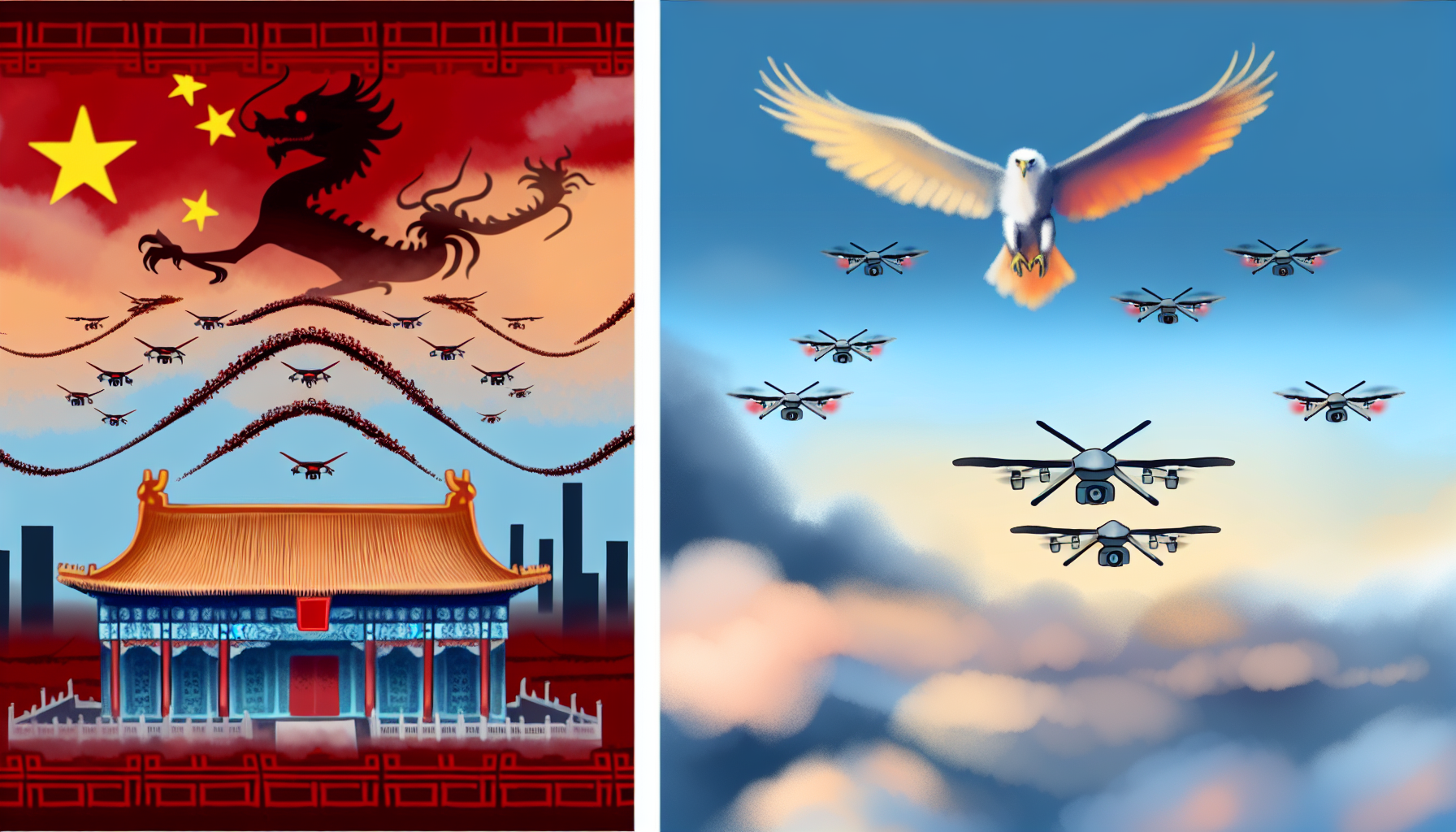
China has adopted an innovative approach focusing on mass production and affordability. This strategy allows for the rapid deployment of drones, which serve as key elements in asymmetric warfare. Analysts, like Michael Raska from Nanyang Technological University in Singapore, highlight that China’s emphasis on drones aims to overwhelm adversaries through sheer quantity and strategic application. Resources poured into artificial intelligence and swarm technologies exemplify China’s intent to utilize drones not just as standalone units but as interconnected agents enhancing military effectiveness.
The U.S. Approach to UAVs
Conversely, the U.S. has chosen to invest significantly in high-end, versatile drones, deeply integrating them into a network-centric warfare strategy. This integration emphasizes superior sensor capabilities and data-sharing networks, enhancing the coordination and effectiveness of aerial operations. Raska points out that the U.S. approach centers around creating a cohesive operational framework, where drones complement various military assets rather than merely serve as alternatives.
The Asymmetrical Warfare Dimension
China’s focus on inexpensive drones allows it to adopt asymmetrical tactics that could level the playing field against the U.S. air power. By flooding the battlefield with a large number of drones, China can exploit vulnerabilities in more traditional military setups, creating a scenario where quantity can offset quality. This approach caters to the notion of war being fought not just with superior technology but also through innovative strategies that exploit existing weaknesses.
Investment in Advanced Technologies
Both nations are racing to refine drone technologies that incorporate advanced features such as AI-driven autonomy and swarm capabilities. China’s rapid advancements in mass-produced drones compel analysts to acknowledge the speed with which it could close technological gaps with the United States. The Chinese model emphasizes not only the hardware of drones but also their software capabilities, focusing on innovative logistical and operational frameworks.
Drones in the Ukraine Conflict
The conflict in Ukraine serves as a vivid illustration of the evolving utility of drones in real-world scenarios. Both Russia and Ukraine have employed UAVs for reconnaissance, targeting, and even psychological operations. The dynamics of drone warfare witnessed in this conflict offer insights into future military engagements globally.
Challenges and Ethical Considerations
While the strategic advantages of drones are evident, questions surrounding their ethical implications remain. Issues such as civilian safety, accountability, and the potential for miscalculations in conflict zones challenge militaries to reassess their drone deployment strategies. The risk of collateral damage and the psychological toll on civilian populations due to drone engagements are vital considerations as countries develop their UAV capabilities.
Looking Ahead
The proliferation of drone technology encapsulates the future of warfare. As countries innovate and adapt, the lessons learned from current conflicts will undoubtedly shape military strategies and policies for years to come. The unfolding landscape of aerial dominance, with UAVs at the forefront, will continue to influence geopolitical tensions and alter the nature of international military engagements, pushing both efficiency and ethical considerations to the forefront.