


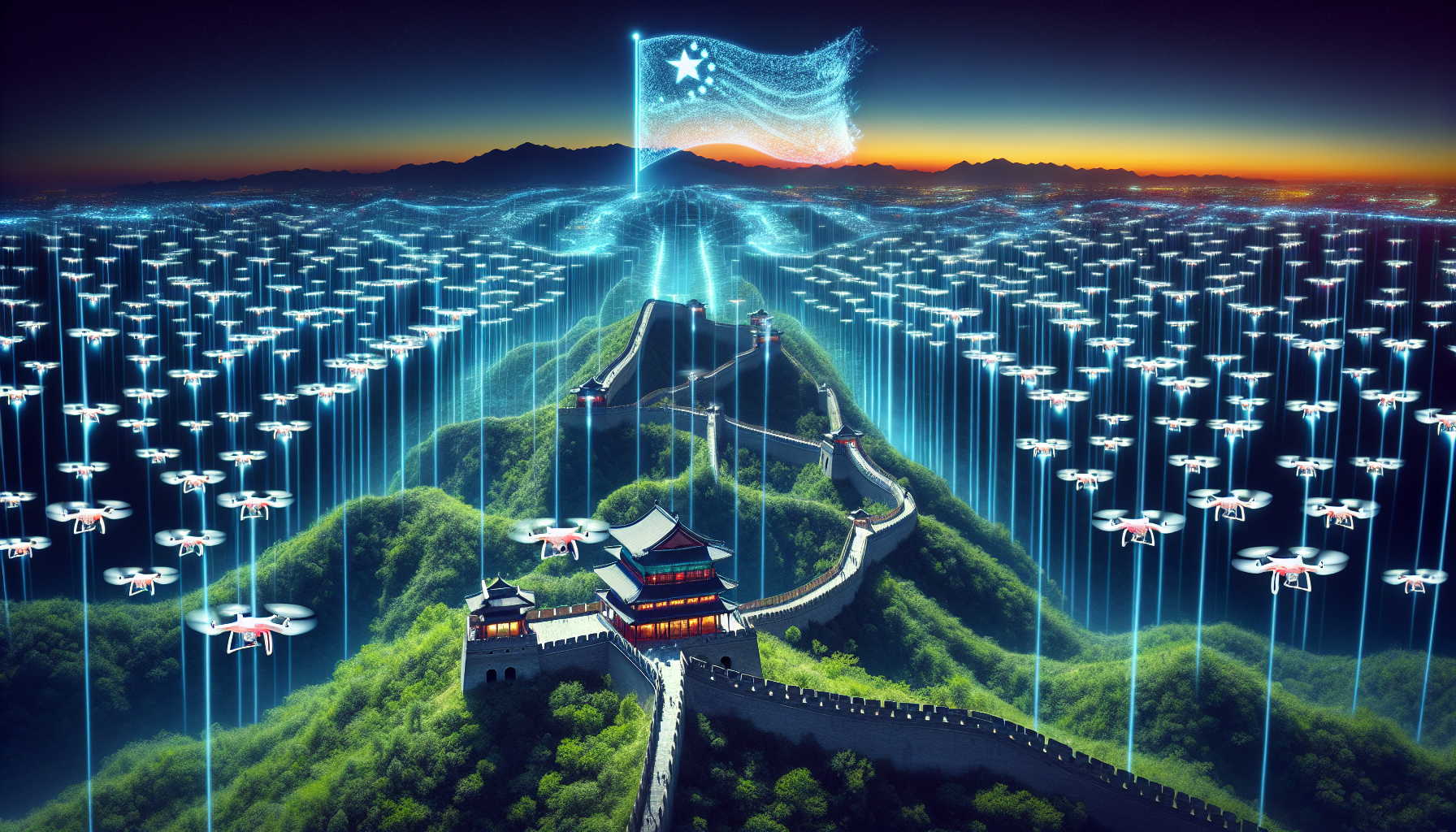
China’s Advanced AI-Equipped Swarm Drone Warfare: A Game Changer
China’s People’s Liberation Army (PLA) has sparked significant interest and concern with its recent revelations about AI-equipped swarm drone warfare. The information shared suggests a striking military advancement where a single soldier could potentially coordinate over 200 drones, a feat that signals a new era in combat strategy. This cutting-edge technology, showcased through a defence program on CCTV, comes from the PLA’s National University of Defence Technology and presents implications for regional tensions, particularly with nations such as India, Taiwan, Japan, and Australia.
The Mechanics of Swarm Drone Warfare
At the core of this technology lies sophisticated artificial intelligence and data linking systems. This enables the simultaneous deployment of hundreds of drones, each capable of executing precision tasks independently. The drones can gather intelligence over vast areas, perform surveillance operations, and even execute attacks, all while communicating with one another through interconnected algorithms. This level of coordination not only enhances operational efficiency but also enables a redefined scope of tactical warfare.
Training and Development: The Path to Autonomy
Extensive training has been pivotal in the development of swarm drones. Through a combination of simulator use and real-world flight exercises, these drones cultivate robust autonomous intelligence. CCTV footage revealed researchers actively monitoring live drone operations, where drones were trained to perform diverse functions including surveillance, distraction and direct engagement in attacks. This rigorous training regime equips each drone with advanced capabilities, allowing them to operate autonomously even in complex environments.
Autonomous Algorithms and Resilience to Interference
A significant feature of these swarm drones is their reliance on intelligent algorithms that govern their operations. These drones are not merely programmed machines; they are capable of self-organization within a cooperative swarm setup. This interoperability enhances their collective effectiveness, allowing drones to distribute tasks efficiently. Interestingly, researchers have also developed anti-jamming algorithms, enabling drones to navigate through environments fraught with electromagnetic interference. This ensures continuous operation and allows them to adapt by independently selecting flight paths when traditional navigation fails.
Real-World Applications: Demonstrations of Capability
Recent demonstrations of swarm drones included scenarios where drones lost their navigation and communication systems yet effectively transitioned into autonomous operation mode. They successfully intercepted offline drones and targeted munitions, illustrating their tactical versatility in dynamic combat situations. During these training exercises, a framework referred to as the “I vehicle” was utilized, recognized as a high-mobility swarm weapon system capable of launching various drone types.
The I-48 Fixed-Wing Drone: A New Operational Standard
Among these developments is the I-48 fixed-wing drone, designed specifically to function within a drone swarm. This platform stands out for its ability to deploy loitering munitions in a single launch, enabling efficient airborne operations. Such advancements in drone technology provide the PLA with a significant edge in modern warfare tactics, highlighting the transformative nature of AI in military applications.
Regional Implications and Strategic Concerns
As the PLA unveils its advancements in swarm drone technology, the geopolitical landscape in East Asia may experience heightened tensions. Countries like India, Taiwan, Japan, and Australia have historically strained relations with China, and the introduction of such sophisticated military capabilities could escalate fears of conflict. The potential for rapid, coordinated drone attacks may lead these nations to reassess their own defensive strategies in response to an increasingly assertive China.
Through these developments, China is not just altering the battlefield; it is changing the rules of engagement. The advent of AI-driven swarm drone warfare presents both opportunities and challenges, making it a critical area of observation for military analysts and policymakers alike.