


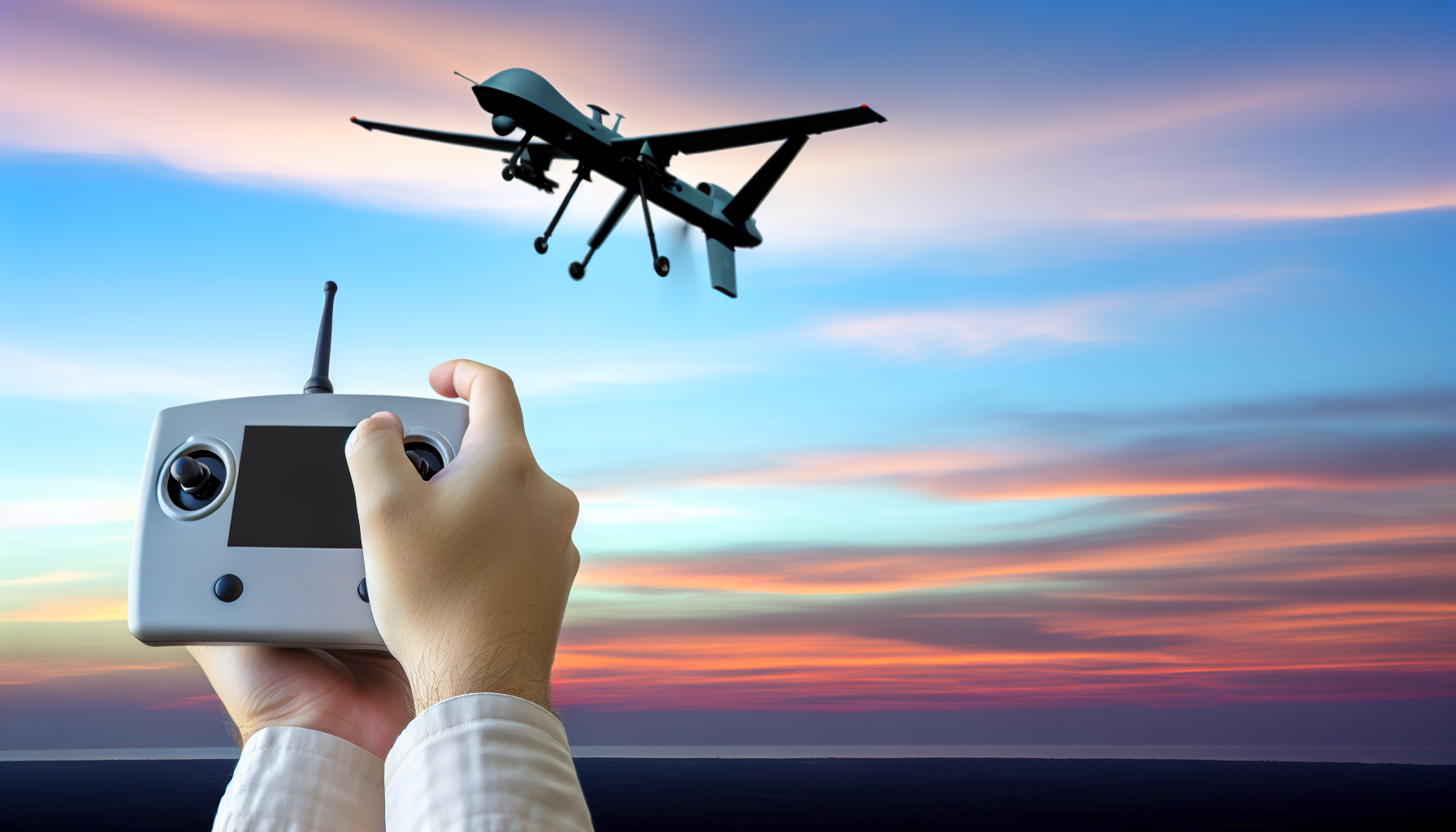
Ethical and Legal Considerations in Armed Drone Warfare: An Overview of Christian Enemark’s Edited Volume
The increasing prevalence of armed drones in modern warfare has ignited a myriad of ethical and legal discussions worldwide. The advancements in drone technology—spanning aerospace engineering, robotics, satellite communications, and artificial intelligence—have brought to the forefront urgent conversations about the need for international regulations. In this context, Christian Enemark’s edited volume, published by Edinburgh University Press in 2021, offers a rich tapestry of perspectives aimed at understanding the complexities surrounding drone strikes.
The Ethical Dimension of Drone Warfare
The ethical discourse surrounding drone warfare is a significant focal point of Enemark’s compilation. The introduction sets the stage by emphasizing that the implications of drone strikes go far beyond mere military strategy; they penetrate deeply into moral landscapes. The juxtaposition of technology with ethical considerations raises critical questions about the “moral status” of drone violence. This inquiry is essential not only for understanding the current landscape but also for shaping future policy and regulation.
Conceptual Frameworks: War vs. Law Enforcement
The first chapters delve into the philosophical underpinnings of war, specifically referencing the influence of Paul Kahn’s works. Robert Sparrow’s analysis highlights Kahn’s contributions to debates on targeted killings and the ethics of drone warfare, despite Kahn’s ideas emerging before drones were utilized in combat. The examination urges modern readers to reflect on the implications of “riskless warfare” on the ethics surrounding armed conflicts.
Similarly, Christian Nikolaus Braun introduces a “third way” to the traditional Just War theory. By redefining key criteria such as “sovereign authority” and “just cause,” he probes whether they still hold in the context of targeted killings. Braun’s analysis illuminates the need for a fresh ethical framework that encapsulates the contemporary realities of warfare, especially as they relate to drone strikes.
Legal Perspectives: Military Actions or Policing?
Max Brookman-Byrne’s contribution provides a critical assessment of U.S. drone strike campaigns in Yemen and Somalia from an international law and human rights perspective. He contends that these operations resemble policing endeavors rather than traditional military engagements. This classification necessitates adherence to more stringent international human rights laws, particularly given their implications on sovereignty and civilian lives.
Christian Enemark also engages with the notion of “wild justice” in his evaluation of U.S. personality strikes since 2002. This term reflects a form of violent law enforcement that arises when the rule of law is uncertain. By advocating for a non-war posture in analyzing drone violence, he emphasizes the need for reducing arbitrary killings and navigating complex legal landscapes.
The Role of Drone Operators
Examining the perspective of drone operators, Peter Olsthoorn challenges conventional military virtues, arguing that qualities like courage have diminished relevance in drone warfare. This shift invites a reconsideration of how we perceive military ethics and the moral fabric underlying drone operations.
Lindsay C. Clark and Enemark expand on this discussion through the lens of feminist ethics. Their exploration of the non-physical harms inflicted by drone strikes on both operators and “innocent others” highlights the relational impacts of warfare. This ethical reasoning challenges existing paradigms and provides a framework for a more empathetic approach to the conduct of drone operations.
Future Challenges: Artificial Intelligence and Autonomous Weapons
As technology evolves, the introduction of artificial intelligence (AI) in drone operations marks a new frontier. Peter Lee’s chapter investigates the increasing autonomy in military drone systems and raises pressing questions about accountability. The ethical implications of lethal autonomous weapon systems (LAWS) demand robust guidelines to prevent misuse and ensure compliance with existing laws of war.
Thompson Chengeta further explores the international landscape concerning autonomous armed drones (AADs), often dubbed “killer robots.” He underscores the slow progress toward regulatory frameworks, particularly within the UN, where negotiations are frequently stalled by competing political interests. Chengeta’s analysis signals the pressing need for public discourse around AADs to address not only military ethics but also societal acceptability.
Governance and Risk Assessment
In the concluding thoughts of the volume, Christian Enemark reiterates the urgent need for improved governance concerning drone usage. By addressing the nuances of risk and the categorization of drone violence, the edited volume offers a comprehensive insight into the shifting moral and legal landscapes of warfare. The synthesis of contributions provides a multifaceted look at the ethical and regulatory challenges posed by armed drones—making it an invaluable resource for scholars, policymakers, and anyone interested in the future of warfare.
Chantal Lavallée’s background lends further depth to this discussion, as she provides critical insight from her position as an Assistant Professor at the Royal Military College Saint-Jean in Canada. Her analysis hints at the academic rigor embodied within this volume, setting a precedent for ongoing discourse in the realm of drone ethics and international law.