


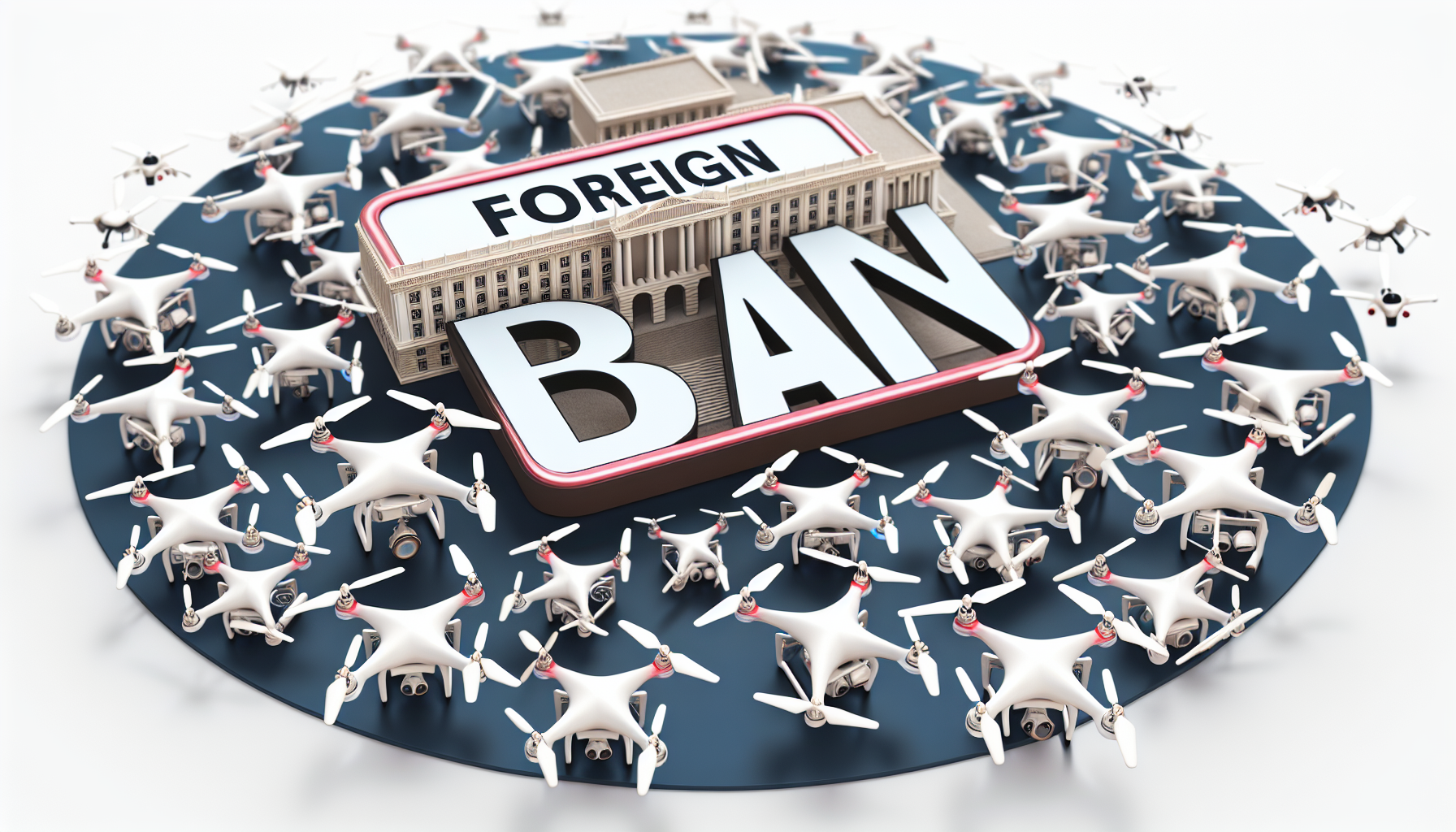
Bold New Moves in Drone Regulations
Last month, the Federal Communications Commission (FCC) took significant action by banning the import and sale of all new drone models and critical equipment manufactured by foreign companies. This decisive step was taken by adding these entities to the “Covered List,” which identifies those posing an “unacceptable risk to the national security of the United States.”
The Rationale Behind the Ban
As articulated by a coalition of 14 Republican senators on the Senate Armed Services Committee (SASC), the ban is a proactive measure intended to bolster the American drone industry. They emphasized, “America needs a cutting-edge small drone industry.” The legislators pointed out that concerns over foreign adversaries manipulating the market necessitated protective actions, initially envisioned when Congress passed Section 1709 of the Fiscal Year 2025 National Defense Authorization Act (NDAA). This provision effectively initiated a timeline for a nationwide inquiry into whether communication or surveillance equipment from Chinese companies posed security risks.
Exception for Existing Drones
It’s important to note that this ban does not affect already approved drone models or those that have been purchased. This carve-out allows consumers and businesses that currently rely on foreign-made drones to continue their operations without immediate disruption.
Market Dominance of Chinese Manufacturers
Chinese manufacturers, including DJI and Autel Robotics, dominate the U.S. drone market, with DJI capturing more than 70% of the global market according to data from Research and Markets. This overwhelming presence has raised alarms about the potential for drones to be misused—either in civilian life or by U.S. forces—posing national security threats that have been discussed for years.
Diverse Applications of Drones
Drones serve a variety of purposes, ranging from law enforcement to agriculture, as well as personal use by civilians. With the increasing integration of drones into these sectors, both government officials and lawmakers are eager to strengthen the U.S. drone industrial base. The aim is to eliminate vulnerabilities associated with the use of foreign-manufactured drones.
Government Support for Domestic Drone Development
Lawmakers believe the ban falls in line with the $2.5 billion allocated for the U.S. drone industry as part of a recent reconciliation bill meant to invigorate American manufacturing of small drones. The funding aims to catalyze rapid growth in domestic production, a move that could help offset the gaps created by the restriction on foreign drones. They underscored the importance of providing American consumers with time to adapt to this shift, which will help lead to the establishment of free-market supply chains for small drone components.
Presidential Initiatives for Drone Commercialization
In June, former President Donald Trump signed an executive order aimed at accelerating the commercialization of drone technologies, which includes scaling up domestic production. Secretary of War Pete Hegseth has made revitalizing the defense industrial base a key priority at the Pentagon, further emphasizing the administration’s commitment to supporting American manufacturers.
Addressing Domestic and Global Security Challenges
Amidst this growing industry, it’s also crucial to acknowledge the evolving threats posed by drones, both in domestic settings and internationally. FCC Chairman Brendan Carr pointed out the dual-edge nature of unmanned aircraft systems (UAS), noting their potential to enhance public safety while also serving as tools for criminals and hostile entities. The ongoing weaponization of drone technology highlights the urgency in addressing these challenges.
Law Enforcement and Public Safety
For law enforcement agencies, the ability to identify, track, and mitigate potential threats from drones is increasingly critical. They face the complex task of intercepting possible hazardous drones without endangering civilians, adding layers of difficulty to an already intricate situation.
Navigating a New Landscape
The recent FCC measures mark a pivotal shift in drone regulation, balancing national security interests with the desire for American innovation in drone manufacturing. As the landscape of drone technology continues to evolve, stakeholders from various sectors are now called upon to adapt, innovate, and collaborate in this rapidly changing environment.