


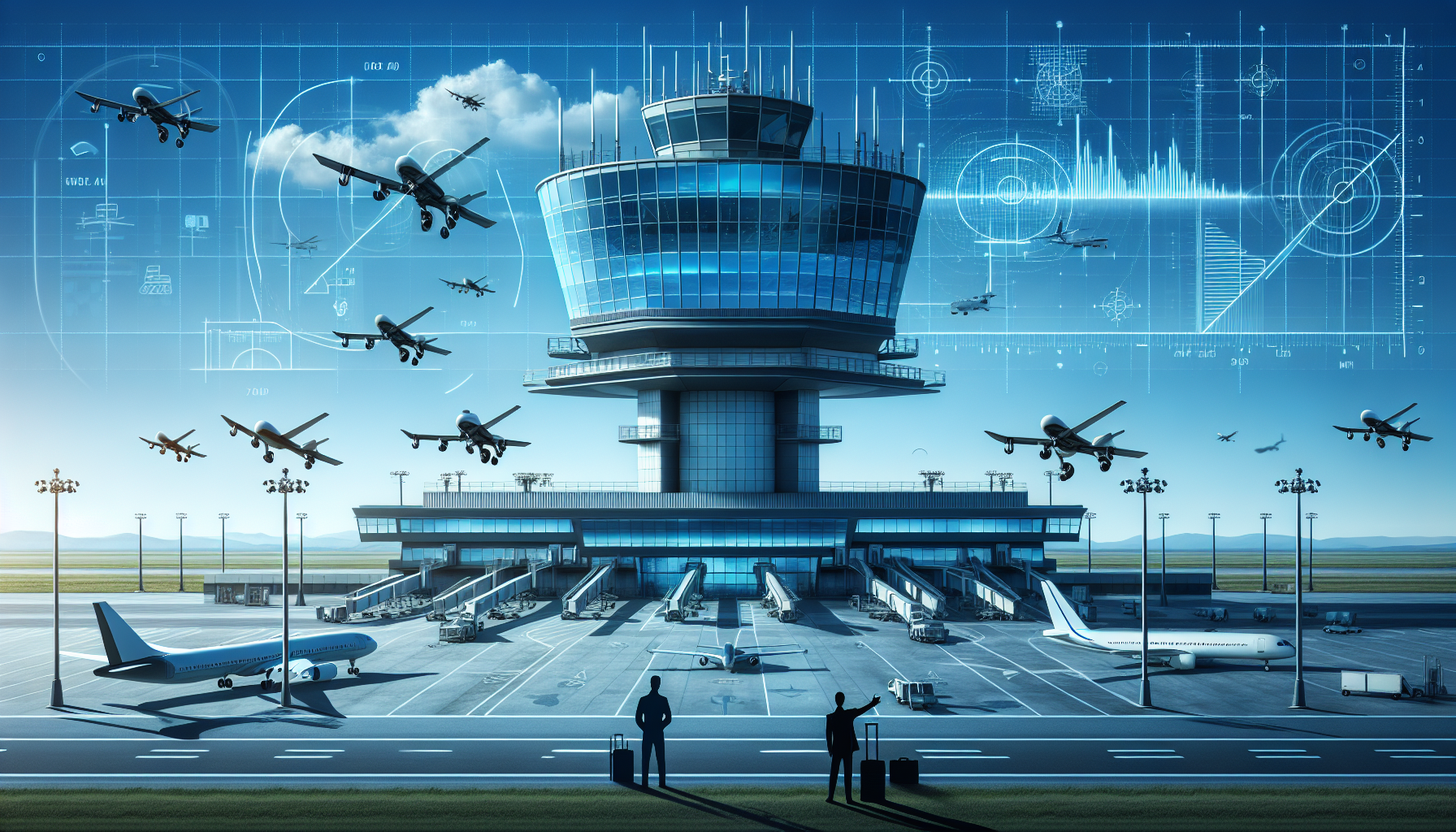
Navigating the Sky: How Airports Detect Unidentified Drones
In recent years, the rise of drones has transformed them from science fiction novelties into commonplace tools in our lives. From stunning aerial photography to recreational flying, these unmanned aerial vehicles (UAVs) have captivated enthusiasts worldwide. However, with their increasing presence comes a significant challenge: ensuring the safety and security of our airspace, particularly around sensitive areas like airports.
The Regulatory Landscape
To manage the burgeoning drone population, the Federal Aviation Administration (FAA) has implemented stringent regulations. Since 2016, these rules have included the use of government-approved “B4UFLY” apps that inform users about designated no-drone zones, such as sports arenas, Washington D.C., and, most critically, commercial airports. Given the potential dangers drones pose to aviation—ranging from privacy infringements to the risk of collisions with aircraft—these regulations are vital for maintaining order in our increasingly crowded skies.
Radar Limitations: The Challenge of Detection
Despite these regulations, airports are still grappling with the challenge of detecting drones. Traditional radar systems were designed primarily to identify larger aircraft, which means smaller drones can often go undetected. The radar struggles to distinguish a drone from similar-sized objects, like birds, and may overlook the drone entirely. Moreover, the fast-paced movement of drones can overwhelm these systems, which were not engineered to track multiple nimble targets simultaneously.
Advancements in Drone Detection Technology
In June 2025, the FAA embarked on an initiative testing advanced drone-detection technologies at various locations, aiming to integrate these systems into airports across the United States. These cutting-edge radars boast multi-mile detection ranges and can differentiate between a flying drone and a bird, solving some of the problems associated with traditional radar systems. While not yet commonplace, the exploration of drone detection tech is gaining momentum globally, with airports in cities like Dublin and Seoul also adopting similar measures.
Countermeasures in Play
As the drone market continues to expand—expected to reach nearly $700 billion by 2032—airports are exploring innovative strategies for monitoring and responding to drone activities. Advanced radars form just part of a comprehensive suite of detection tools. Other sophisticated systems include artificial intelligence that analyzes long-range security camera footage and the implementation of integrated response protocols, which alert law enforcement if a drone is detected in no-fly zones.
In addition to these high-tech solutions, airports are turning to various countermeasures such as acoustic sensors, GPS spoofers, control-frequency jammers, and even ingenious methods like nets launched from cannons. These solutions reflect the urgency of keeping airport airspace clear and secure.
The Real-World Risks
The stakes are high, as demonstrated by incidents like the drone sightings that paralyzed London Gatwick in 2018, causing a massive disruption that saw the cancellation of 1,000 flights and the inconvenience of around 150,000 passengers. Such scenarios exemplify the very real risks drones present to airport operations and the aviation industry as a whole. The FAA reports over 100 drone sightings near airports each month—a clear indicator of a problem that continues to escalate.
In light of these challenges, legislative measures are also being introduced to bolster airport security. A bill approved by the House Transportation and Infrastructure committee in September 2025 seeks to direct the FAA to deploy anti-drone systems at major U.S. airports. Should this legislation come to fruition, we can expect to see these technologies becoming staple components of airport security strategies in the not-so-distant future.
The Future of Airport Security
As drone technology evolves and becomes more affordable—some models are now priced under $200—the need for effective detection and mitigation systems at airports becomes increasingly critical. Airports must stay ahead of potential threats, leveraging advanced technology and innovative methods to safeguard their operations and the safety of air travel. The future of drone detection at airports will likely combine high-tech solutions and innovative strategies to ensure that the skies remain safe for both ordinary travelers and the aviation industry alike.