


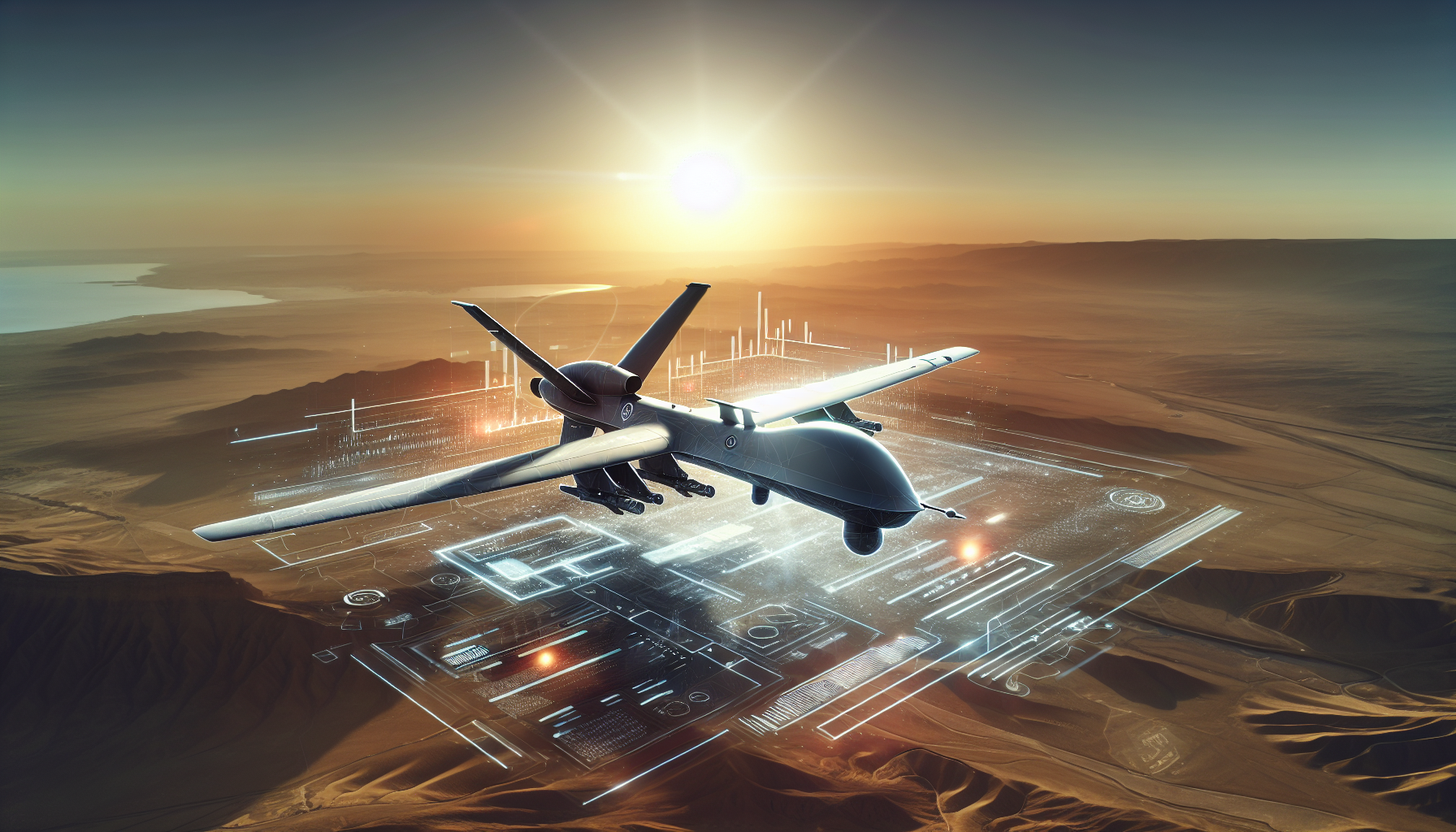
Iranian Armed Forces Drone Operations Amid US Tensions
Successful Surveillance Mission
Recently, an Iranian Armed Forces patrol and surveillance drone successfully completed its mission in international waters. This event stirred discussions, especially following reports of a United States aircraft reportedly downing a similar drone. The Fars News Agency was quick to report on this, revealing that the primary purpose of these Iranian surveillance drones is to monitor military movements in areas adjacent to the Islamic Republic.
Shahed-129: The Workhorse of Surveillance
The drone in focus is identified as a Shahed-129, a model that has garnered attention for its capabilities in reconnaissance, monitoring, and imaging. According to a source from Tasnim News Agency, this drone’s mission was routine and entirely legal, conducted in compliance with international norms. Such operations are considered standard procedures for Iran’s military, aiming to collect vital intelligence while ensuring sovereignty in its adjacent waters.
Real-time Data Transmission
A key aspect of the Shahed-129’s mission is its ability to transmit data in real-time. According to military sources, the drone successfully sent vital surveillance and reconnaissance footage back to its command center. However, shortly after completing its task, communication with the drone was lost. The cause of this disconnection is currently under investigation, with authorities promising additional details once the inquiry concludes.
CENTCOM’s Intervention
In a counter-response, United States Central Command (CENTCOM) announced that it had targeted an Iranian drone, claiming it acted in “self-defense” to protect its troops stationed in the region. CENTCOM’s statement emphasized that their actions weren’t intended to escalate tensions but rather to ensure the safety of American personnel. This pronouncement adds another layer of complexity to an already tense situation.
Rising Military Presence in the Gulf
These drone incidents occur against the backdrop of increased American military buildup in the West Asia region, particularly in the Persian Gulf. Such preparations come amid frequent threats from former President Donald Trump regarding potential military action against Iran. These developments serve to heighten anxieties on both sides, as rhetoric continues to escalate without signs of de-escalation.
Stern Warnings from Iranian Leaders
In response to the escalating tensions and military posturing, Iranian officials, including high-ranking military leaders, have issued stern warnings against any miscalculations by the United States and its allies. Ayatollah Seyyed Ali Khamenei, the Leader of the Islamic Revolution, recently cautioned that any war initiated by the U.S. would escalate into a broader regional conflict. His assertion serves as a reminder that Iran views threats to its sovereignty very seriously.
The Resilience of the Iranian Nation
Ayatollah Khamenei further emphasized that threats and displays of military power would not intimidate the Iranian nation. His statements reflect a broader sentiment within Iran that aggressive posturing from the U.S. is nothing new, and that the Islamic Republic remains steadfast in its resolve to resist such pressures. This determination underscores the complexities of U.S.-Iran relations, where military maneuvers and diplomatic rhetoric intertwine with deeply entrenched historical grievances.
In navigating these turbulent waters, the Iranian military continues to assert its operational capabilities while simultaneously leveraging its geopolitical narrative to rally support domestically and deter foreign aggression. Each incident, whether it involves drones or military deployments, feeds into a larger narrative of power, sovereignty, and the ongoing struggle for influence in a rapidly changing global landscape.