


In a world where technological advancements in warfare escalate daily, the introduction of a new drone type by Ukrainian radio-technical systems specialist Serhiy Beskrestnov, known by his callsign “Flash,” marks a significant development on the battlefield. This drone signals a shift from mass strikes to precision engagements, reflecting the evolving tactics in modern warfare.
Unlike the Shahed-136 (Geran-2), widely recognized for its mass strikes against infrastructure, this new drone is tailored for covert precision strikes specifically targeting military objectives. Command posts, logistics hubs, and ammunition depots become its primary targets, indicating a more strategic focus rather than broader area attacks.
Read more: F-22 Finally Gets Its Robotic Wingman Pilot Controls MQ-20 Avenger Drone From Single-Seat Cockpit
Recent recoveries of debris from this drone reveal intriguing features. Among the remnants, a four-channel Iranian CRPA antenna was identified. This antenna is similar to those used on the Shahed-238-Herbera and has been adapted to fit the cylindrical design of the Shahed-101. The drone’s engine also mirrors the powerplants found in other Iranian tactical UAVs of this classification.
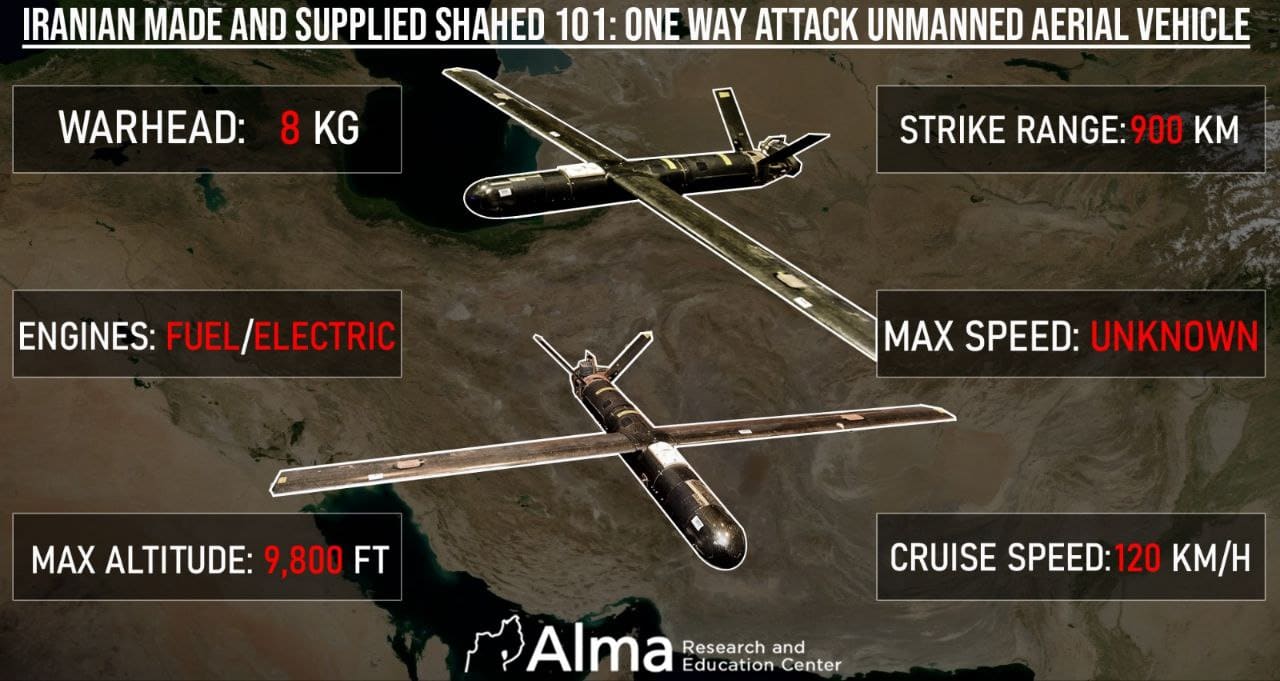
The external design of the drone exhibits notable similarities to aircraft utilized by Hamas groups, as documented through captures by the Israel Defense Forces in Gaza. The Shahed-101 boasts a high-wing configuration, featuring a slender torpedo-shaped fuselage and a wingspan of approximately 2.2 meters, complemented by X-shaped tail surfaces.
Constructed from carbon fiber, the drone is engineered for stealth. In some iterations, the propeller is made from wood or plastic, further minimizing its radar signature. Operationally, it can travel at speeds around 120 km/h and maintain altitudes between 60 to 150 meters—a profile that enhances its stealth capabilities. During its terminal flight phase, it can descend to remarkably low altitudes of 20 to 30 meters, significantly complicating interception efforts.
For navigation, the drone employs a four-element CRPA antenna for satellite guidance, supported by an inertial system, laying the groundwork for possible future improvements in technology.
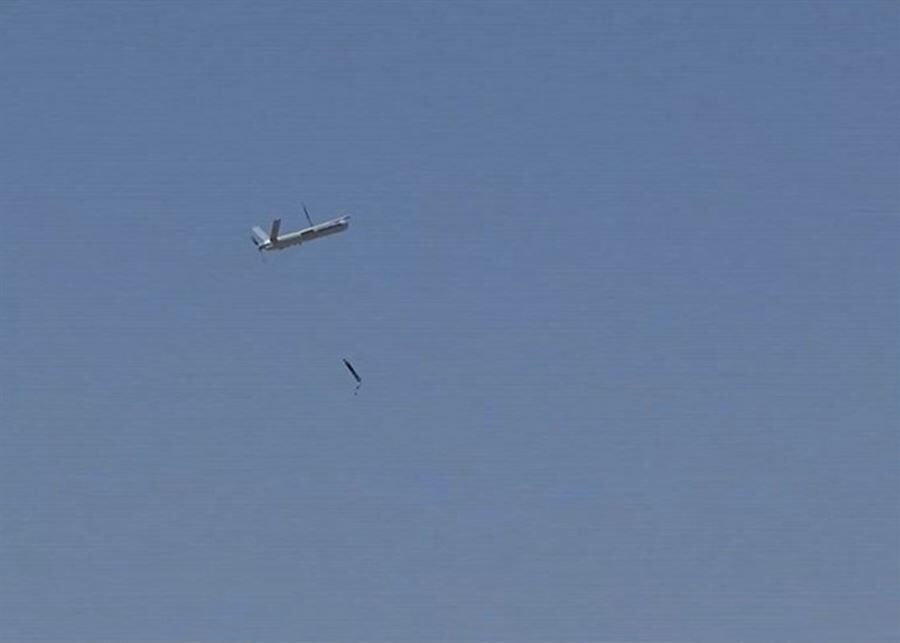
When it comes to armaments, the Shahed-101 carries a warhead weighing approximately 8 to 9 kg. Its shaped-charge or high-explosive design incorporates a metallic powder mixture that enhances incendiary effects and lethality against both personnel and equipment.
This drone represents a tactical weapon suited for front-line operations as well as near-rear engagements, distinguishing it from strategic strike systems. Its relatively modest warhead weight favors precision over broad destruction, making it more effective for stealthy, accurate strikes—an increasingly critical need on the modern battlefield.
The operational history of the Shahed-101 extends beyond Ukraine. Since 2021, Shia groups in the Middle East have utilized it under names such as Morad-5 or Khatif-2, showcasing its versatility and adoption in various conflicts. The Iranian military has also incorporated the Shahed-101 into its operations, further testament to its strategic value.
As countries adapt to counter new aerial threats, Defense Express has recently spotlighted Ukraine’s strategies for acquiring advanced weaponry to counteract Shahed drones and other hostile UAVs.