


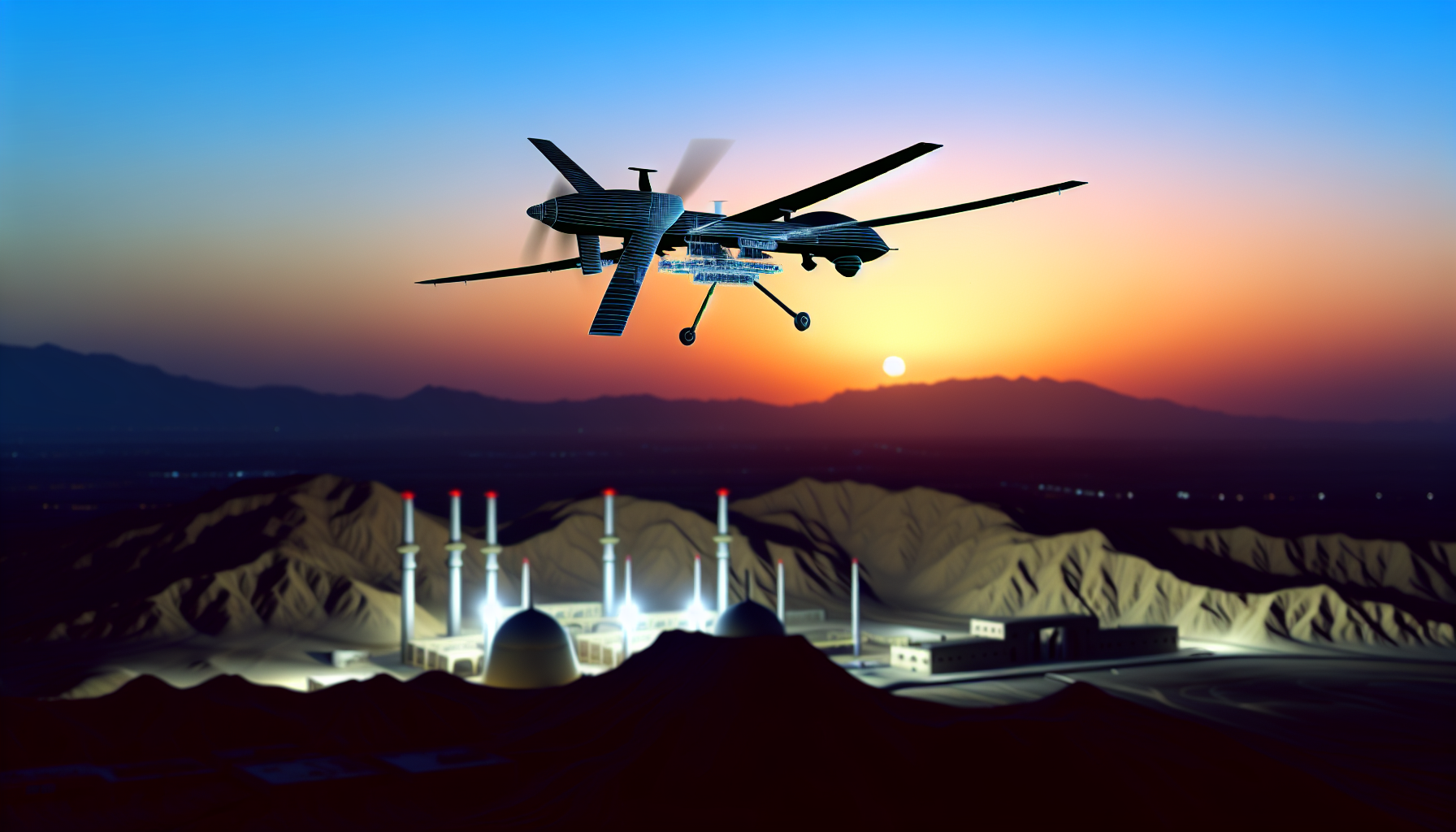
The Impact of Iran’s Drone Technology on Global Military Trends
Iranian Breakthroughs: A Source of National Pride
Recent statements from Brigadier General Abolfazl Shekarchi, a high-ranking spokesperson for the Iranian Armed Forces, revealed a significant narrative in the world of military technology. He emphasized that the replication of the Iranian-made Shahed 136 unmanned aerial vehicle (UAV) by superpowers is indicative of Iran’s impressive advancements in drone technology. For Shekarchi, this isn’t just a sign of recognition; it symbolizes a national pride for Iran and its military capabilities.
Global Recognition of Iranian Military Advancements
Shekarchi went on to assert that the interest from major global powers, such as the United States, in duplicating Iranian drone technology reflects the strength of Iran’s military innovations. The general stated that these nations are attempting to “make up for the things they don’t have,” suggesting that they perceive a gap in their own technological arsenal. This statement indicates a shift in the perception of Iranian technology—from a country often viewed as reliant on imported weapons to a self-sufficient innovator in military gadgets.
His remarks extend beyond mere national pride; they suggest a broader geopolitical context. Shekarchi mentioned that many oppressed nations across the globe look to Iran as a symbol of resistance against what he termed the “tyranny of global hegemony.” This framing infuses Iranian military prowess with a broader narrative of solidarity among nations facing external pressures.
Responses to Military Aggression
The conversation around Iran’s drone capabilities also intersects with recent military tensions in the region. Referring to a recent 12-day military aggression by the U.S. and Israel against Iran, Shekarchi warned of severe retaliatory measures in the event of further provocations. This highlights not just a defensive posture but a robust commitment to military readiness.
Iran’s significant advancements in drone technology have positioned it as a formidable player in West Asia, asserting its military strength through precision drone strikes that serve as both a deterrent and a response to external threats. The Iranian armed forces, particularly the Aerospace Division of the Islamic Revolution Guards Corps (IRGC), are touted as pivotal in propelling this military evolution.
The Evolution of Iran’s Drone Program
Over the years, Iran has demonstrated a remarkable capacity to innovate and adapt its military technologies to align with strategic needs. The development of the Shahed drones represents a successful endeavor to ensure that the armed forces are self-reliant amid ongoing U.S. sanctions. This approach has led to the manufacture of a variety of domestically produced military equipment, emphasizing Iran’s commitment to self-sufficiency.
The Shahed series, known for its cost-effectiveness and efficiency, has established itself as a benchmark in drone warfare. These drones are not only designed for long-range strikes but also exhibit high levels of accuracy, thereby enhancing Iran’s tactical capabilities in various conflict scenarios.
The Response from Global Powers
In a striking development, several nations have begun to focus their research and development efforts on creating UAVs inspired by the Shahed model. This trend has raised eyebrows in military circles, with reports indicating that companies in the U.S., China, France, and the U.K. are actively working on low-cost, long-range drone prototypes that echo Iranian designs.
The Wall Street Journal recently highlighted that at a military event hosted by the U.S. Department of War, models resembling the Shahed drone were notably featured among the showcased technologies. This evolving landscape indicates a competitive push among Western nations to create replicas that could potentially match, if not exceed, Iranian capabilities.
The Market for Shahed-Derivative Models
Interestingly, the marketplace for drone technology is seeing a surge in products modeled after Iran’s UAVs. Companies such as Griffon Aerospace and Sweden’s Saab are capitalizing on this trend by offering target-practice UAVs that resemble Iranian munitions. The focus on affordability and efficiency suggests a significant shift in how drone technology is viewed—not just as military might but as a viable option for numerous tactical applications.
Conclusion
As Iran’s drone technology continues to garner international attention and inspire mimicry, the implications for global military dynamics are profound. These developments signify not only a transformation in Iranian military capabilities but also reflect broader shifts in geopolitical alignments and rivalries. The technological arms race sparked by Iran’s innovations underscores the increasingly interconnected nature of global security challenges.