


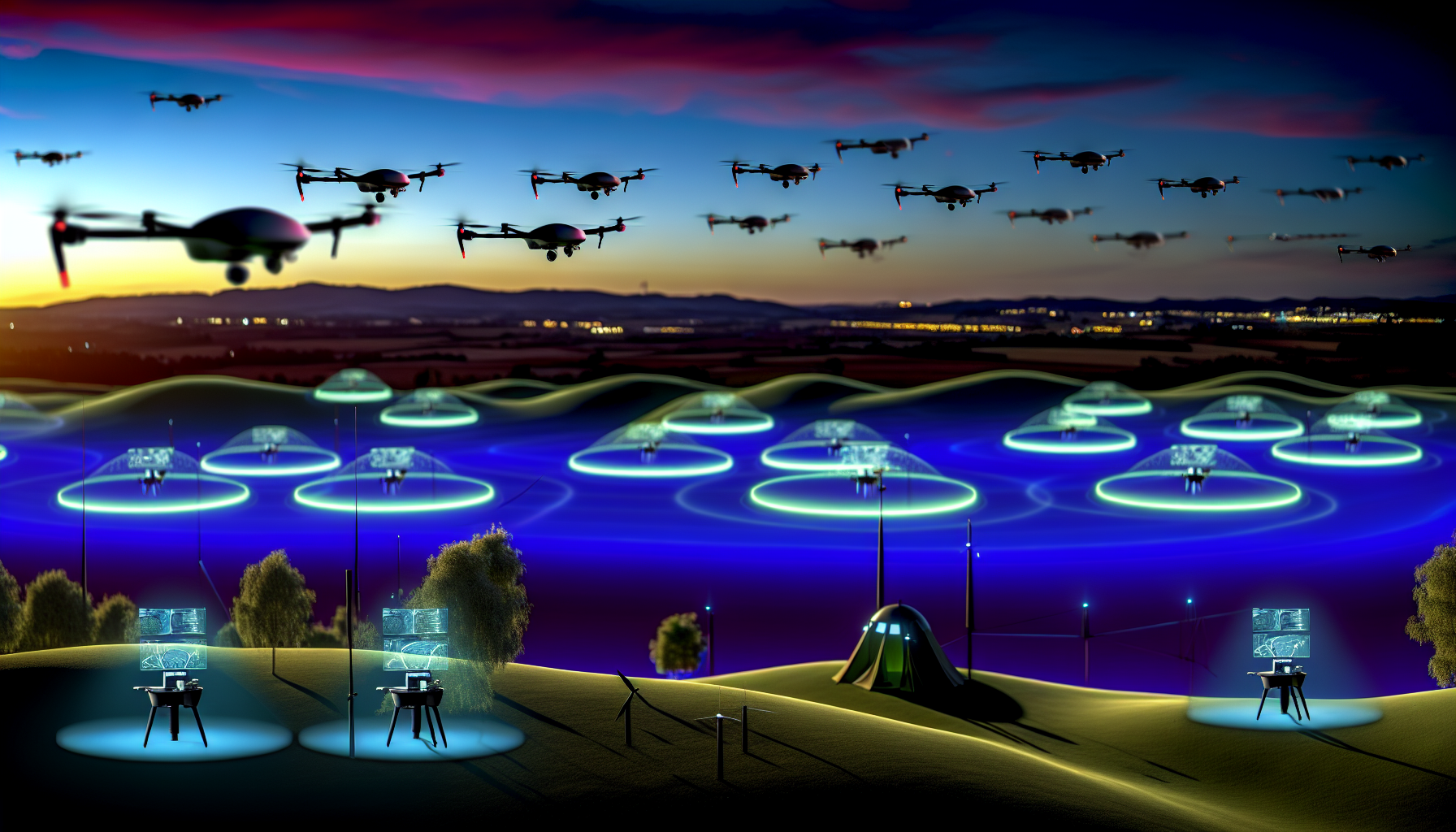
Unmanned Aerial Systems: A New Era in Warfare
In recent years, unmanned aerial systems (UAS), commonly known as drones, have emerged as pivotal assets in military operations. This technological evolution has fundamentally altered battlefield dynamics, enabling enhanced reconnaissance, data-sharing capabilities, and strategic deployment. A recent demonstration of such advancements took place during the Scarlet Dragon 26-1 exercise at Fort Bragg, North Carolina, showcasing the capabilities of a sophisticated UAS configured as a mothership.
The Scarlet Dragon Exercise
The Scarlet Dragon exercise stems from a series initiated in 2020, designed to integrate various military branches and governmental agencies into collaborative efforts focused on testing drone technologies. The exercise, held three times a year, unites forces to formulate innovative approaches to hybrid warfare, addressing modern challenges in real-time combat scenarios.
During the latest iteration of the exercise, the XVIII Airborne Corps explored several pioneering initiatives that illuminate the evolving role of UAS in tactical operations. For instance, the collaboration between the 18th Field Artillery Brigade and Air Force personnel centered around the rapid deployment of an M142 high mobility artillery rocket system via a C-17 Globemaster III. This was accomplished while simultaneously receiving real-time targeting data via the Geospatial-Intelligence Agency’s Maven Smart System, highlighting a seamless integration of drone technology with traditional artillery.
Real-Time Data Sharing
The ability to share and track data in real-time across various military platforms is another significant evolution demonstrated during the exercise. Drones operated alongside AH-64 Apache helicopters, small UAS, and defense radars, facilitating instant communication and coordinated efforts. This integrative approach reflects a shift towards more dynamic, interconnected military systems capable of responding to threats with unprecedented speed and efficiency.
A key takeaway from this capability is the establishment of a robust operational framework that not only enhances battlefield awareness but also streamlines decision-making processes. The rapid sharing of intelligence, traditionally a cumbersome process involving multiple agencies, has seen transformative improvements due to innovations in drone technology.
The Joint Innovation Outpost (JIOP)
The establishment of the Joint Innovation Outpost (JIOP) further underscores the military’s commitment to rapid innovation. This facility encourages soldiers to collaborate with civilian industries and academic institutions, allowing for experimentation with new technologies. The aim is to foster soldier-driven solutions that can be swiftly tested in subsequent exercises like Scarlet Dragon.
Lieutenant General Greg Anderson, commanding general of the XVIII Airborne Corps, emphasized the strategic importance of the JIOP in transforming the Army’s acquisition processes. The outpost represents a progressive shift towards a model where innovation is driven not only by technological trends but also by the frontline experiences and insights of soldiers.
Challenges and Organizational Changes
Despite these advancements, challenges remain, particularly regarding the authorization processes necessary for deploying autonomous systems. Rapidly evolving tech landscapes often clash with traditional military bureaucracies, creating obstacles for prompt adoption and deployment. Recent changes initiated by Defense Secretary Pete Hegseth, including the formation of the Joint Interagency Task Force (JIATF-401), aim to centralize control over U.S. military counter-drone programs and establish consistent operational standards.
By consolidating efforts into a single task force, the Pentagon seeks to enhance interoperability between services, ensuring that drone programs operate under unified technical standards. This organizational shift intends to streamline the procurement process, enabling quicker adaptation to emerging threats.
Future Prospects
The future landscape of warfare will likely be heavily influenced by the continued evolution of unmanned aerial systems. As demonstrated in the Scarlet Dragon exercise, these systems are not merely support tools; they are integral components of a modern military strategy that emphasizes versatility, rapid response, and collaboration across multiple domains.
The ongoing integration of drones into military operations epitomizes a broader shift toward hybrid warfare capabilities, where technology and human ingenuity converge to address complex challenges on the battlefield. As the military navigates this new terrain, the emphasis will remain on innovation, agility, and collaboration, ensuring that the United States maintains its strategic edge in an increasingly competitive global landscape.