


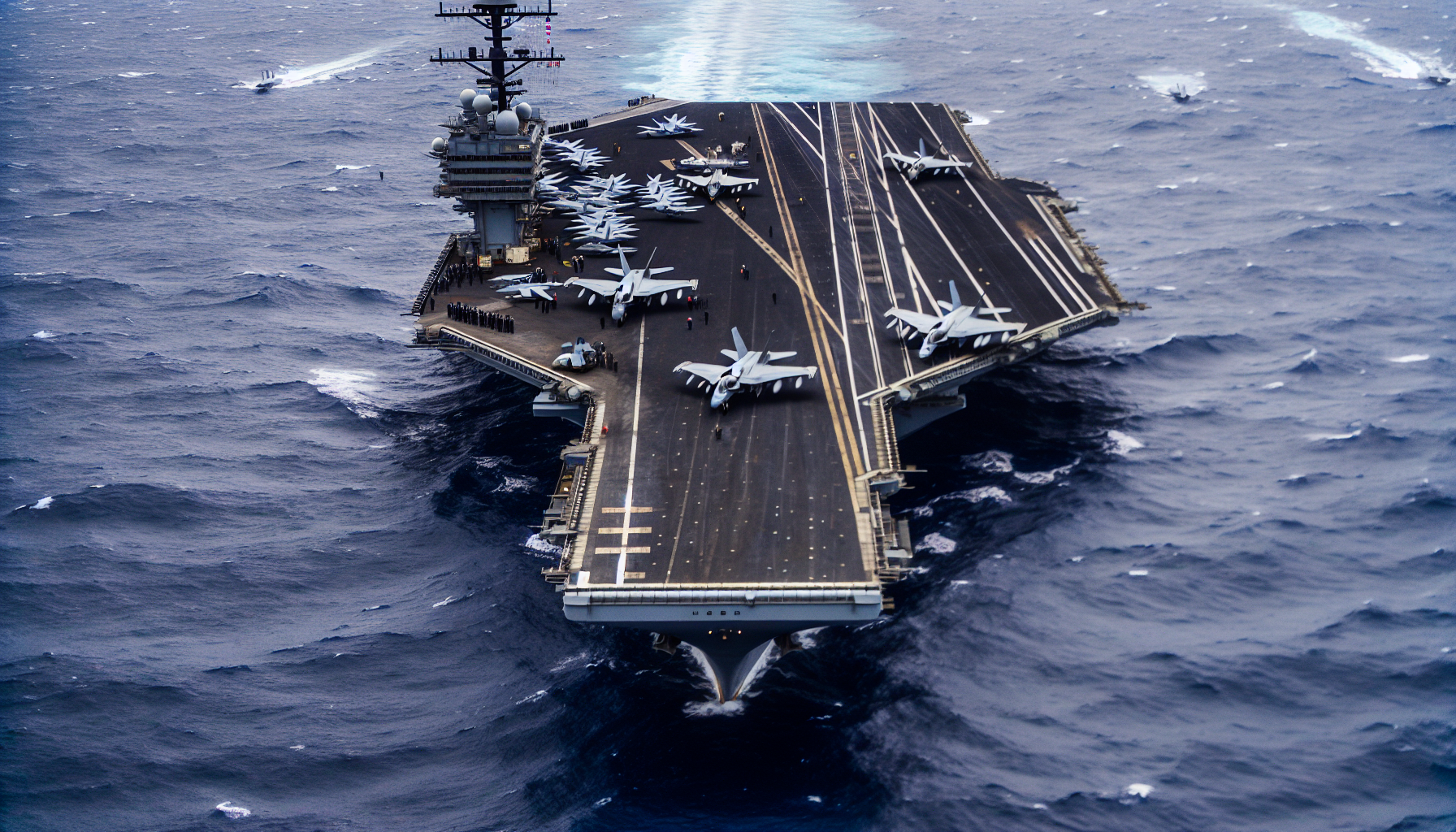
The Ford-Class Aircraft Carrier Debate: A Critical Examination
Key Points and Summary
The Ford-class aircraft carriers have become a pivotal focus in discussions about the future of U.S. sea power. Critics argue against their continued investment, citing exorbitant price tags, technical issues, and the evolving military landscape marked by nations like China. Proponents, however, emphasize the necessity of maintaining a robust naval presence amid soaring geopolitical tensions.
The Price of Prestige
The debate over the Ford-class carriers is as much about strategy as it is about economics. With projected costs reaching upwards of $13 billion per carrier, detractors point to these figures as indicative of a program that is financially untenable. Additionally, critics highlight the carriers’ extensive maintenance cycles that keep them docked for long periods, potentially reducing active fleet numbers in times of crisis.
Emerging Threats: The Rise of China
China’s advancements in carrier-killer missiles and swarms of loitering drones have raised alarm bells in U.S. defense circles. The sheer volume of China’s naval investments—aiming to field six carriers by 2030—calls into question the U.S. Navy’s ability to assert influence in Asian waters. The evolution of asymmetric warfare, including the use of anti-access/area denial (A2/AD) strategies, raises doubts about the effectiveness and survivability of traditional carrier strike groups.
The Case for Continued Investment
Despite the criticisms, there are compelling arguments for maintaining and continuing the Ford-class program. The U.S. Navy serves as a fundamental pillar of American global strategy, fulfilling roles that range from deterrence to providing humanitarian assistance. Carriers symbolize national prestige and are vital in ensuring freedom of navigation in international waters. Eliminating new carriers could undermine U.S. ability to project power and deter adversaries.
Navigating Technical Challenges
The technical intricacies inherent in the Ford-class design, such as the Advanced Arresting Gear and Advanced Weapons Elevators, have led to delays and cost overruns similar to those witnessed in the earlier stages of the program. These challenges, reflected in the delay of the USS John F. Kennedy, highlight the complexities involved in modern naval warfare and technology.
Alternative Investment Opportunities
Should the Ford-class program be curtailed, the funds could be reallocated toward enhancing the capabilities of destroyers and submarines, such as the Virginia-class Block V. Investing in advanced next-generation fighters like the F/A-XX and the forthcoming DDG(X) could offer the U.S. Navy a diversified approach to maritime operations, addressing various threats on multiple fronts.
The Implications of Cancellation
However, cancelling the Ford-class program raises significant strategic risks. Without a robust carrier presence, the landscape for U.S. operations in East Asia could drastically shift, favoring Chinese expansionism. The use of carriers has provided strategic clarity and aerial dominance, enabling the U.S. to act decisively in hotspots around the world.
The Evolving Nature of Warfare
The rise of hybrid warfare approaches from nations like Russia compounds the need for a flexible naval strategy. Carriers may face challenges from missile threats and cyber warfare tactics that attempt to undermine their effectiveness. The shift towards drones and information warfare complicates traditional naval paradigms, necessitating adaptiveness in carrier operations.
Enhancing Defensive Capabilities
The integration of advanced systems, such as the Aegis Weapon System, has proven effective in creating defensive bubbles around carrier strike groups. The significance of these capabilities was evident in past confrontations in the Gulf of Aden and the Red Sea, where carriers successfully thwarted drone and missile strikes.
Geographic Vulnerabilities
The First and Second Island Chains pose significant geographical challenges that require a calculated U.S. Navy response. The increasing sophistication of China’s naval assets, combined with its growing capabilities in anti-ship missile systems, creates a potential operational environment where U.S. bases could be vulnerable to Chinese strikes.
Future Scenarios in Global Conflict
Considering the evolving geopolitical landscape, the need for a strong carrier presence becomes even more pronounced. The threat of peacetime sabotage and aggressive maneuvers by adversaries further illustrates the strategic necessity of modernized carriers.
The Path Forward for the Ford-Class Program
With the next carriers in the Ford-class lineup already under construction, discontinuing the program appears counterproductive. Maintaining this program is vital for upholding U.S. naval superiority and the intricate network of deterrence that supports broader U.S. national interests.
As the world navigates increasingly complex military challenges, the conversation about the future of the Ford-class aircraft carrier program reflects broader themes of national strategy, technological advancement, and geopolitical maneuvering—making it a topic of critical importance.
About the Author: Dr. Brent M. Eastwood
Dr. Brent M. Eastwood is an expert with a rich background in defense issues, having authored over 3,000 articles on military strategy and policy. He is the founder of a tech firm specializing in predictive analysis using artificial intelligence and has held roles advising key military and governmental leaders. With a military history as a former U.S. Army Infantry officer and academic credentials from several prestigious institutions, Eastwood brings nuanced insights into the complexities of contemporary warfare. Follow him on X @BMEastwood for more analyses on defense strategy.