


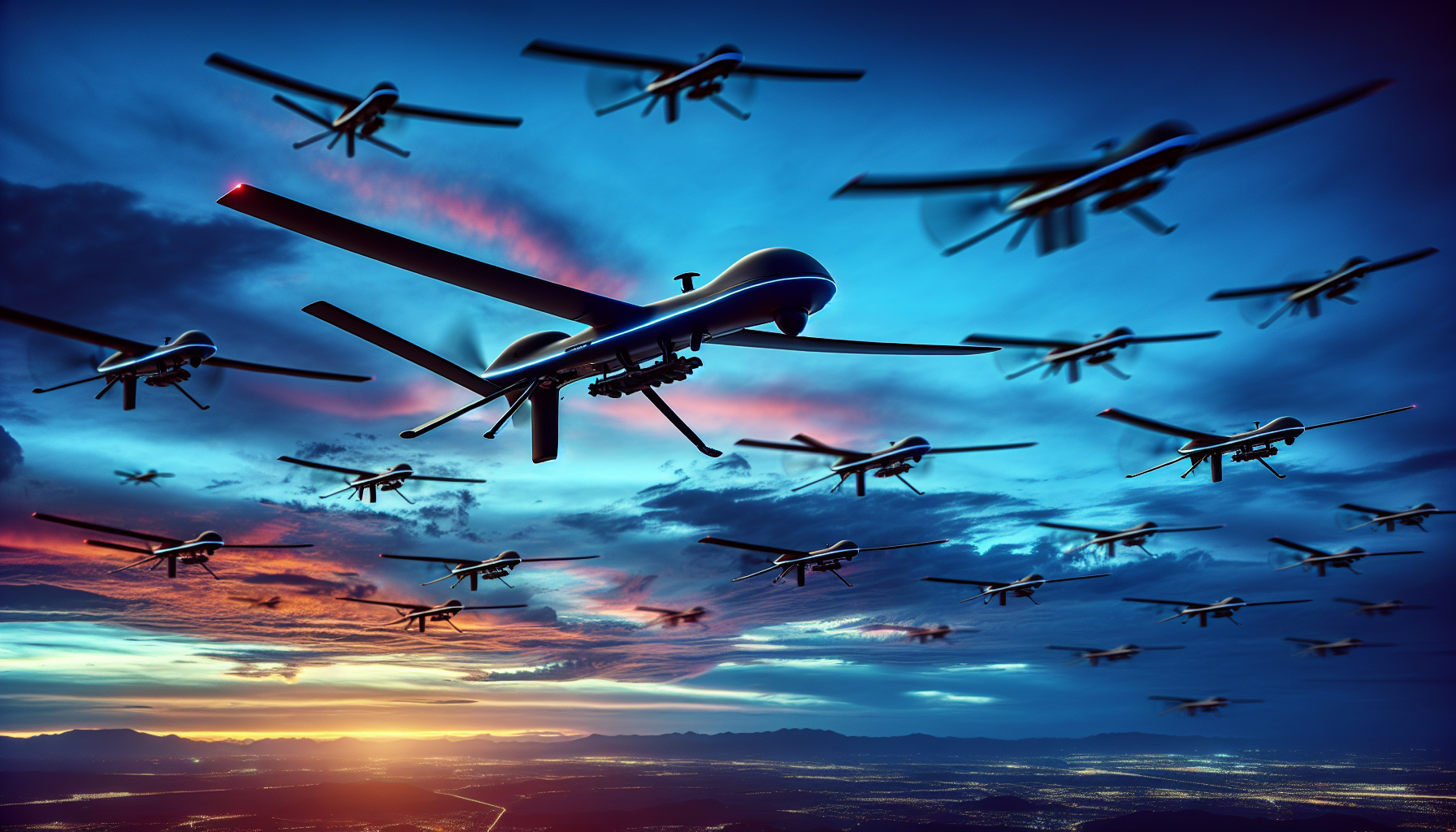
The Leleka-100 Reconnaissance Drone: Advancing Ukrainian Aerial Intelligence
The Leleka-100, developed by the Ukrainian company DeViRo, represents a significant milestone in the evolution of reconnaissance drones for military operations. As conflicts around the globe become increasingly complex, the importance of advanced aerial surveillance systems cannot be overstated.
A New Era of Adaptability
Recently, the Leleka-100 has undergone a crucial upgrade aimed at enhancing its survivability against Russian interceptor UAVs. This initiative is part of a broader effort to adapt the technology to the changing demands of the battlefield. The newly integrated maneuvering system, known as “Stich,” is designed specifically to identify and evade Russian air-defense systems.
How the Stich System Works
Illia Kovalchuk, head of development and software at DeViRo, elaborated on the capabilities of the Stich system. It features an advanced camera and a set of components that allow the Leleka-100 to recognize threat signatures from interceptor drones automatically. Once a threat is identified, the drone can execute evasive maneuvers autonomously, thereby improving its chances of survival in hostile environments.
Kovalchuk emphasized that while the Stich system has shown promising results in beta testing, it is not a foolproof solution. None of the innovations can guarantee complete safety from interception, but they notably enhance the “survivability coefficient” of Leleka-100 drones on the front lines.
Established Military Presence
The Leleka-100 was officially introduced to the Armed Forces of Ukraine in 2019. Since then, it has quickly become an essential asset. The drone is equipped with two resilient communication channels that can withstand electronic warfare, ensuring operational integrity even in adverse conditions.
Its imaging capabilities are noteworthy as well: the drone features a high-resolution daytime camera with a remarkable 100x zoom and an advanced thermal imaging system, allowing for effective reconnaissance during night operations.
Impressive Operational Range
The technical specifications of the Leleka-100 further underscore its capabilities. It boasts a declared operating radius of 80 kilometers and can cover a total flight path of up to 340 kilometers. Notably, the drone can sustain flight for up to five hours at an operational altitude of 3,500 meters. This durability provides commanders with extended reconnaissance capabilities, enhancing situational awareness on the battlefield.
Thwarting Emerging Threats
Despite its advancements, the drone faces particular challenges. A report from Ukrainska Pravda in July 2025 noted an increase in the Russian military’s efficiency in downing Ukrainian reconnaissance drones, including the Leleka-100. This has prompted ongoing efforts by DeViRo to enhance the drone’s defensive mechanisms and ensure its viability in tumultuous conditions.
Future Developments
The Leleka-100 serves as a testament to the innovation and resilience inherent in Ukraine’s military technology landscape. As threats continue to evolve, so too will the capabilities of systems like the Leleka-100. The ongoing improvements to its technology aim to stay one step ahead, ensuring that this drone remains a key player in modern aerial reconnaissance.
With continual advancements like the Stich system, the Leleka-100 stands as a promising example of adaptive military technology, driving the future of aerial surveillance in conflict zones.