


Escalating Tensions in Ukraine: Recent Attacks on Kyiv
On the eve of crucial diplomatic discussions between the United States and Ukraine, a wave of drone and missile strikes launched by Russia has once again turned the spotlight on the enduring conflict between the two nations. In a night marked by chaos and destruction, Kyiv endured relentless attacks that resulted in at least one confirmed casualty and left a significant portion of the city without heat during brutally cold temperatures.
The Assault on Kyiv
The assault commenced in the early hours of Saturday morning, sending shockwaves through Kyiv as Russian ballistic missiles and drones targeted key infrastructure. An air raid alert blared for nearly ten hours, reflecting the severity of the assault and the immediate danger faced by residents. Unfortunately, this attack claimed the life of a 47-year-old woman and injured at least 22 others, including two children, highlighting the indiscriminate nature of warfare that spares neither age nor innocence.
Kyiv’s mayor and the regional governor reported the devastation to local facilities and civilian sites. In response to the attacks, Ukrainian President Volodymyr Zelenskyy stated that approximately 500 drones and 40 missiles were used to disrupt “energy facilities and civilian infrastructure.” The repercussions were severe, with over one million households in and around Kyiv losing access to power, underscoring the urgent humanitarian implications of the ongoing conflict.
Kristina Zelenyuk, a Kyiv-based journalist, poignantly captured the plight of the residents, explaining that Russian forces are “trying to cut off all Ukrainians from our critical resources just to freeze us.” The government reported that one-third of the city was devoid of heat, as temperatures hovered just above freezing, further intensifying the humanitarian crisis.

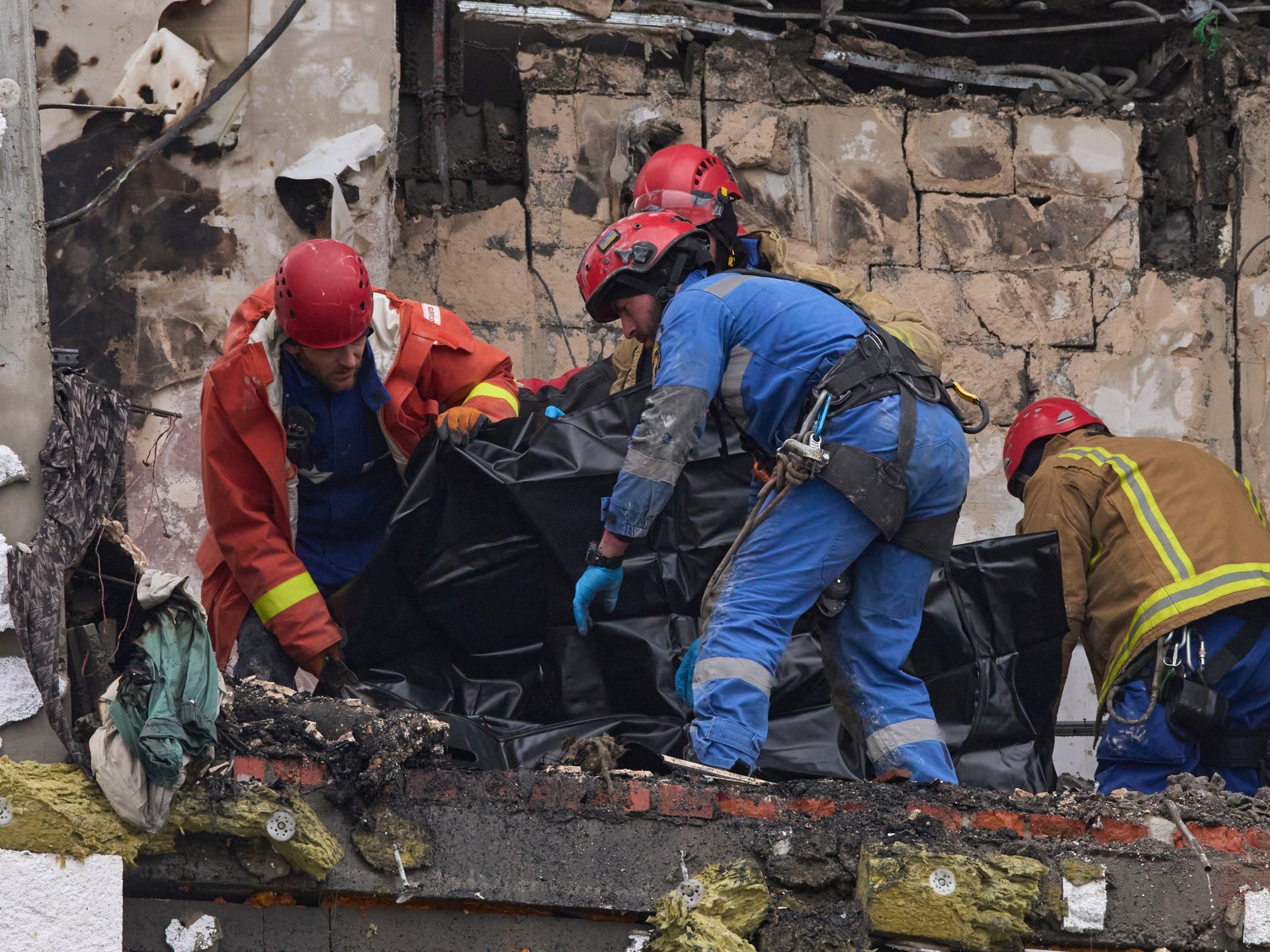
Municipal employees and firefighters work at the site of an apartment building hit during Russian missile and drone strikes in Kyiv, Ukraine. [Valentyn Ogirenko/Reuters]
Diplomatic Talks on the Horizon
As the dust settled on the day of destruction, eyes were firmly set on the diplomatic discussions set to take place shortly thereafter. President Zelenskyy was scheduled to meet with U.S. President Donald Trump in Florida to explore methods for de-escalating the nearly four-year war. These discussions are pivotal, revolving around security guarantees and the contentious issue of territorial control—two foundational elements in the ongoing peace negotiations.
Prior to this significant meeting, Zelenskyy had already engaged in dialogue with Canadian Prime Minister Mark Carney, where Canada pledged an additional 2.5 billion Canadian dollars in economic assistance to Ukraine. This support further highlights the international community’s commitment to Ukraine amid the conflict. Following the meeting, European leaders reiterated their backing, emphasizing the urgency of finding a viable path to peace that honors Ukraine’s sovereignty and territorial integrity.
Leaders from the European Union and NATO echoed similar sentiments, balancing the concepts of urgent military support while seeking avenues for lasting peace. Both President Zelenskyy and Prime Minister Carney expressed cautious optimism, seeking a resolution that would stabilize the region and ultimately benefit Ukraine.
The Broader Implications
Amidst the backdrop of these diplomatic efforts, the recent missile strikes underscore the complexities of the situation on the ground. Russia continues to assert claims over parts of the eastern Donetsk region while Ukraine seeks to maintain its current territorial lines. The disparity between the two parties creates significant friction, complicating any path toward a ceasefire or long-term solutions.
In his communications, Zelenskyy reflected on the day’s tragic events, stating that the ongoing conflict appears to indicate that Russia’s leadership is not genuinely invested in the peace process. He cautioned that their aggressive tactics are aimed at causing greater suffering to Ukraine while seeking to exert pressure on global partners.
Additionally, during the same period, reports emerged of Russian forces capturing strategic towns such as Myrnohrad in Donetsk and Huliaipole in the Zaporizhzhia region, marking a concerning escalation in territorial gains that could have further ramifications for Ukraine’s military standing.
The complexity of the situation continues to evolve as engagements between military confrontation and diplomatic efforts unfold. Each party’s maneuvering reflects the profound stakes involved—not just for Ukraine, but for regional stability and international relations at large.